Elena Rybakina Aims for World No.1 After Dominating Naomi Osaka
Elena Rybakina is closing in on the summit, and she is not pretending otherwise.
One more win and the Wimbledon champion will overtake Aryna Sabalenka to become world No.1, a milestone that has hovered over this US Open campaign and now sits squarely within reach. She knows the equation, embraces it, and is not shy about saying so.
“Of course I want it,” she said after dismantling Naomi Osaka in just 66 minutes. “I don’t know anyone that wouldn’t wish this. That is definitely one of my goals. If I start well as I did today, I think I have all the chances to (become world No.1). I’ll try my best and hopefully, it will go my way.”
On this evidence, it just might.
Rybakina ruthless, Osaka out
Osaka’s 2026 US Open is over, ended by a cold, efficient performance from the No.2 seed that left little room for sentimentality.
The scoreline – 6-1, 6-4 – tells most of the story. The manner of it fills in the rest. Rybakina bullied the first set, sweeping through it with a serve Osaka simply could not get a grip on. The Japanese star never found the sustained answers needed to truly trouble her opponent, and any hope of a deep run evaporated under the weight of Rybakina’s first-strike tennis.
There was a flicker in the second set. Osaka raised her level, pushed harder, tried to drag the match into a deciding set. The crowd sensed a shift, waiting for the kind of surge that once defined her in New York.
It never really came. Rybakina’s delivery, heavy and precise, kept bailing her out of tight spots and slamming the door on any Osaka momentum. The serve was the separating line between two multiple major champions – and it was not a fine one.
That single performance has already convinced Australian great Jelena Dokic that Rybakina should be considered the favourite for the title in New York. The draw and the form book are starting to agree with her.
Next up is Qinwen Zheng in the quarter-finals. And that is no formality.
Zheng topples Świątek again
Hours earlier, the tournament had already been shaken by Qinwen Zheng, who sent six-time grand slam champion Iga Świątek out of the event with a fearless, surging display.
Świątek led 5-0 in the opening set. On most days, that is a death sentence for the opponent. Not this time.
Zheng stormed back, game by game, turning what looked like a routine set into a stunning 7-5 steal. The turnaround stunned the crowd and clearly rattled the Pole, who never fully recovered her grip on the contest.
“I guess to come back from 0-5 is not lucky, that’s all I can say,” Zheng, 23, said. She admitted she started poorly but “little by little” rediscovered her rhythm on a centre court she had not graced in a long time. Once she settled, she took over, rolling through the second set 6-3 and closing out one of the standout wins of her career.
This is becoming a pattern. Zheng also beat Świątek to win Olympic gold in 2024, and while she pointed out she had not beaten a top-10 player “in a while,” she made this one count. With each match, she said, she feels more rhythm, more energy, more belief.
Now she runs straight into a surging Rybakina with the No.1 ranking dangling as an extra prize on the line. It is a quarter-final with the feel of something bigger.
A men’s battle in the shadows
While the women’s draw dominated the headlines, Learner Tien and Karen Khachanov stepped onto court in the men’s singles, fighting for a quieter but still significant prize: a spot in the quarter-final against Alexander Blockx.
Their match, unfolding away from the glare of the marquee names, will decide who earns the right to test Blockx in the last eight. In a tournament brimming with storylines at the top, these are the kind of contests that quietly shape the second week.
A “zoo” in New York, a warning from Wimbledon
Off the court, the US Open has been wrestling with a different kind of noise.
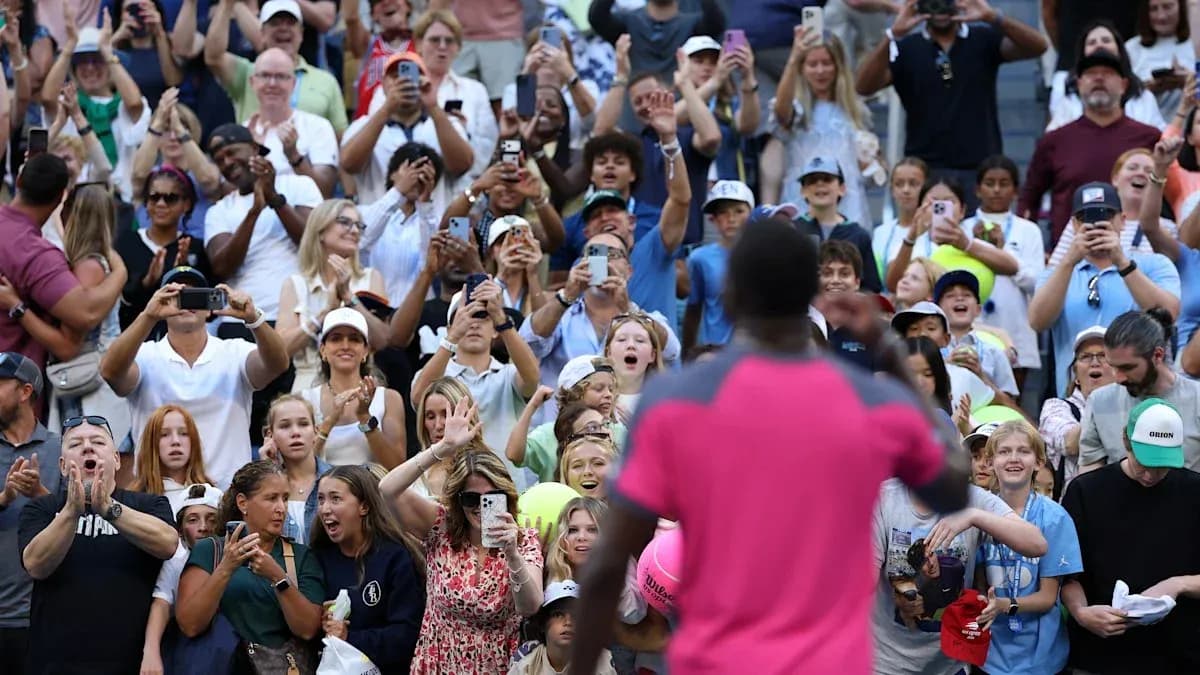
Players and umpires have grown increasingly frustrated with influencers and content creators disrupting play with bright phone lights and constant movement in the stands. Coco Gauff and Naomi Osaka have both spoken about the behaviour, making it clear they welcome new fans but expect everyone to respect the sport’s basic etiquette.
Big screens around the grounds now carry reminders aimed squarely at those chasing content mid-rally. The tournament has tried to calm the tension, but not everyone is impressed with the atmosphere.
French veteran Adrian Mannarino, knocked out in doubles, did not sugar-coat his view. The smell of marijuana drifting through the air and the constant movement in the stands, he said, have helped turn the event “into a bit of a zoo.”
“People are allowed to move around in the crowd during points,” he told reporters. “The tournament puts up with it ... I don’t know if it’s the best thing for tennis in general.”
Wimbledon has been watching – and drawing its own lines.
The All England Club has already confirmed it will not allow an influencer free-for-all at SW19 next year. Ring lights will be banned at the gates. Content creators should not expect accreditation. The message is clear: the tennis comes first, and the show around it will have limits.
New York, with its noise and chaos, leans into the circus. London is determined to keep the ropes tight around the ring.
Between those two worlds, players like Rybakina and Zheng are carving out careers, chasing rankings, and rewriting draws. One is a win away from No.1. The other has just sent a giant home and is “pumped” for more.
Soon enough, they will share the same court. The question now is simple: whose surge defines this US Open?