Elena Rybakina Reaches US Open Final After Defeating Coco Gauff
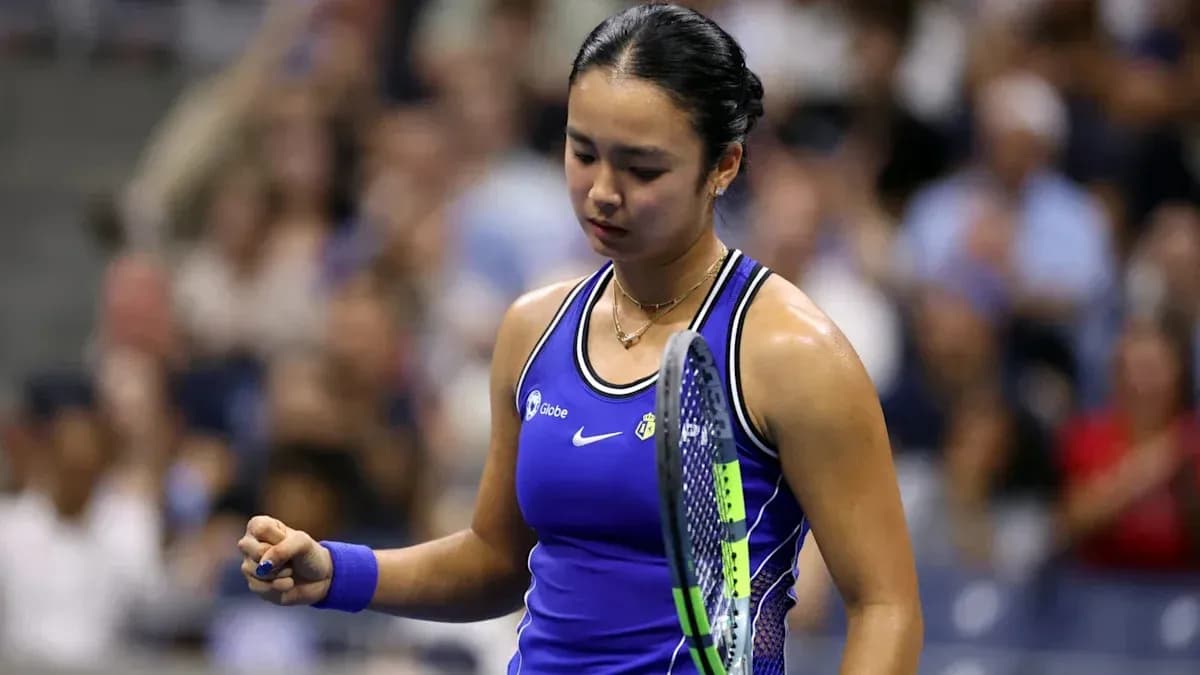
Elena Rybakina walked onto Arthur Ashe Stadium in her first US Open semi-final looking as if the occasion might swallow her whole. One set in, it almost had.
Coco Gauff flew out of the blocks, devouring the court with those long, elastic strides, feeding off a crowd that roared for every point as if it were match point. Rybakina, usually so composed, sprayed balls from the baseline, her vaunted serve dulled and unreliable. The scoreboard read 6-3 Gauff, but the story felt even more lopsided than that.
And then the world No 1 turned into exactly that.
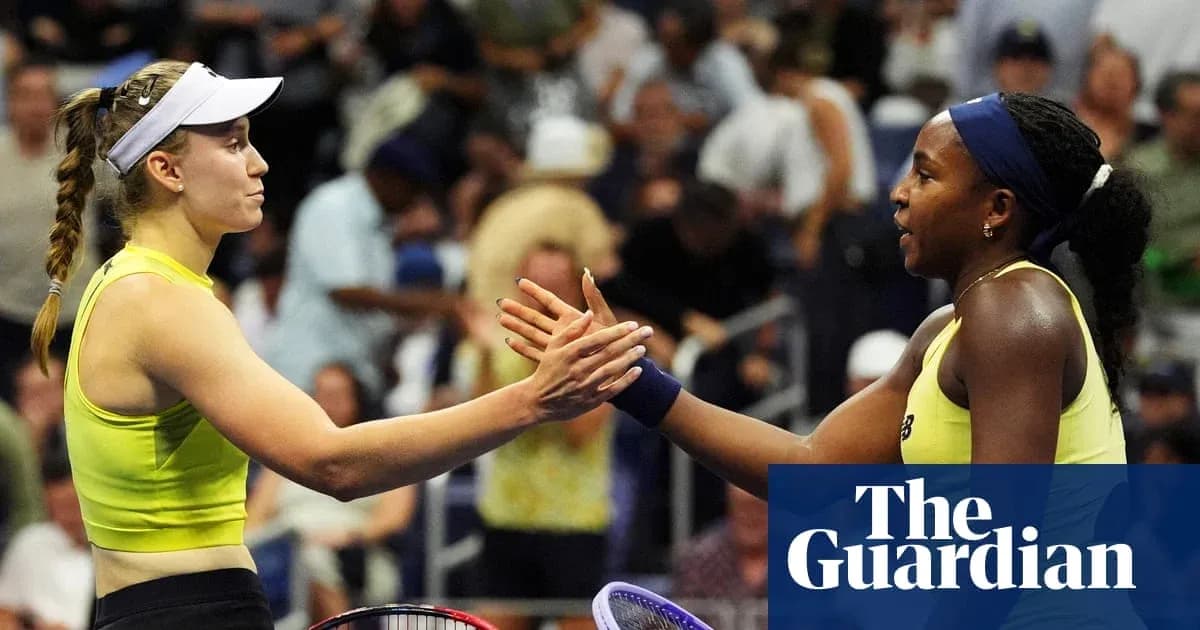
Rybakina, who has built a career on quiet problem-solving rather than theatrics, found a way. She steadied, then imposed, then suffocated. From a set down and under siege, she dragged the match into her rhythm and powered past Gauff 3-6, 6-4, 6-4 to reach her first US Open final and a fourth major final overall.
It was not her cleanest performance of the fortnight. It has not been her cleanest tournament at all. But six matches in, the pattern is clear: when the tennis has wobbled, the mind has not.
From survival mode to control
For a set, Gauff looked like the player who has transformed her own trajectory over the past year. The serve that once betrayed her on this very court, reducing her to tears 12 months ago, held firm early. She landed big first serves in the tight moments, then let her defence go to work, dragging error after error out of Rybakina’s racket.
Rybakina, usually a model of clarity from the line, misfired. The first serve lacked its usual bite, the groundstrokes flew long or died in the net, and Gauff’s athletic defence turned every rally into a test Rybakina was failing. The American pocketed the opening set and looked in command.
The response was immediate.
Rybakina opened the second set with a different blueprint. She started to stretch Gauff wider, carving angles off both wings, especially with a series of biting, cross-court backhands that dragged Gauff out of the middle and finally opened up space. The depth improved, the errors thinned out, and the match stopped being played entirely on Gauff’s terms.
Within minutes, Rybakina was up 4-1. It was not suddenly pristine tennis. Both players had scratchy patches, but Gauff’s forehand began to unravel under the weight of Rybakina’s pace. The shot that has long been her technical fault line cracked again: 15 unforced errors came off that wing across the match, many of them at crucial junctures.
Serving at 4-5 in the second, Gauff produced her worst game of the night. Three forehand misses and a double fault handed over the set. The crowd fell quieter. The dynamic had flipped.
The serve arrives right on time
Rybakina’s rise has been anchored by one of the most destructive serves in the women’s game. For a set and a half, it had barely shown up. In the decider, it finally roared.
At 1-1 in the third, she closed a hold with two thundering aces, the kind of statement points that cut through any lingering doubt. From there, her service games shortened, the scoreboard moved quickly, and the burden shifted to Gauff to keep pace.
The American fought to stay level. At 2-3, she faced two break points, teetering on the edge. She dug out the hold with a couple of bold first serves, clinging on for 3-3, but the strain was obvious. When Rybakina pressed again at 4-3, Gauff could not escape. Another loose service game, more pressure on the forehand, and the break landed. Rybakina stepped up at 5-3 to serve for the match.
Gauff, as always, refused to go quietly. Down 3-5, 30-30, she ripped a stunning backhand passing shot, then broke for 4-5 to ignite Arthur Ashe one last time. The noise surged, the momentum seemed to tilt, and for a flicker the script threatened to change.
Rybakina didn’t let it.
She walked to the return line and forced herself forward again, attacking second serves, taking the ball early, flattening her groundstrokes through the court. The disappointment of failing to serve it out vanished in a single, ruthless return game. Gauff’s resistance finally broke, and with it, her tournament. Rybakina sealed the win on the American’s serve, not her own, a fitting symbol of the way she had wrestled control of the night.
A new No 1, and a familiar rival
This run in New York already carried historic weight before a ball was struck in the semi-final. Rybakina arrived with a chance to do what every player dreams of and very few achieve: climb to world No 1. She did it the hard way, nursing a worrying Achilles problem in the build-up and dragging a poor US Open record behind her into the draw.
The breakthrough came in the quarter-finals, where she edged Zheng Qinwen in a tense, high-stakes contest to secure the top ranking. Many players would have allowed that achievement to define their fortnight. Rybakina made it clear it would not. World No 1 was a milestone, not a finish line.
Now the stakes rise again.
For the first time in 51 years, all four top seeds reached the US Open women’s semi-finals. Not since Wimbledon 2009 has a major seen such an orderly procession of favourites this deep into the tournament. It says plenty about the strength and consistency at the top of the women’s game that this line-up felt almost inevitable rather than miraculous.
Within that elite cluster, Rybakina and Gauff have been something of an anomaly. They have largely circled each other rather than collided. Before this summer, they had met just once. Last month in Canada, they played again, Rybakina clawing back from a set down to win in three. The pattern repeated in New York, but with far more on the line.
Now comes a very different kind of familiarity.
Rybakina’s fourth major final will reignite the rivalry that has framed this season. Across the net will be Aryna Sabalenka, the outgoing No 1, in a rematch of the Australian Open final that Rybakina won. Hard courts, high stakes, power tennis at full tilt. One player trying to stamp her authority on the era, the other refusing to loosen her grip on it.
Rybakina has already conquered the ranking mountain and survived six uneven rounds in New York. One match remains to decide whether this is the year she simply touched the summit, or the year she started to own it.