Elena Rybakina: New US Open Champion and World No. 1
Elena Rybakina stood on the Arthur Ashe Stadium baseline with the match on her racket and the No. 1 ranking already in her pocket. One week had changed everything. One night confirmed it.
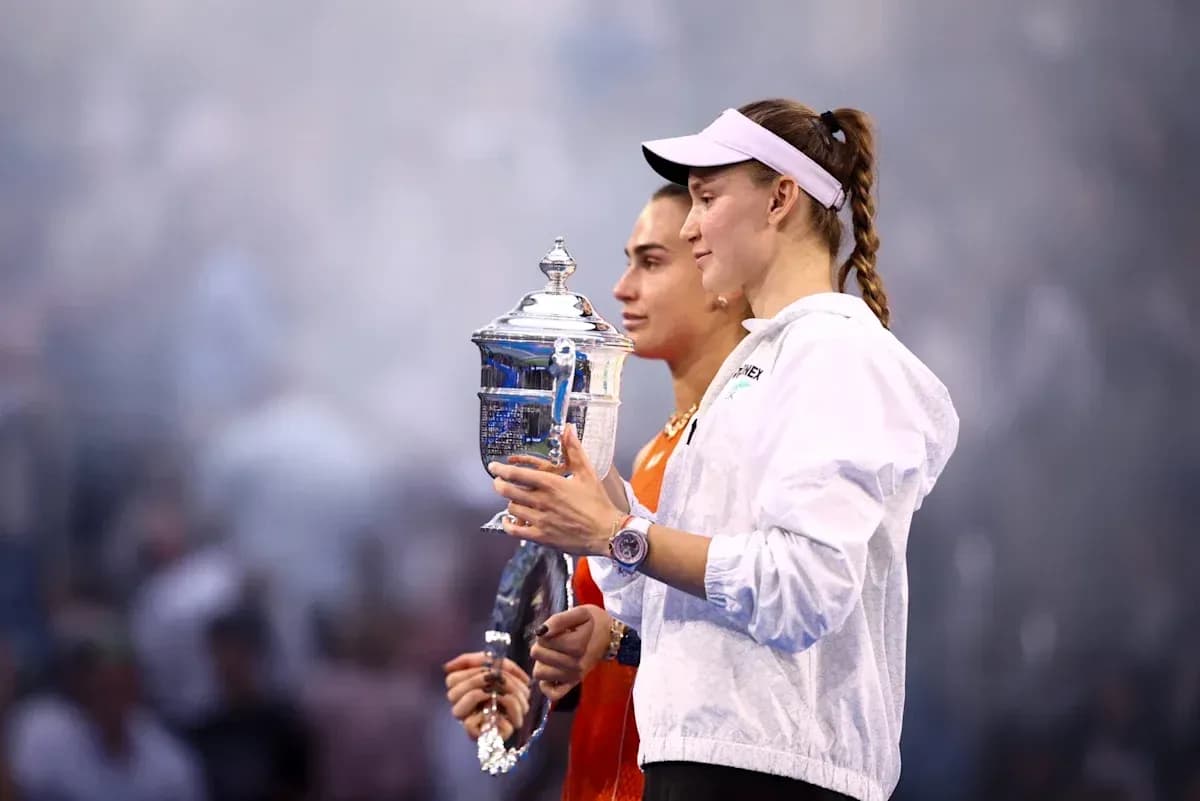
The new world No. 1 is now the new US Open champion, outlasting Aryna Sabalenka 6-4, 5-7, 6-2 in a final that crackled with power, tension and momentum swings. It was not clean, it was not easy – and that is precisely what made it so significant.
A No. 1 who finishes the job
Rybakina arrived in New York with the pressure of a favourite and the burden of history. Her best result at Flushing Meadows before this fortnight? The fourth round. Nothing in her past here suggested a coronation.
She tore that script to pieces.
Having just overtaken Sabalenka at the top of the WTA rankings, the Kazakhstani walked into the final with the target on her back and a proven hard-court giant across the net. Sabalenka, the defending champion and one of the game’s fiercest front-runners, dragged the contest into a deciding set and briefly had the momentum.
That is where Rybakina’s night truly began.
After dropping the second set and getting broken at the end of it, many players would have carried that sting into the decider. Rybakina did the opposite. She reset. She attacked. She imposed.
The third set became a statement: 6-2, built on relentless returning and unflinching aggression on Sabalenka’s serve. When the rallies stretched, Rybakina’s ball-striking separated the two. When the pressure rose, it was the new No. 1 who held her nerve.
Bartoli’s verdict: “Absolutely extraordinary”
From the commentary box, a former Wimbledon champion watched on with admiration that bordered on disbelief.
“Can you imagine that her previous best result here was the fourth round?” Marion Bartoli said on Sky Sports Tennis. “That's extraordinary, to come here with all the pressure of the world, knowing she had the No. 1 world ranking on her racket, to actually go on and win the title.
“The way she bounced back at the beginning of the third set tonight for me, was absolutely extraordinary.
“It looked like she completely forgot what happened at the back end of that second set, when she got caught on her own service game. She just kept on moving on, and moving forward all the time. The way she attacked Sabalenka's serve all the time, putting her under so much pressure.
“The ball-striking from that young lady is just something else. She can do anything on the tennis court. She's only missing Roland Garros now from completing a career Grand Slam.”
Bartoli’s words captured what the numbers on the scoreboard could not: the mental reset, the selective memory of a champion who shrugs off a lost set and plays the next one as if nothing has happened.
A three-time major champion – and a slice of history
The US Open title is Rybakina’s third Grand Slam crown, and each has come on a different stage of tennis’ grandest theatre.
Wimbledon in 2022 announced her as a major champion. The Australian Open earlier this year confirmed that was no one-off. New York, with its noise, its chaos and its unforgiving night sessions, has now hardened that reputation into something more permanent.
She is not just winning Slams. She is collecting them across surfaces and continents.
This run in particular will sit in the record books. In the Open Era, Rybakina is the first woman to win the US Open while going the distance in the quarterfinals, semifinals and final – three straight three-set victories when the tournament reaches its most brutal phase.
That workload under the New York lights exposes any weakness, physical or mental. Rybakina turned it into a showcase of endurance. At 27, she looks like one of the fittest and most resilient players on the WTA Tour, able to absorb the grind and still step into the court when it matters.
Only Paris left
Wimbledon. Australian Open. US Open.
The list is starting to look ominous for the rest of the field. As Bartoli pointed out, only Roland Garros now separates Rybakina from a career Grand Slam – the kind of club that defines legacies, not just seasons.
For now, there will be a pause. After a fortnight of late nights, three-set marathons and the strain of playing as the hunted, Rybakina has earned the right to disappear from the baseline for a while. Time to celebrate, time to breathe, time to let the scale of this breakthrough in New York settle in.
When she does return, she will not just be the world No. 1 or the latest US Open champion.
She will be the player standing one major away from completing the full set.