Elena Rybakina's Grand Slam Journey: Triumphs and Setbacks
Elena Rybakina is building the kind of Grand Slam résumé that bends a season around one name. Three majors now sit on her shelf after the US Open, and in 2026 alone she has lost just twice at the sport’s biggest events.
Those two defeats tell their own story.
Clay trip, New York payback
Roland Garros has always looked like the surface most likely to trip Rybakina, even as her game has adapted and hardened on clay. This spring she arrived in Paris with real credentials: a Stuttgart title, her fifth career trophy on the surface, and a quarter-final run at the Italian Open. The signs pointed upwards.
The start backed that up. She brushed aside Veronika Erjavec 6-2, 6-2 in the opening round, authoritative and efficient. Then came Yuliia Starodubtseva.
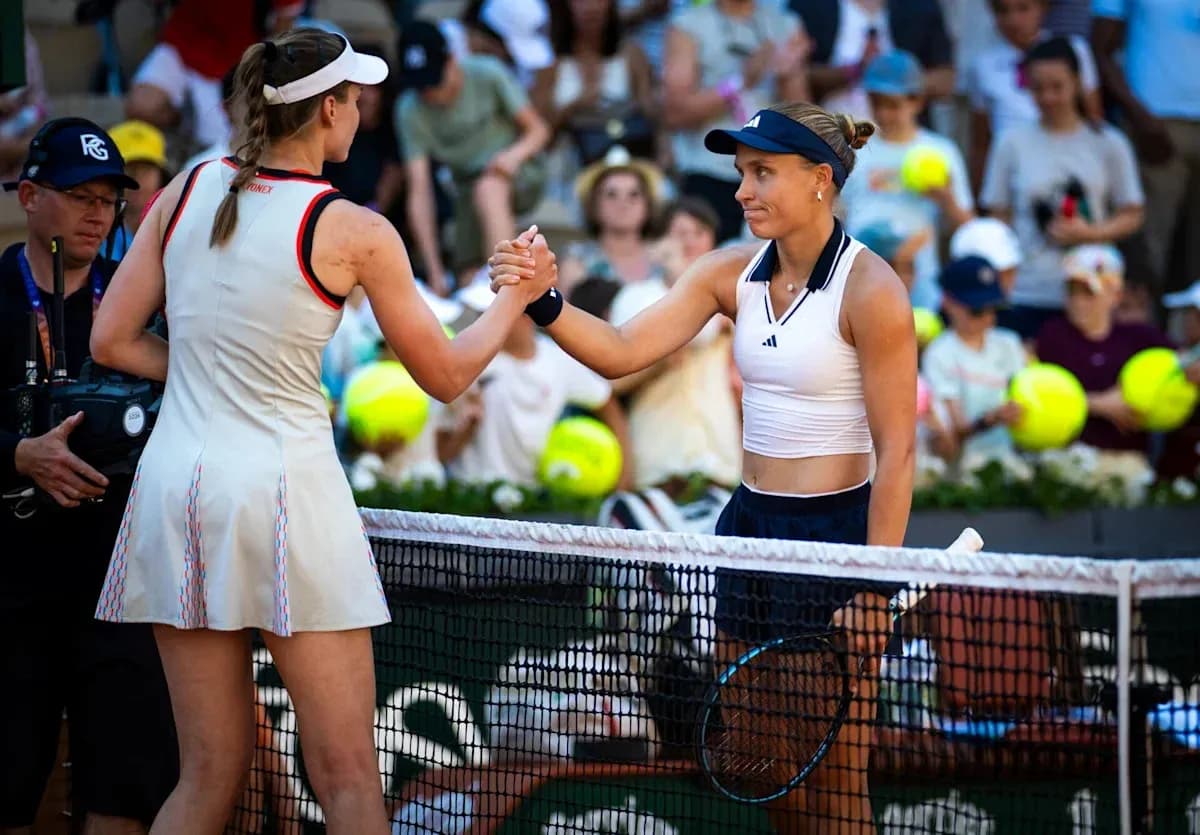
Ranked No. 55 at the time and with no experience beyond the second round at a Slam, the Ukrainian walked into Philippe-Chatrier as a heavy underdog. She walked out with the biggest win of her life. Starodubtseva turned a one-set deficit into a 3-6, 6-1, 7-6(4) upset, handing Rybakina her earliest defeat at a major since the 2024 US Open, when a back injury forced a withdrawal.
For Rybakina, it was a jolt. For Starodubtseva, it was a springboard she briefly failed to use. A six-match losing streak dragged her outside the top 70, the momentum from Paris apparently gone.
Then the tour circled back to New York, and their paths crossed again.
By the time they met in the third round of the US Open, Starodubtseva had steadied. She had matched her best Slam performance by reaching the last 32 for only the second time in her career. Across the net, though, stood a different Rybakina: sharper, scarred by Paris, and hunting revenge.
This time the Kazakh didn’t let the door open. She edged a tight first-set tiebreak 8-6, then pulled clear 6-3 in the second, a 7-6(6), 6-3 victory that felt like a personal correction as much as a step towards the title. From there she surged through the draw and lifted the trophy in New York, her third Grand Slam crown after Wimbledon 2022 and the Australian Open earlier this year.
Starodubtseva still left with a reward. That joint-best Slam run pushes her into the top 50 for the first time, up to a new career high of No. 43. The upset in Paris no longer looks like a one-off shock; it sits as the first marker of a player finally punching through.
Grass sting at Wimbledon
If clay is Rybakina’s most vulnerable territory, grass is supposed to be her kingdom. A former Wimbledon champion, she arrived at the All England Club again among the favourites, her serve and flat, skidding groundstrokes tailor-made for the lawns.
Yet the second blow of her Grand Slam season landed there.
In the third round she faced Elise Mertens, the No. 25 seed and a familiar opponent. The head-to-head was brutally one-sided: Rybakina had won seven of their eight previous meetings. History leaned heavily her way.
On the day, it didn’t matter. Mertens absorbed the pace, held her nerve in the key moments and flipped the script. She edged the first-set tiebreak 7-4, then raced through the second 6-1, a 7-6(4), 6-1 scoreline that stunned Centre Court and sent one of the title favourites out before the second week.
Those are the only two names on the list of players who have beaten Elena Rybakina at a Grand Slam in 2026: Yuliia Starodubtseva in the second round of Roland Garros, and Elise Mertens in the third round of Wimbledon.
Everyone else has fallen.
Rybakina closes her major campaign with a 17-2 record, the best Grand Slam season of her career. One loss on clay, one on grass, three trophies in hand. The field has found two cracks. The question for 2027 is simple: can anyone else force one open?