Djokovic's Legacy: Influence on Sinner and Alcaraz
Novak Djokovic has never been shy about his place in tennis history. With more majors than anyone and a career that has stretched across three generations of rivals, he has long seen himself as a standard-setter rather than just another champion.
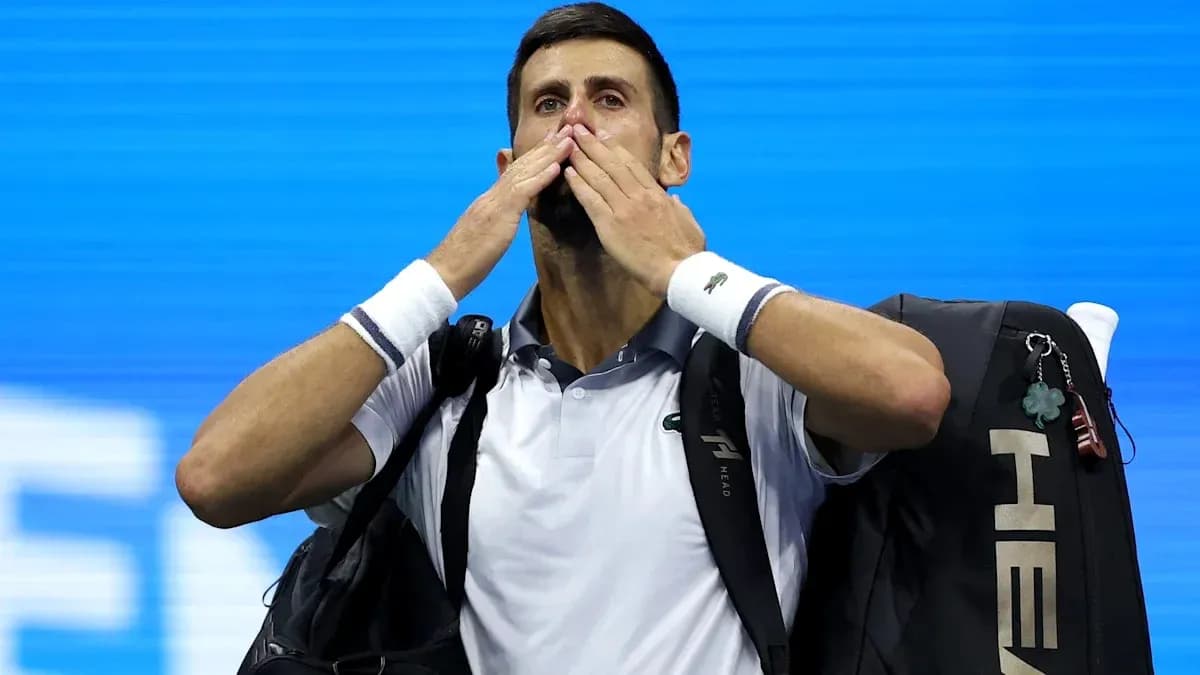
At 39, he is still trying to prove it on court. He owns a win over Jannik Sinner as recently as 2026 and pushed Carlos Alcaraz hard in an Australian Open final that underlined how narrow the gap remains between him and the sport’s new ruling class. His ranking may have dipped, his aura a shade dimmer, but he is still trading blows with players almost half his age.
Now it is his words, not his forehand, that have put him in the spotlight.
Djokovic’s claim on Sinner and Alcaraz
In a snippet from a conversation with Kevin Hart on the comedian’s podcast, Djokovic spoke openly about his influence on the next wave. He suggested that both Alcaraz and Sinner had, in part, modelled their games on his own, saying they had “copied” his style of play.
The context was not dismissive. Djokovic framed it as a point of pride, a sign that his approach to the sport had seeped into the DNA of the modern game. For a player who has spent nearly two decades redefining physical standards, returning, defending and mental resilience, it was his way of staking a claim to a legacy beyond numbers and trophies.
The Sinner comparison broadly tracks with how many analysts see the Italian: a baseline machine with elastic defence, relentless depth and a willingness to turn defence into attack, all built on supreme conditioning. Djokovic’s fingerprints are easy enough to trace there.
The Alcaraz link, though, has not landed as smoothly.
Backlash over the Alcaraz comparison
Once the clip surfaced, reaction came quickly, particularly around the mention of the Spaniard. Some fans bristled at the idea that Alcaraz – whose explosive, all-court aggression and improvisation have drawn parallels with a blend of Roger Federer and Rafael Nadal – could be framed as a Djokovic imitator.
One fan on X captured the disbelief in blunt terms: “I'm genuinely lost for words at this point. I'm being totally serious here. I don't know what to say.”
That post summed up a wider feeling among sections of the tennis public who see Alcaraz as something distinct, a once-in-a-generation talent carving his own path rather than walking in anyone’s shadow, even Djokovic’s.
The debate cuts to the heart of how greatness is perceived. Djokovic views his legacy as structural: the way players train, defend, slide, return, manage points. Many fans, especially those captivated by Alcaraz’s flair and risk-taking, see the Spaniard as a departure, not a continuation.
A legacy under the microscope
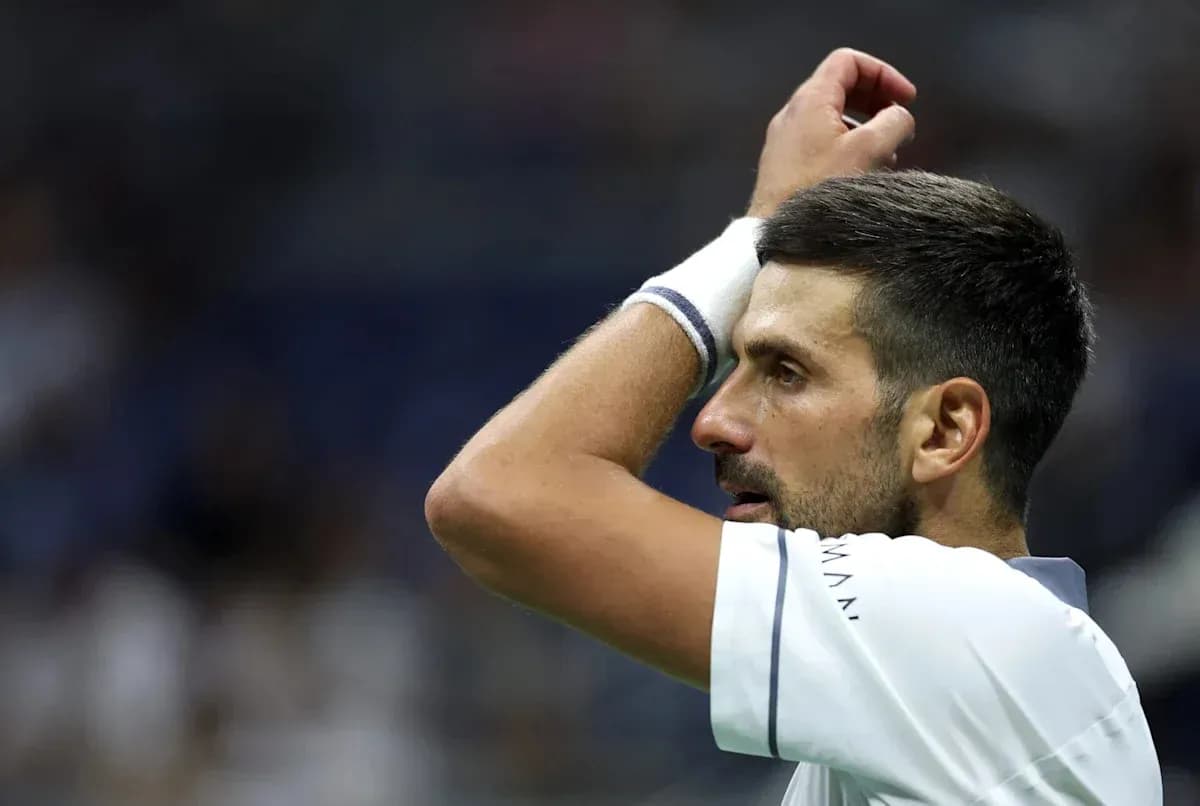
Djokovic’s recent form has invited questions about how long he can stay with the new wave. Yet the very fact he is still pushing Sinner and Alcaraz deep into major finals at 39 underlines why he feels entitled to talk about influence. He is not a retired legend watching from the stands; he is still on the other side of the net, testing them, forcing them to find new levels.
That is where the tension lies. A champion trying to define his own story while a new era insists on writing its own. Whether fans agree with his assessment or not, Djokovic has once again ensured that the conversation about the future of tennis still runs straight through him.