Detroit Pistons' Offseason Strategy: Subtle Changes After 60-Win Season
The Detroit Pistons didn’t chase headlines this summer. They didn’t need to. Not after a 60-win season that reset expectations in Michigan and across the league.
What they did instead was quieter, more calculated — the kind of offseason that tells you a franchise believes its window is open and doesn’t want to smash the glass just to make noise.
A 60-Win Team, Subtle Tweaks
The core of Detroit’s rise remains in place. The intrigue lies around it.
As The Athletic’s Hunter Patterson outlined, this is a refreshed version of the same contender. John Collins arrives as the headliner, a veteran forward expected to slide directly into the starting power forward spot, effectively taking over Tobias Harris’ role. Around him, the Pistons have added Isaiah Joe, Taurean Prince and Ebuka Okorie — not blockbuster names, but deliberate fits for a team trying to sharpen the edges of an already dangerous roster.
The starting five, assuming Jalen Duren is back in the fold, should look familiar. That’s by design. This isn’t a rebuild. It’s refinement.
The catch? Duren isn’t back yet.
The Duren Domino
Detroit’s offseason, for all its quiet competence, still turns on one unresolved issue: Jalen Duren’s contract.
Talks have dragged through the summer, leaving team and player in a stalemate. Until that deal is done, everything else sits in a kind of strategic limbo. The Pistons know what Duren means to their interior identity — his rim protection, his vertical gravity, his presence on both ends — and locking him in is the first step before any bigger swing.
If they get that signature, the landscape changes. Suddenly, a 60-win team with its young anchor secured can think more aggressively.
That’s where the trade board starts to light up.
A Big Swing: Derrick White on the Radar
One potential move sits 700 miles away in Boston.
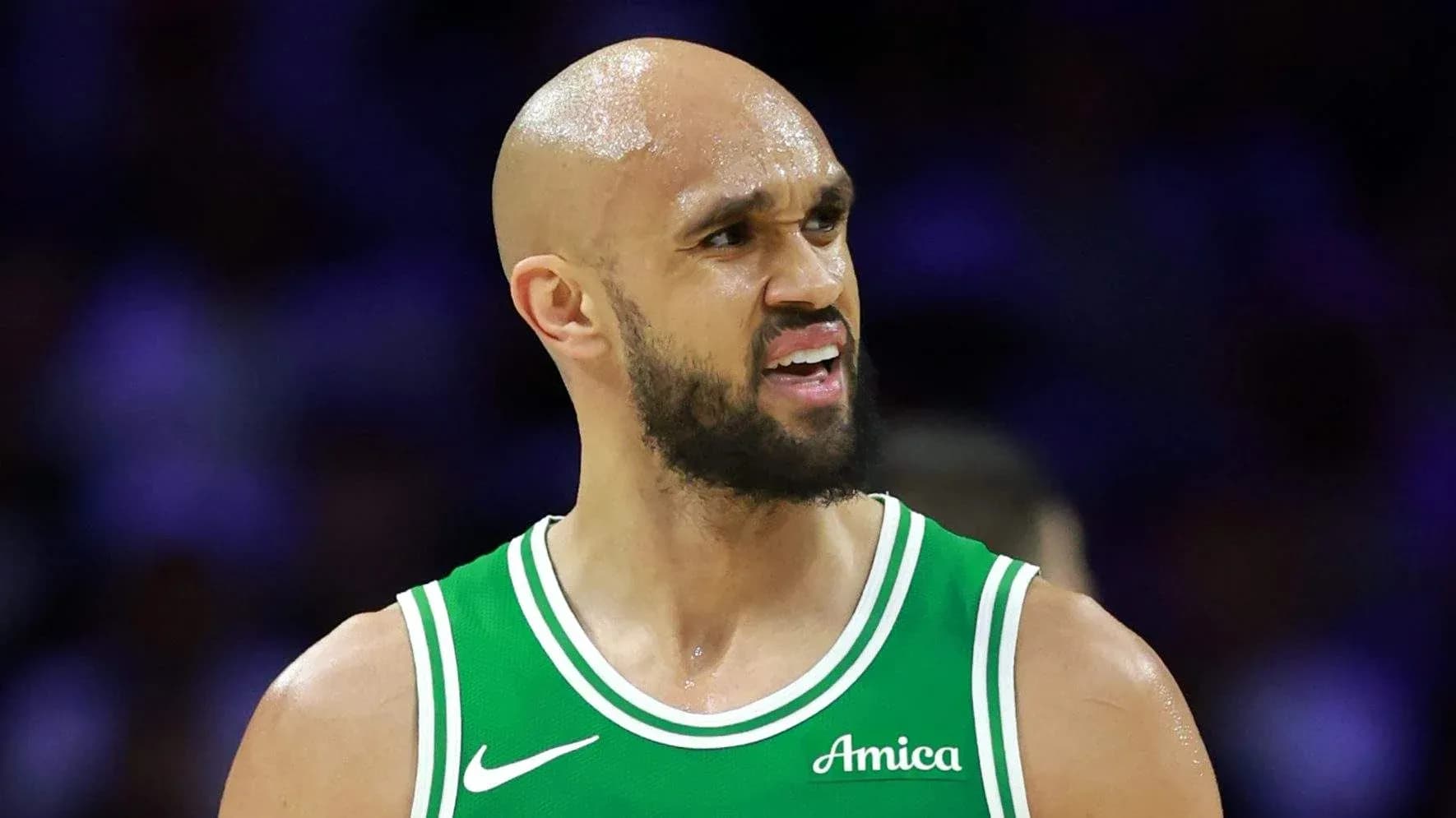
If the Pistons decide the time is right to cash in some assets, Derrick White is the kind of name that makes the phone call worth it. He’s the archetype every contender chases: elite defender at the point of attack, capable playmaker, and a usually reliable 3-point shooter who doesn’t need the ball to impact winning.
The hypothetical framework is simple enough:
- Pistons receive: Derrick White and second-round picks in 2028 and 2030
- Celtics receive: Duncan Robinson, Ron Holland II and a 2031 first-round pick
On paper, it’s a classic contender-for-contender trade. Detroit sends out Duncan Robinson, one of the league’s premier floor spacers, and Ron Holland II, a young wing already known for his disruptive defense, plus a future first. In return, they get a guard with championship credentials who can elevate their perimeter defense and give them another steady hand in big moments.
Losing Robinson’s shooting would sting. His gravity bends defenses, and those kinds of weapons don’t grow on trees. But Detroit has already moved to soften that blow with the arrival of Isaiah Joe, another deep-range specialist who can punish teams that overhelp.
Holland’s inclusion would hurt for different reasons. He represents upside — length, energy, and on-ball defensive chops that front offices dream about. Trading him is the kind of decision you only make if the incoming piece is proven at the highest level.
White is exactly that.
What White Changes in Detroit
Drop White into Detroit’s backcourt and everything tightens.
He guards up and down lineups, takes the toughest perimeter assignment, and allows coaches to simplify schemes. On a team already built on a 60-win defensive identity, his presence could turn strong into suffocating.
Offensively, he doesn’t hijack possessions. He spaces the floor, makes the extra pass, and hits big shots when the game slows and every possession feels like a referendum on your season. For a group trying to make the leap from regular-season juggernaut to postseason bully, that matters.
This is the kind of move that shifts a team from “dangerous” to “complete.”
Would Boston Even Listen?
That’s the other side of the equation. Detroit can draw up any trade they want on the whiteboard. Boston has to pick up the marker.
White has become a pillar of the Celtics’ title core since arriving at the 2021-22 midseason trade deadline. He’s not a star in the marketing sense, but he’s central to what they do. His two-way impact has put him in annual All-Star conversations, and inside the organization, his value runs even deeper.
“As for White: It would also be a surprise, sources say, if the Celtics cut ties with him,” NBA insider Jake Fischer reported last month, noting that the 31-year-old is a “beloved member of the organization” whose backcourt work has driven that All-Star buzz.
That’s the reality Detroit would be pushing against.
Still, the return outlined isn’t trivial. Boston would gain one of the league’s most feared shooters in Robinson, a player whose off-ball movement and range could supercharge an already explosive offense. Holland would give them a young, cost-controlled defender with the tools to inherit some of the toughest assignments down the line. Add a 2031 first-round pick, and the Celtics would at least have to weigh present certainty against future flexibility.
For a 32-year-old White, that’s not an insignificant haul.
How Far Is Detroit Willing to Go?
Up to now, the Pistons have resisted the urge to detonate their asset chest. They’ve chosen patience over panic, preferring to stack smart moves and preserve long-term flexibility instead of chasing the move of the week.
This proposed deal sits in a different category. It’s not a reckless gamble, but it is a statement. Moving Robinson, Holland and a future first signals a franchise ready to lean into its contention timeline, confident that its core is good enough to justify the cost.
White’s championship pedigree fits that mindset. He’s the kind of player you acquire when you believe your next step isn’t just another good season, but a deep run into June.
Everything, though, loops back to where Detroit started its summer: Jalen Duren’s signature. If that domino falls the right way, the Pistons will have a choice to make.
Do they stay the course with a deep, balanced roster and their assets intact?
Or do they push harder on the accelerator and see if a guard from Boston is the missing piece between a 60-win season and something even louder?