Dane Sweeny’s US Open Journey: Pain and Promise
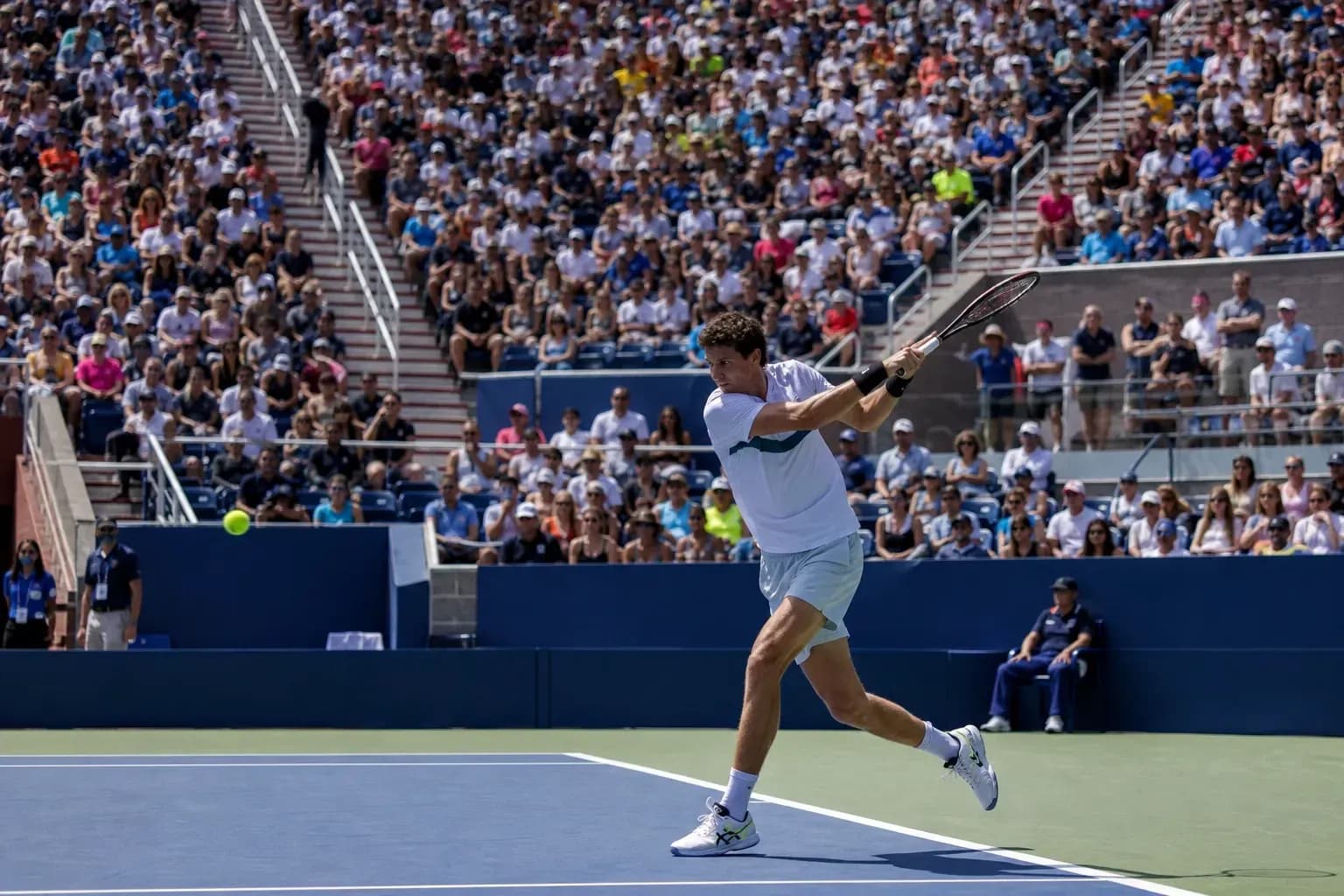
Dane Sweeny walked off Louis Armstrong Court with a limp, a grimace, and the kind of week that can change a career.
Australia’s last man standing in the US Open singles draw saw his run halted in the third round by 21st seed Luciano Darderi, the Italian overpowering him 6-4, 6-3, 6-3 in New York. The scoreline was clean. The story behind it was anything but.
From late call-up to last Aussie
Sweeny arrived in the main draw almost by accident. Ranked 123 in the world and on the outside looking in, he only slipped into the field when two late withdrawals opened the door. Tennis Australia moved quickly, redirecting a reciprocal wild card that had been earmarked for Alexei Popyrin and handing it to the 25-year-old.
He seized it.
By the time he met Darderi, Sweeny had already carved out the best Grand Slam run of his life, pushing into the last 32 at a major for the first time. For a player who has lived in the margins of tour-level tennis, that alone was a jolt of validation.
A body that wouldn’t cooperate
Against Darderi, though, his body betrayed him. Sweeny complained of a hip problem during the match, the discomfort visible as he tried to chase down the Italian’s heavy forehands and kick serves.
The Australian later called the week “career-changing” but did not spare himself. He admitted he never found his usual sense of pace or rhythm, and the statistics backed up his frustration as unforced errors piled up. The timing on his groundstrokes looked a fraction off, the kind of margins that matter when you’re facing a seeded player in full flow.
The pressure told in the key moments. Darderi broke once in the first set, twice in the second, and again in the third, steadily squeezing the life out of the contest while Sweeny searched for a gear he couldn’t quite locate.
A loss that still moves the needle
The defeat stings, yet the numbers attached to it underline why Sweeny left New York talking about a turning point rather than a dead end.
- A first appearance in the round of 32 at a Slam.
- Prize money of $402,500.
- And, by preliminary calculations, a leap to No. 109 in the world rankings, the highest mark of his career.
That ranking bump is more than a line on a résumé. It drags him to the edge of a crucial threshold. If Sweeny can break into the top 100 before season’s end, he will book direct entry into the Australian Open main draw for the first time, walking into his home major as a fully-fledged tour player, not a hopeful relying on favours and late withdrawals.
For a week that ended with a sore hip and a straight-sets exit, the horizon suddenly looks a lot wider.
American hopes cut down early
While Sweeny’s story was one of breakthrough and bruises, several established American names saw their campaigns cut short in the same third round.
Taylor Fritz, the ninth seed and last year’s US Open finalist, suffered a collapse that will linger. He led Francisco Cerundolo by two sets before the Argentine stormed back to win 3-6, 4-6, 6-3, 6-4, 6-4. For Fritz, this marked his earliest exit in New York in four years. For Cerundolo, it delivered a milestone: a place in the fourth round at Flushing Meadows for the first time.
On the women’s side, Madison Keys endured a brutal unraveling. She raced through the opening set 6-1 against Zheng Qinwen, then found herself in a dogfight. Zheng edged the second-set tiebreak 7-3, but the real drama came in the decider. Keys surged to a 5-0 lead, one foot in the next round, only to watch it disintegrate. Zheng reeled off seven of the next eight games to steal it 7-5 and complete a 1-6, 7-6 (7-3), 7-5 comeback that will haunt the American and embolden the Chinese star.
Zheng’s reward is a showdown with world No. 1 Iga Swiatek, who survived a tense encounter with Marie Bouzkova, winning two tight tiebreak sets to move on.
Tenth seed Amanda Anisimova also bowed out, beaten 6-2, 7-5 by Anastasia Potapova. The straight-sets scoreline reflected Potapova’s control, as Anisimova never quite wrestled the match onto her terms.
Coco Gauff, at least, steadied the home narrative. The American handled Spain’s Cristina Bucsa with authority, winning 6-3, 6-4 to keep her own campaign intact and maintain a flicker of US optimism in a draw that suddenly looks far less star-spangled.
A week that asks new questions
For the Americans, the third round brought a harsh reset. For Dane Sweeny, it brought something else entirely: proof that he belongs in this company, and a clear target for the months ahead.
The hip will heal. The ranking will rise. The real question now is whether this unexpected New York surge becomes a one-off memory or the launch point to a permanent place among the game’s top 100—and a guaranteed ticket onto Melbourne’s biggest stage in January.