Dane Sweeny’s US Open Journey Ends in Disappointment
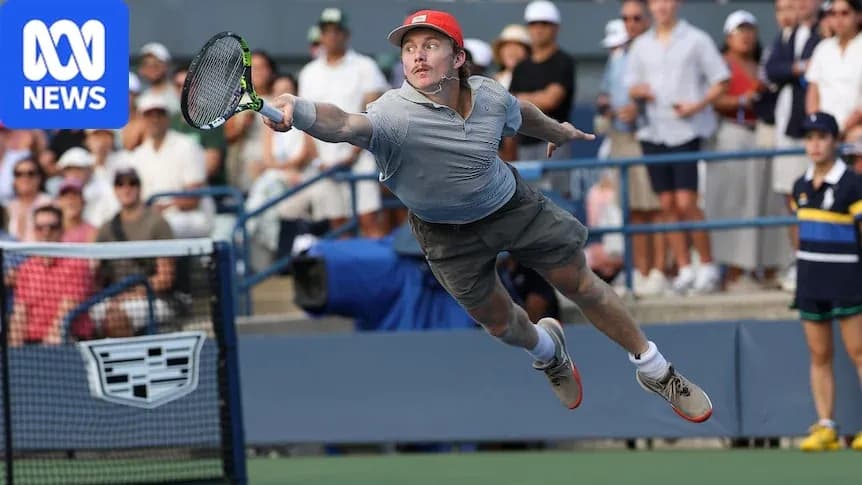
Dane Sweeny’s US Open run ended not with a roar, but with a grimace.
The Australian qualifier, who had turned a late wildcard into the fortnight of his life, bowed out in the third round to 21st seed Luciano Darderi, beaten 6-4, 6-3, 6-3 and hampered by a nagging hip complaint that never let him loose the way he wanted.
By the end, it wasn’t just the hip. It was the sense of a chance slipping away.
Sweeny, ranked 123 in the world and only in the draw after two late withdrawals allowed Tennis Australia to redirect a reciprocal wildcard from Alexei Popyrin, had been Australia’s last singles player standing at Flushing Meadows. Alex de Minaur’s shock defeat to Botic van de Zandschulp had cleared the path and the spotlight. Sweeny carried both.
This time, the stage felt heavy.
"It's been an amazing week, a career-changing week, but I can't help but feel a bit disappointed just with today's performance," he admitted. The words matched what the scoreboard had already underlined. He never quite found his range, never truly threatened to drag Darderi into the kind of dogfight that has marked his rise.
"I just wasn't really feeling it, just not really feeling the timing and the rhythm as I have been. I just made a lot of cheap errors and that was quite frustrating."
Darderi, the world number 22, didn’t need a second invitation. He played with the authority of a seeded contender who knows the second week is where his tournament really starts. He held his nerve when Sweeny tried to surge, absorbed the sporadic aggression, and walked away with a straight-sets win that always felt under his control.
Sweeny wanted something different. Not necessarily the upset, but the battle.
"I was OK to lose a match, but I really wanted to test him more and bring a good level so I could make an absolute fight out of it," he said. "Win or lose, I wanted to really make him work for the victory at least and I wasn't able to do that."
That, more than the hip, seemed to sting.
Yet even in defeat, the scale of what he has done in New York is hard to ignore. This was his first US Open main-draw appearance. He turned it into a run to the last 32 of a major for the first time in his career, a watershed moment for a 25-year-old who has spent years grinding away outside the limelight.
The reward is significant. Sweeny leaves with a cheque for $402,500, the kind of money that changes the logistics of a tennis life: better coaching, more support staff, a more sustainable schedule.
"The financial side of things, that will help with coaching and people you travel with," he said, fully aware of what that means for someone ranked outside the top 100.
The rankings will move too. Provisionally, he climbs to 109 in the world. One more push, one more good swing of tournaments, and the number that every Australian player craves comes into focus: direct entry into the Australian Open.
If he can crack the top 100 by the end of the season, he won’t need a wildcard in Melbourne. He’ll walk in the front door.
"That's exciting too. But that will take care of itself," Sweeny said. "It's hard not to worry about that because we're indoctrinated to want that low number next to our name, but I can just focus on working hard, focus on improving. Particularly just staying really kind to myself and trying to enjoy the journey."
For now, Australia leaves New York without a second-week singles player for the first time in five years. Sweeny’s run delayed that reality. It couldn’t erase it.
American hopes hit from all sides
If Australian fans were left flat, American supporters copped a full-scale collapse.
On a bruising day for the home contingent, past US Open finalists Taylor Fritz, Madison Keys and Amanda Anisimova all crashed out in the third round, stripping the draw of some of its most familiar local names and draining the energy from the stands.
Fritz’s exit hurt most.
The ninth seed, last year’s runner-up, had not dropped a set all tournament and looked to be cruising again when he took a two-set lead over Francisco Cerundolo. Then the match flipped.
The Argentine found his range, his forehand started to bite, and the match tightened. Fritz, who had been gliding through the draw, suddenly found himself dragged into a street fight. Cerundolo refused to back off, pushed the American deeper, and rolled through the final three sets to win 3-6, 4-6, 6-3, 6-4, 6-4.
For Fritz, it was his earliest exit in New York in four years. For Cerundolo, it was a breakthrough: a first trip to the fourth round.
On the women’s side, the blows kept coming.
Madison Keys, the 2017 finalist, looked in total command against Zheng Qinwen. She led 5-0 in the deciding set, the finish line in sight, the crowd ready to roar her home. Then the match turned into a nightmare.
Zheng, fighting to haul herself out of a career slump, refused to go quietly. Point by point, game by game, she clawed her way back from the brink. Keys tightened. Zheng surged. The improbable comeback became inevitable.
From 0-5 down in the third, Zheng stormed back to win 1-6, 7-6 (7/3), 7-5, collapsing to the court in disbelief and joy when it was done. It was the kind of escape that can jolt a season back to life.
Waiting for her next is about as tough as it gets: 2022 champion and former world number one Iga Świątek, who edged past Marie Bouzková 7-6 (7/3), 7-6 (7/3) in a tight, nervy contest decided by two razor-thin tiebreaks.
Anisimova’s campaign never sparked. The 10th seed, last year’s runner-up, has endured a frustrating year at the majors, and this was more of the same. She fell 6-2, 7-5 to Anastasia Potapova, another early exit in a season that keeps asking hard questions.
Only Coco Gauff offered any real solace for the home crowd.
The defending champion handled her business with authority, beating Spain’s Cristina Bucșa 6-3, 6-4 to move into the last 16. No drama, no detours, just the kind of controlled performance that suggests she still sees this as her tournament to own.
On a day when storylines splintered and favourites fell, Gauff kept the American flag flying. The question now is who, if anyone, can join her.