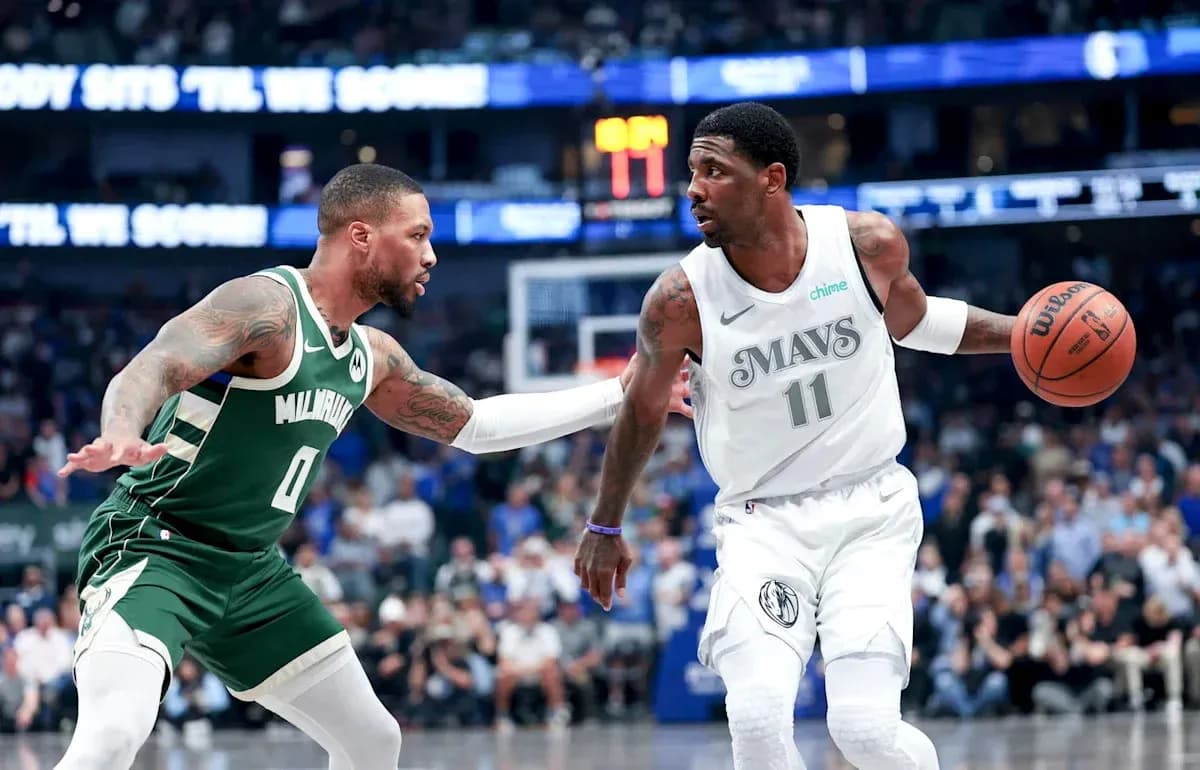
Dallas Mavericks' Clutch Games and Kyrie Irving's Impact
There’s one number that haunts the Dallas Mavericks’ 2025-26 season.
Forty-five.
That’s how many clutch games they played — contests that were within five points in the final five minutes. Nearly half the schedule came down to a handful of possessions. Dallas tied for the league lead in those situations.
They lost 28 of them.
A 17-28 record in games on a knife’s edge goes a long way toward explaining a 26-win season. This wasn’t a team getting run off the floor every night. It was a team that kept walking into the closing act and forgetting its lines.
For a 56-loss season, that’s the strange, stubborn optimism buried in the wreckage. The Mavericks were there. Over and over. They just couldn’t finish.
And now they’ve brought in one of the sport’s great finishers.
A Young Team, No Guide in the Storm
The story of last year isn’t complicated. Dallas rolled out one of the youngest rosters in the league and asked it to solve the hardest part of NBA basketball without the one player on the planet built for that exact job.
Cooper Flagg, a teenager, was thrown straight into the fire. He wasn’t just learning the league; he was learning it in the crucible of final minutes where every mistake is magnified, every decision feels heavier. Around him, a supporting cast that had never been asked to close out NBA games suddenly had the ball in their hands with everything on the line.
Experience matters most when the clock winds under five minutes. It shapes shot selection, tempo, composure, even the way a player comes off a screen. Dallas, in those moments, had talent but almost no scar tissue. No history to lean on.
The result: a season full of almosts.
Enter Kyrie Irving, Professional Closer
Kyrie Irving changes that calculus the second he steps on the floor.
His résumé in pressure moments is as decorated as any active player’s. The Game 7 dagger over Stephen Curry in the 2016 Finals is etched into league history, the kind of shot kids reenact on playgrounds a decade later. The left-handed floater from the free-throw line to beat Denver in 2024 had no business dropping, and yet with Irving, it somehow felt inevitable.
His playoff record in closeout games is almost absurd: 15-1, with 23.5 points per game in those contests. When a series is there to be finished, Irving typically finishes it.
Dallas has already seen what that looks like with its own eyes. In 2023-24, with Irving healthy and in rhythm, the Mavericks went 16-4 in clutch games, one of the best marks in the league. He ranked among the NBA’s top 10 in clutch scoring at 4.2 points per game, while hitting 60% from the field and 42% from beyond the arc in those moments.
That isn’t just good. That’s the difference between life and death in a league where the margins are microscopic.
The Anatomy of a Closer
Late in games, offenses tend to grind down. Sets shrink. Coaches trust fewer actions. Defenses lock in, force isolations, and dare someone to create something out of nothing.
Most players can’t.
Irving can. Consistently.
He can beat a switch, dance a big man into retreat, or split a trap and get to his spots. When the floor tightens, his handle, balance, and shot-making don’t. That alone changes the geometry of a final possession.
But it’s not just about his own scoring. His gravity pulls defenses out of shape. Two defenders lean his way, and suddenly those young teammates — the ones who were drowning in decision-making last year — are looking at clearer reads, simpler choices, cleaner looks. A kick-out three. A straight-line drive. A cut into open space.
With Irving on the floor, they don’t have to be heroes. They just have to be ready.
Lessons in Losing
There’s another layer to this, one that doesn’t show up in the standings yet.
Those 45 clutch games from last season weren’t wasted minutes. They were an education. Flagg and the rest of the young core spent an entire year living in high-pressure possessions, feeling the weight of every turnover, every rushed jumper, every missed rotation.
Players grow from that, even when the result is a loss. Maybe especially then.
Now Dallas has a group that has already been through the turbulence — and it’s adding a veteran who’s made a career out of steadying the plane on final approach. The kids have seen what not finishing looks like. Irving knows what finishing looks like.
That combination can be powerful.
No Need for Perfection, Just Progress
The Mavericks don’t need to transform into a juggernaut overnight to change their trajectory. They don’t need to dominate wire to wire. They just need to stop bleeding away the games that are already within reach.
Take last year’s script and flip even a modest share of those 28 clutch losses. Turn five or six of them into wins. The entire shape of the season shifts.
With how often this roster already finds itself in one-possession games, the arrival of a closer like Kyrie Irving isn’t a luxury. It’s the swing factor between another year of “almost” and a season that actually goes somewhere.
Now the question is simple: with the game on the line again, how many of those final possessions will look different?