Czech Republic Defeats USA to Reach Davis Cup Finals
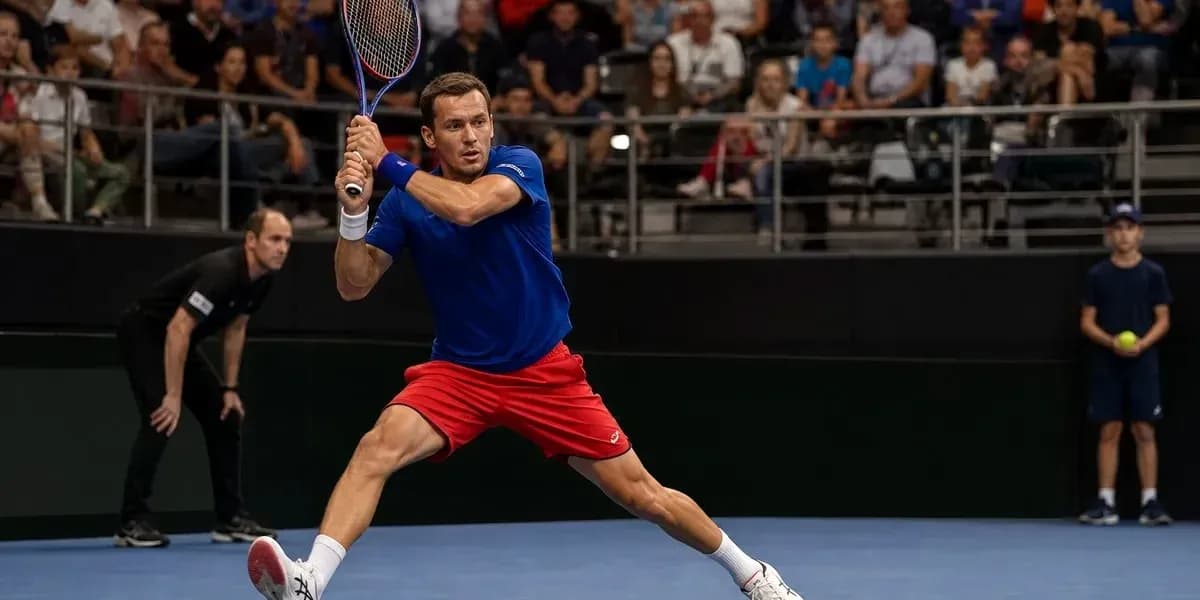
Jiří Lehečka dragged his hand across his face, looked up at the roaring stands in Prague, and finally let it all out. The Czech No. 1 had just closed out Learner Tien 6:3, 7:5, sealing a 3–2 victory over the United States and sending his country back to the Davis Cup Finals.
Same opponent, same stage, same script: the Czechs knocking out the most decorated nation in the competition. Different hero.
Last year in Delray Beach, it was Jakub Menšík who stunned Frances Tiafoe in a decisive rubber. This time, in front of a home crowd, Lehečka carried the weight – but he made it clear he did not carry it alone. He underlined that in Davis Cup, wins feel different because they are shared, and without Menšík’s earlier victory over Ben Shelton, he would never have stepped on court for the clincher.
A rollercoaster day in Prague
The tie began the final day finely balanced at 1–1. From there, it swung wildly.
The Americans struck first in the doubles. Christian Harrison and Austin Krajicek clawed past Adam Pavlásek and Patrik Rikl 5:7, 6:3, 7:6 (10:8), a knife-edge contest in which the U.S. pair stared down four match points and refused to blink. That escape put the visitors 2–1 up and briefly silenced the O2 Arena.
Then Menšík walked in and tore up the script.
Facing the in-form Ben Shelton, fresh off a run to the US Open final, the young Czech refused to be intimidated. He dropped the opening set 5:7 but grew stronger as the match tightened, turning the tide with aggressive returning and fearless ball-striking. The scoreboard flipped: 6:4, 6:3 to Menšík, and suddenly the tie was level again at 2–2. The arena woke up. So did Lehečka.
He had already beaten Shelton in straight sets the previous day, and he carried that authority into the decisive rubber with Tien, though the start told a different story. Tien broke early in the first set, swinging freely and taking the ball early, but Lehečka steadied, reeled him back in, and ran away with the set 6:3.
The second set looked even more dangerous for the hosts. Tien surged 3:0 ahead, playing with nothing to lose. The tension thickened. Lehečka, though, refused to panic. He tightened his serve, stepped into his returns, and gradually dragged the match back on his terms. Point by point, game by game, the gap disappeared. On his fourth match point, he finally finished the job, triggering an eruption in the stands and on the Czech bench.
For the second straight year, the United States – 32-time champions, but without a title since 2007 – saw their campaign end at the hands of the same nation, in another decisive rubber.
New faces in the final eight
While Prague delivered drama, history was being made in Seoul.
South Korea reached the Davis Cup final eight for the first time ever, defeating India 3–1. Kwon Soon-woo provided the decisive blow, dismantling Sumit Nagal 6:1, 6:2 in a one-sided clincher that underlined Korea’s growing presence on the team stage.
In Vienna, Austria also booked its ticket to the November finals. Jurij Rodionov held his nerve to close out Zizou Bergs 7:6 (8:6), 6:3, securing a 3–1 victory over Belgium and locking in another spot in Bologna.
There, Italy will host the Finals and chase a fourth consecutive Davis Cup crown, a remarkable run of dominance in the modern format. The Czechs will arrive with momentum and belief after another emotional win over the Americans. The United States, meanwhile, are left to wrestle with a stark question: how can a country with such depth keep falling short in a competition it once owned?