Cristiano Ronaldo Retires from Portugal After 23 Years
Cristiano Ronaldo has finally done what for two decades felt unthinkable: he has walked away from Portugal.
At 41, the country’s record appearance-maker and record goalscorer announced his international retirement on November 5 in a video message to supporters, closing the book on a national-team career that stretched across 23 years, six World Cups and the most prolific scoring return the men’s game has ever seen.
He steps down with 234 caps and 146 goals for Portugal, numbers that stand alone in FIFA’s record books. No man has played more. No man has scored more.
The shirt, though, does not retire with him.
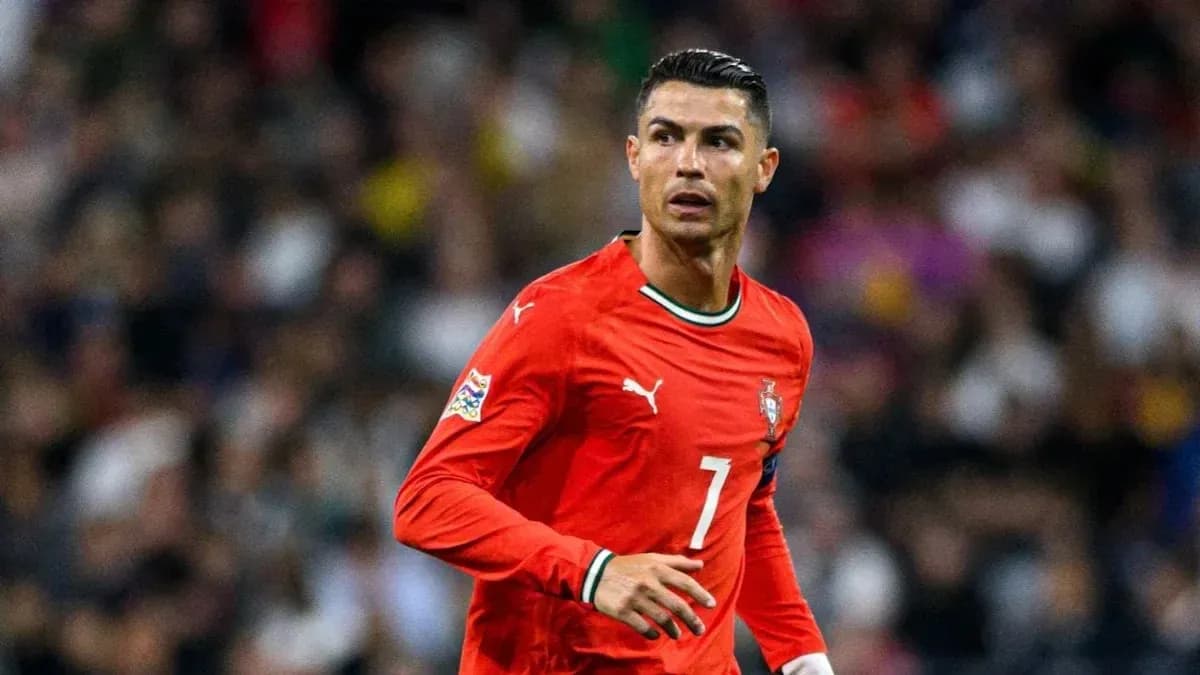
Passing on the No. 7
“Today the time has come to pass it on to the future,” Ronaldo said of his Portugal No. 7, in FIFA’s English translation of his farewell message. The phrase landed with the weight of finality. For a generation of Portuguese fans, that number and that name had become inseparable.
He admitted the decision cut deep, shaped by emotion but also by the realities of age and the demands of elite football. This was not a player pushed out of the door by fading relevance; this was a superstar choosing his own exit route.
Ronaldo used the announcement to look beyond the spotlight. He thanked his family for enduring years of absences and the strain of constant travel. He then widened the lens: teammates, coaches, medical staff, and the largely invisible workers who hold a national setup together but rarely appear in the photographs that defined his era.
He spoke, too, about the diaspora. About Portuguese supporters scattered across continents, for whom a Portugal fixture meant a flag, an anthem, a piece of home for 90 minutes. He recalled scanning the stands during the national anthem, seeing families grouped together, and feeling those moments as a rare suspension of differences – a stadium full of people briefly united under a single song and a single crest.
Club Career Rolls On
International retirement does not mean Ronaldo is done. Far from it.
He remains an Al Nassr player in Saudi Arabia, still hunting milestones, still chasing goals with the same restless obsession. One target looms above all: the pursuit of 1,000 career goals across his professional journey. For most players it would be a fantasy. For Ronaldo, it has become a serious, loudly stated ambition.
While he steps away from the Seleção, he continues to demand more from his body and his game on the club stage.
A Farewell Framed by Tension
The timing of the announcement was no accident. It arrived one day before Portugal coach Jorge Jesus was due to name his latest squad for the Nations League, with group fixtures against Denmark and Wales on the horizon.
Their relationship had already been tested.
The first flashpoint came in the September international break. Ronaldo sat as an unused substitute in Portugal’s 2-1 win over Norway on September 27, a detail confirmed in the Norwegian federation’s match records. He warmed up. He waited. He never crossed the white line.
Three days later, on September 30, he left the Portugal camp, departing before the match against Denmark.
The storm broke publicly on October 6. In a statement, Ronaldo accused Jesus of breaking promises over his role, including what he said was an assurance that he would play against Norway. Jesus, as reported by Sky Sports, denied making any such agreement about playing time.
Ronaldo then did something that has not always come easily to him: he apologized. He addressed his teammates and the Portuguese public, accepting that he should not have walked out and insisting he still wanted to be available for selection.
The Portuguese federation responded with a 30-day suspension and a €255 fine. By the time he announced his retirement, that ban had already been served. The wound, though, lingered in the background of his final decision.
Jesus Left to Accept a Legend’s Choice
Speaking to Canal 11 on November 5, Jorge Jesus admitted he had tried to change Ronaldo’s mind before unveiling his first Portugal squad. He wanted the forward with him, in the dressing room and on the pitch, as he began his own cycle in charge.
According to RTP, Jesus said he now had to accept the player’s decision. The power dynamic had flipped: a new national coach left to reconcile with the fact that the defining figure of modern Portuguese football would not be part of his plans.
Jesus also revealed a symbolic gesture. He had ordered a large photograph of Ronaldo to be displayed in the team’s auditorium, a permanent reminder for younger players of the standards, sacrifice and relentlessness that carried Portugal to its greatest nights.
Even in absence, Ronaldo will loom over the room where the next generation gathers.
From Figo’s Heir to Portugal’s Standard-Bearer
The story began quietly enough. Ronaldo’s senior debut came against Kazakhstan in August 2003. He was 18, raw, and already electric. At halftime he replaced Luis Figo, the icon of the previous era, in a substitution that now reads like a baton pass across time.
From there, he became the spine of a golden age.
He captained Portugal to its first major international trophy at Euro 2016, a night remembered as much for his tears on the touchline after injury as for the trophy lift in Paris. He then led the side to Nations League titles in 2019 and again in 2025, turning near-misses of earlier years into a decorated honours list.
On the world stage, his longevity was astonishing. Ronaldo scored at six different World Cups, amassing 11 goals in the tournament across his career, including three at this year’s edition. His final World Cup outing ended in a 1-0 defeat to Spain in the round of 16 – a quiet exit on the scoreboard, but another chapter in a relationship with the competition that stretched across a generation.
A Farewell Still to Come
Portugal has already promised a tribute to its former captain. The details will come later, but the intent is clear: this will not be a low-key goodbye.
He may never pull on the shirt again, yet the national team he leaves behind has been shaped in his image – ambitious, unapologetically demanding, and unafraid of the biggest stages.
Ronaldo walks away from Portugal with the numbers, the medals and the memories. The real question now is how long his shadow will stretch over the team that follows.