Cristiano Ronaldo Ends Portugal Career Amid Conflict with Jorge Jesus
Cristiano Ronaldo has finally done what he spent two decades fighting off: he has walked away from international football. No farewell tour, no packed stadium waving him off in Lisbon. Instead, a stark, emotional video message at 41, delivered from a distance, closes one of the greatest chapters the game has ever seen.
It ends not in glory, but in conflict.
A giant bows out under a storm cloud
Ronaldo’s last appearance in a Portugal shirt now belongs to the record books: a 1-0 Nations League win over Wales in September. At the time, it felt routine, another step in a long road he had stretched almost beyond belief.
The real rupture came days later.
Against Norway, he never left the bench. No late cameo, no chance to bend a free-kick into the top corner, not even a token run-out. An unused substitute. For Cristiano Ronaldo, that status carried more weight than any opponent.
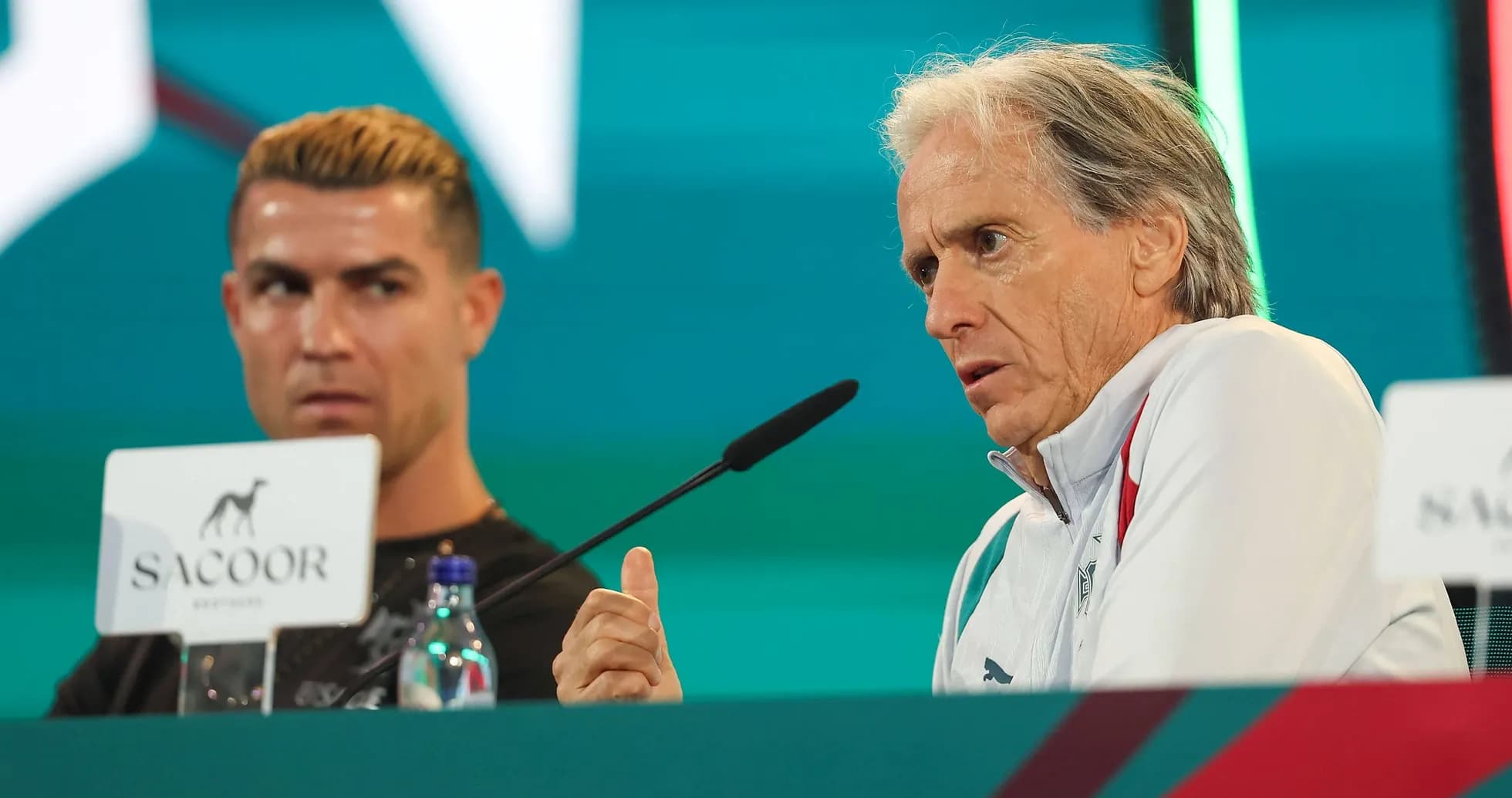
The tension spilled over. According to the 41-year-old, Jorge Jesus had promised him at least 30 minutes and told him to warm up. The minutes never came. The promise, Ronaldo felt, was broken.
What followed was an argument that went far beyond a tactical decision. Ronaldo believed there was also an agreement for Jesus to publicly explain the decision, to share the responsibility. Instead, the coach stood firmly on the principle that team selection was his and his alone.
The fallout was immediate and brutal. Ronaldo refused to train and then left the camp entirely, walking away before Portugal’s next match against Denmark. For a player who had built his image on relentless commitment to the national shirt, it was a stunning break.
Jesus salutes a legend he could not convince
The split may have been acrimonious, but Jorge Jesus did not use the moment to settle scores. Quite the opposite.
“Cris is a global icon – for Portugal and the national team,” he said, underlining the scale of the departure rather than the dispute. He spoke of a player who had given “so much” to the country, a role model whose fanbase is overwhelmingly young and whose shadow will stretch across generations.
Jesus recalled their year together at Al Nassr and revealed a gesture that underlined Ronaldo’s status: a large picture of the forward installed in the national team auditorium. A daily reminder to every player of the standard they were expected to chase.
“It is his decision,” Jesus added, a line that carried both resignation and respect.
The coach admitted he had tried to stop this outcome long before it became official. He had urged Ronaldo to stay, to remain close, whether starting or not. The message was consistent: Portugal needed him, even if his role shifted from star to elder statesman.
This time, persuasion was not enough. The decision stood.
“He will always be in the hearts of the Portuguese people and part of the national team,” Jesus insisted. Icon status, he argued, does not vanish with a retirement video or a training-ground row.
Doubts that never went away
The question of when Ronaldo would finally let go of the international stage has hovered over Portugal for more than a year. After their World Cup exit in the summer, the conversation intensified. Was this the right moment? Had he already given everything he could?
Back then, Jorge Jesus managed to hold the line. He convinced Ronaldo to delay the goodbye, to push the ending a little further down the road. Publicly, the coach was unwavering: the timing would be Cristiano’s to choose.
“Cristiano should end his time in the national team the way he wants,” Jesus said only last month. He repeated the same plea he had made at his first call-up as coach: “I need you. I need you to be close to me, playing or not playing.”
That was the vision – a managed transition, a slow fade, the captain guiding a new generation from within.
Instead, the end arrived abruptly, wrapped in anger and disappointment. One of the most extraordinary international careers ever seen closes not with a standing ovation, but with a fracture.
The numbers, though, remain untouchable. Ronaldo leaves Portugal with 146 goals in 234 appearances, a haul that redefined what was possible at this level. He lifted the European Championship and the Nations League, transforming Portugal from dark horses into a genuine force on the biggest stages.
Portugal’s new reality without their captain
Now, the national team must move on without the man who has been their reference point for nearly 20 years. No more late rescues, no more dressing-room speeches from the captain who had lived every possible scenario in international football.
The Nations League continues later this month. Denmark and Wales await, this time with Portugal’s all-time top scorer watching from afar. The armband will find a new arm; the dressing room will find a new voice. But the void he leaves is not just statistical – it is emotional, cultural, almost structural.
For Ronaldo, the focus narrows. Club football now takes full priority. Even there, recent events hint at the complexity that still surrounds his career. He missed Al Nassr’s AFC Champions League trip to Uzbekistan because of security concerns, a reminder that his presence is never just about what happens on the pitch.
An era has ended, not with the smooth handover many imagined, but with a clash of wills between a legendary player and a coach determined to assert his authority.
Portugal must now prove they can thrive without the man who dragged them to new heights. Ronaldo, stripped of the international stage that defined him, must decide what the final act of his remarkable career will look like.