Coco Gauff Survives Thrilling US Open Quarter-Final
Coco Gauff was on the brink. Twice.
Two match points down to Mirra Andreeva, her game fraying, her US Open defence hanging by a thread, the Arthur Ashe crowd braced itself for a shock exit. Instead, it got a reminder of why Gauff is already a major champion at 20.
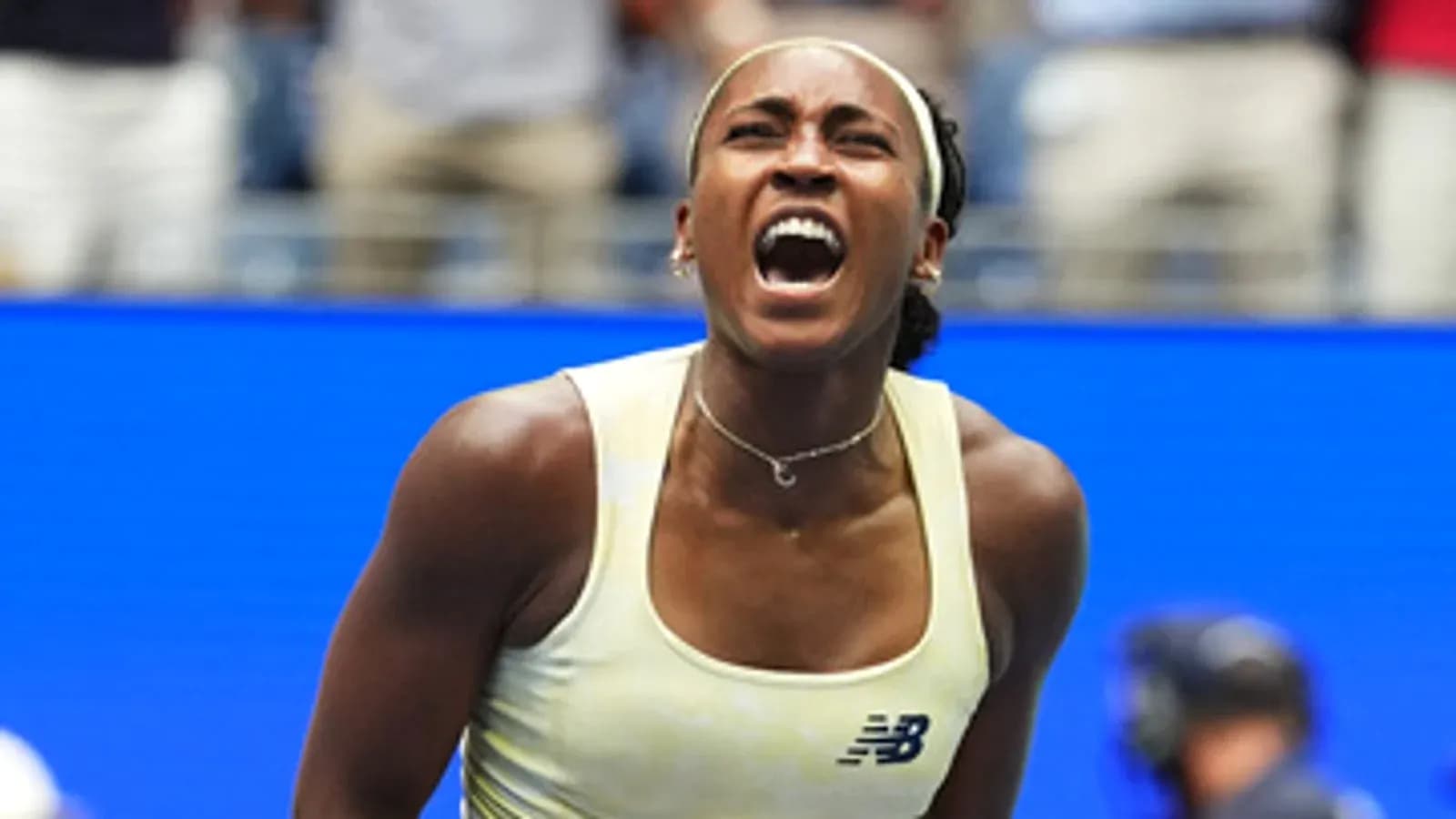
The American turned a ragged, nervy quarter-final into a statement of stubborn survival, clawing past the teenage French Open winner 2-6 7-6 (7) 6-2 to reach the semi-finals and set up a blockbuster with new world No 1 Elena Rybakina.
Gauff dragged into the fire
For almost half an hour, Gauff looked nothing like the player who lifted the trophy here in 2023.
Her serve misfired. The forehand, usually a weapon, sprayed errors. She managed just three winners in a 26-minute opening set and handed over 14 unforced errors. Andreeva, compact and clinical, needed no invitation. She raced through the set, reading Gauff’s serve, punishing short balls, playing like the reigning Roland Garros champion she is.
Gauff walked off after that first set searching for answers, and found them in someone else’s comeback.
She later admitted she thought about Frances Tiafoe’s escape the previous night while she reset in the locker room. She needed something, anything, to break the spiral. When she returned, the tennis wasn’t instantly transformed, but the attitude was.
The errors didn’t disappear, yet the resistance stiffened. Gauff dug in on return, extended rallies, and stopped gifting Andreeva free points. The match tightened. So did the teenager.
Match points lost, composure gone
The second set built to a tiebreak that felt like the whole night compressed into a few brutal minutes.
Andreeva reached the brink. Twice she stood a point from the semi-finals. Twice Gauff refused to yield. The rallies slowed, the ball speed dipped, the tension thickened. Both players wrestled with their serves, with their nerves, with the occasion.
Tim Henman called it “amazing to watch” precisely because of that tension. Two brilliant shot-makers, reduced at times to simply trying to keep the ball “on the island” and cut out the errors. It was ugly and gripping all at once.
When Andreeva failed to convert those match points and Gauff snatched the tiebreak 9-7, the emotional swing was brutal. The Russian’s frustration boiled over as she hurled her racket toward her chair. It spun dangerously close to a courtside camera operator, who had to move out of the way. The incident left Andreeva flirting with a possible default and summed up just how much the match had slipped from her grasp.
From there, the dynamic flipped. Gauff, buoyed by the crowd and the escape, surged. Andreeva, drained by the missed chances, faded.
Gauff broke early in the decider and never loosened her grip. The forehand finally found its range, the serve steadied, and the 2023 champion powered through the third set 6-2. What started as a mess turned into a gritty, defiant win.
Marion Bartoli called it “pure heart” and argued that Gauff is “one of the only players in the world capable of winning a match like that.” On nights like this, that feels less like praise and more like a simple description.
For Andreeva, this one will sting. Two match points at a Grand Slam quarter-final, a set in hand, the world No 2 reeling – and still it slipped away. As Henman noted, it will be a “very difficult defeat” to absorb. Yet for a teenager already with a major title this year, the lessons from this collapse could prove as important as the wins that got her here.
Rybakina rises to No 1
Waiting for Gauff is a new world No 1 who needed to fight through her own storm.
Earlier in the day, Elena Rybakina booked her semi-final place and secured the top ranking with a 3-6 6-1 6-4 victory over Qinwen Zheng, ending Aryna Sabalenka’s 99-week stay at the summit.
The Kazakh, this year’s Australian Open champion, has been tracking Sabalenka all season. Now, finally, she steps into the role officially on Monday – and she doesn’t even need the trophy here to do it. Even if Sabalenka somehow completes a hat-trick of titles in New York, Rybakina will still be No 1.
She made sure she’ll have a say in that title race too, reaching the last four at Flushing Meadows for the first time.
The match against Zheng started badly. Rybakina’s game sagged under nerves and errors, and she dropped her first set of the tournament. Zheng, who had already logged close to 12 hours on court through qualifying and five main-draw matches, pounced early with sharp hitting and clean ball-striking.
Then the response came.
Rybakina reset, stepped inside the baseline and began to dictate. The second set raced by 6-1 as her weight of shot finally told. Zheng, whose run had echoes of Emma Raducanu’s charge in New York, started to feel the miles in her legs.
The decider was tighter, but when the scoreboard squeezed, Rybakina elevated. She drove the ball more aggressively from the back of the court, tightened up her patterns, and closed out the match 6-4. Henman highlighted how, in that tense third set, she “really did show her class.”
Rybakina admitted the occasion had got to her at times. She spoke of nerves, a negative mindset early on, and “a lot of unforced errors” before she forced herself to keep fighting. The honesty matched the performance: flawed, tense, and ultimately ruthless.
Zheng’s fairytale finally ended, but not without leaving a mark. The 23-year-old, who had slipped to 121 in the rankings after elbow surgery, now finds herself back on the verge of the top 50. The run may have stopped in the quarters, yet the trajectory is sharply upward again.
A semi-final with real edge
So the stage is set.
On one side, Gauff, the defending champion who just survived a scare that would have ended most campaigns. On the other, Rybakina, the newly minted No 1, fresh from grinding through a three-set test of her own.
One played with pure heart. The other showed pure class. Only one of them will walk off Arthur Ashe on Saturday night still chasing the trophy.