Coco Gauff Steadies US Open Campaign with Gritty Win
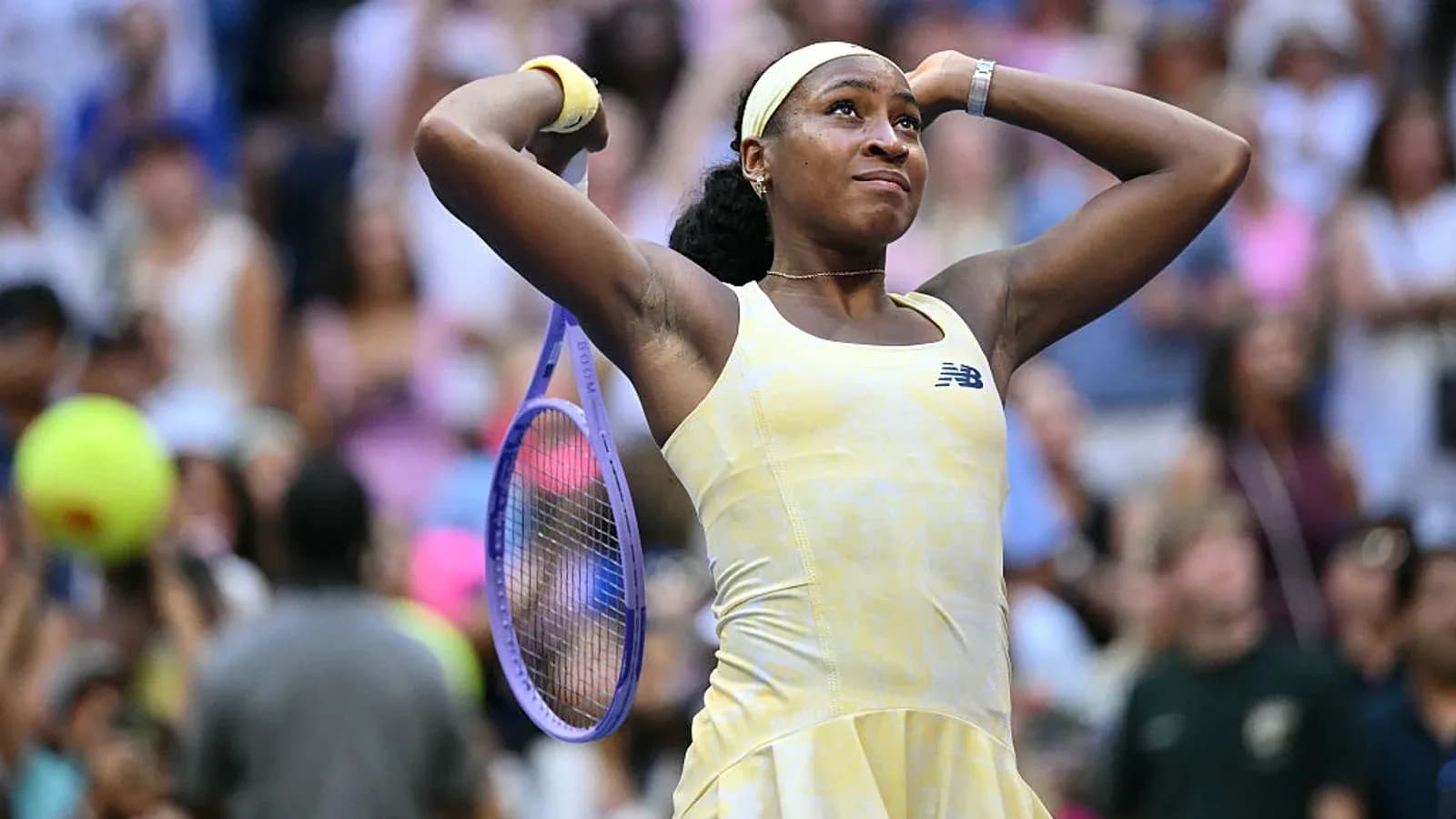
Coco Gauff steadied a rattled American campaign at the US Open, grinding her way into the last 16 on a day when some of the country’s biggest names crashed out in brutal fashion.
On a sun‑splashed court where the ball flew and the rhythm never quite settled, the defending champion did just enough. It was not dazzling. It was not easy. But it was winning tennis.
Gauff grinds through, even without her A‑game
Up against world No 40 Cristina Bucsa, Gauff’s level flickered, but her resolve did not. The 2023 champion pushed through 6-3 6-4, a straight-sets scoreline that disguised the stop‑start nature of the contest.
She dropped an early break, felt the match slipping sideways, and then made a decision.
“Once I was down that break I just told myself I need to accelerate through my shots,” she said, explaining the mid-match adjustment that steadied her game.
Bucsa’s variety caused problems. The Spaniard changed pace, mixed spins, and refused to offer Gauff the kind of rhythm she thrives on.
“She’s a tricky player and sometimes she can pick it up and slow it down, so it was tough for me to get a rhythm,” Gauff admitted. “But I’m just happy with how I fought through even when I wasn’t playing my best.”
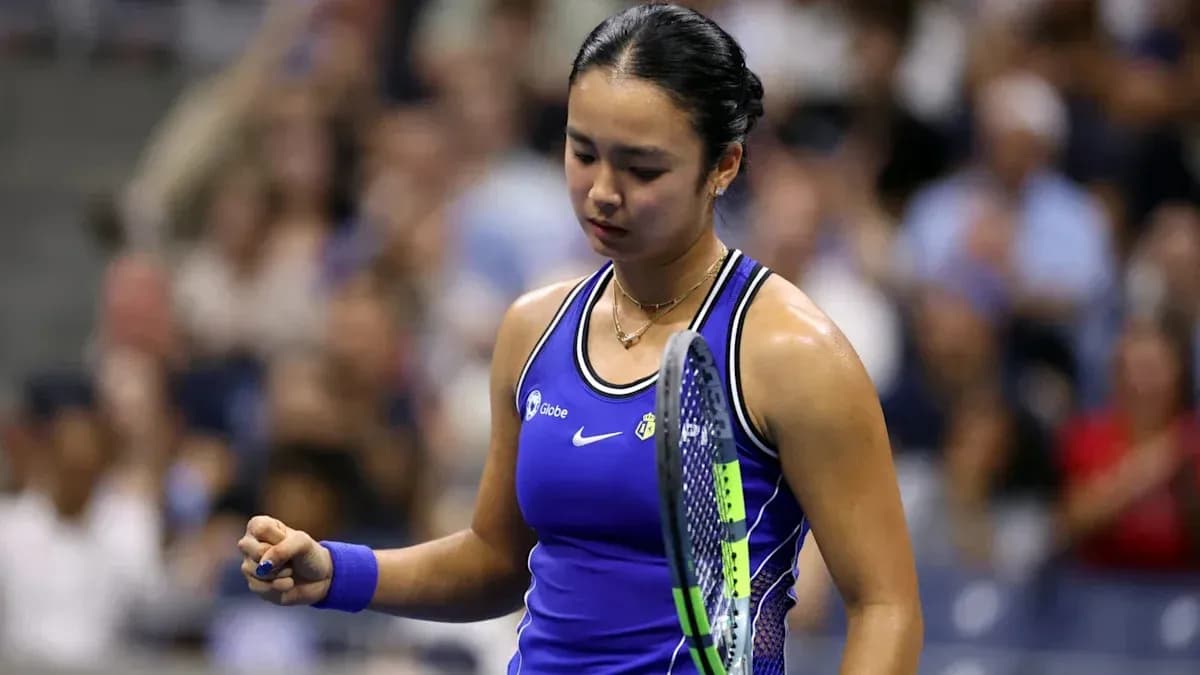
Fight, more than flair, carried her over the line. The 22-year-old now moves into the fourth round, where she will face the winner of an all-teenage clash between fellow American Iva Jovic and the Philippines’ Alexandra Eala for a place in the quarter-finals.
On a bruising day for US hopes, her progress felt even more significant.
Fritz lets two-set lead slip as Cerundolo roars back
While Gauff survived, Taylor Fritz unravelled.
For two sets, the ninth seed looked exactly like the man many tipped to surge deep into week two. He led Federico Cerundolo 6-3 6-4, had not dropped a set all tournament, and seemed on cruise control toward the last 16, where he would have joined Ben Shelton, Frances Tiafoe, Tommy Paul and Alex Michelson.
Then the match turned ugly.
Cerundolo, the surprise Queen’s Club champion earlier this summer, refused to go quietly. He scrapped, he hung in rallies, and he forced Fritz into longer, nervier exchanges. The errors came, then came again, and the contest descended into a grind.
The Argentine seized it. Fritz’s clean, early hitting gave way to frustration and misfires as Cerundolo dragged the match into a fifth and completed a stunning 3-6 4-6 6-3 6-4 6-4 comeback.
For a host nation still waiting for its first men’s singles champion since Andy Roddick beat Juan Carlos Ferrero in 2003, it was another jolt. The American contingent shrank, and the burden shifted.
Tommy Paul now shoulders a large share of that responsibility.
Paul set for Alcaraz test
Paul, seeded 20th, faces defending champion Carlos Alcaraz in what shapes as the first real examination of the Spaniard’s title defence since his return from injury.
“I think I played Carlos more than anybody on tour, for me, which is kind of crazy,” Paul said. “We’ve had some good matches.
“But, I mean, he’s the test, him and [Jannik] Sinner. They have been playing great, and I guess Carlos we haven’t really seen too much, but he’s obviously doing pretty well coming right back to competition.”
Across the draw, another seed fell. Belgian 28th seed Alexander Blockx produced a statement win, stunning Italian fifth seed Flavio Cobolli 6-7 (4-7) 6-3 6-0 6-3 to reach the fourth round. His reward is a meeting with Cerundolo, the man who just sent Fritz home.
Keys’ nightmare collapse as Zheng turns the tide
If Fritz’s loss hurt, Madison Keys’ defeat cut even deeper.
The 2017 runner-up stood five games from victory in the deciding set, leading Qinwen Zheng 5-0. The match seemed over. Instead, it became a collapse that will linger.
Zheng refused to fold, clawed her way back point by point, and watched as Keys’ arm tightened and her game shrank. The American, 31 now and still chasing that elusive first major, could not swing freely when it mattered most.
She fell 1-6 7-6 (7-3) 7-5, a scoreline that barely captures the scale of the turnaround.
“I feel like I obviously got off to a really good lead, and then I just got really scared, like I couldn’t swing,” Keys said, visibly shaken by the loss. “I don’t know. Tennis just feels really hard right now, so I feel like that kind of took over.”
Across the grounds, another American story ended abruptly. Last year’s beaten finalist Amanda Anisimova sprayed 46 unforced errors in a 6-2 7-5 defeat to Austrian Anastasia Potapova, her power game deserting her under pressure.
Swiatek survives, Andreeva advances, Zheng awaits
On the women’s side, the heavyweights mostly held firm.
French Open champion Mirra Andreeva continued her rapid rise, beating Czech Nikola Bartunkova 6-2 7-6 (7-5) to reach the fourth round in New York for the first time. The Russian fifth seed will next face Potapova, who arrives with confidence after toppling Anisimova.
Iga Swiatek, meanwhile, had to work for every inch.
The six-time Grand Slam champion battled past Czech 25th seed Marie Bouzkova 7-6 (7-3) 7-6 (7-3), a match defined by long, punishing rallies and small margins.
“It got pretty physical, many long rallies,” said the 25-year-old Pole. “It wasn’t easy.”
Her next opponent? Zheng, fresh from that extraordinary comeback against Keys. Their clash promises a collision of relentless defence and first-strike aggression, with a place in the quarter-finals on the line.
Williams sisters spared fine after doubles exit
Away from the singles drama, two of the sport’s defining figures made a quieter kind of news.
Serena and Venus Williams, playing their first match at Flushing Meadows in four years, lost a tight three-set doubles encounter to Maya Joint and Chan Hao-ching on Friday night. They did not fulfil their post-match media duties, a move that usually brings a fine.
This time, it will not. It is understood the Williams sisters will not be punished.
On a day when American hopes rose and fell across the grounds, Gauff’s gritty survival, Paul’s looming test, and Zheng’s surge into Swiatek’s path left one question hanging over New York: who, in this unsettled draw, is truly ready to own the hard courts of Flushing Meadows?