Coco Gauff Dominates in US Open Quarterfinals
NEW YORK – Coco Gauff walked back into the US Open quarterfinals on Monday night not like a wide‑eyed teenager chasing a dream, but like a reigning champion returning to familiar ground.
Three years after her last run to the final eight in New York, the defending champion dismantled fellow American Iva Jovic 6-1, 6-4 in 1 hour 33 minutes on Arthur Ashe Stadium, extending a blistering surge that now looks less like a hot streak and more like a standard.
Ten straight wins on the WTA Tour. Twenty consecutive sets claimed since a blip in Cincinnati against Liudmila Samsonova. Twelve Grand Slam quarterfinals reached before her 22nd birthday. The numbers keep stacking up, but Gauff’s reaction tells the real story.
A Quarterfinal That Feels Routine – By Design
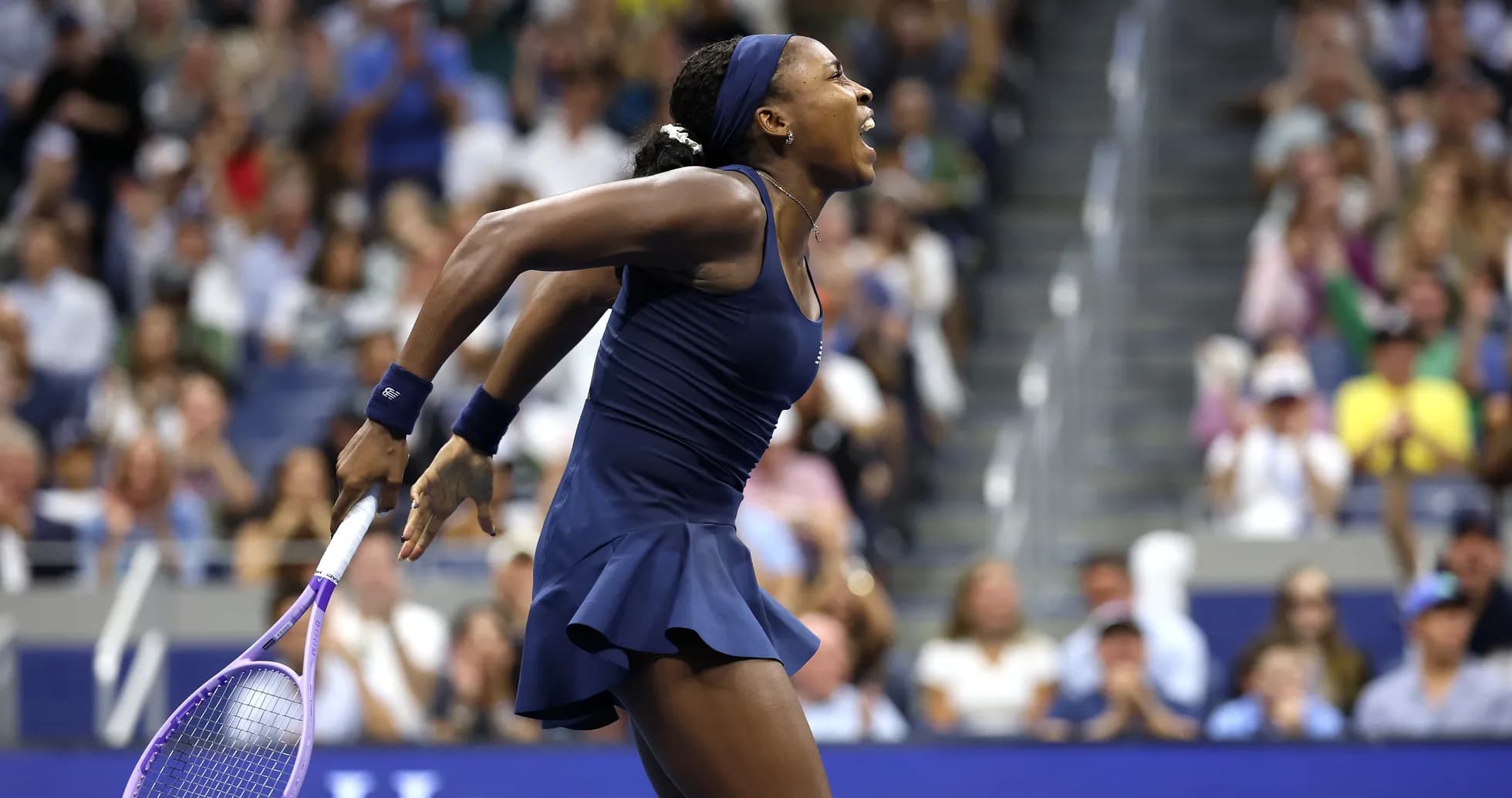
Gauff didn’t celebrate wildly. She didn’t need to.
“I think I just welcome it,” she said of the stage. A Grand Slam quarterfinal used to be a career milestone. For her, it’s become a benchmark. “I'm constantly putting myself in quarterfinals, so the moment doesn't seem as big anymore.”
That isn’t arrogance. It’s evolution.
She still calls herself “very lucky” to be in this position and talks about the “fine line” between appreciating the moment and expecting to be there. Many players would give anything to reach one major quarterfinal. Gauff is learning to treat it as a regular stop on a longer journey, not the destination.
That mindset showed in how she handled Jovic.
From Rome Battle to New York Blowout
Their only previous meeting, on the red clay of Rome, turned into a scrap: Gauff had to climb out from a set down to win 5-7, 7-5, 6-2 in the Round of 16 before eventually reaching the final there, where she lost to Elina Svitolina.
Arthur Ashe told a different story.
Jovic broke Gauff in the opening game, hinting at another long evening. Instead, the champion slammed the door. Gauff ripped through six straight games to take the first set in just under 35 minutes, turning the match on its head with a run of points that underlined the gap in experience and firepower.
From midway through that first set to 0-30 early in the second, Gauff won 25 of 30 points. On a court this big, against a player this sharp, that kind of run feels suffocating.
Jovic, just 17 and making her own way on the big stage, fought to stay composed but left Ashe in tears, frustrated by a day when she won only 45% of points on her own serve. She trailed by a break in the second set, clawed back to 3-3, and briefly threatened to drag the match into deeper water.
The pressure, though, only sharpened Gauff’s focus.
Closing Time on Ashe
Jovic’s late surge could have rattled a less seasoned player. Gauff simply reset.
“It's always great when you can play your best tennis when the points are closer and when they're able to come back,” she said. She admitted she’d prefer to go up a break and stay there, but shrugged it off with a line that sounded like it came from someone much older: “That's not tennis. It's a back-and-forth game.”
At 5-4, with Jovic serving to stay alive, Gauff pounced. She broke again, this time for the match, and walked to the baseline to serve it out like it was a routine practice drill. No drama. No wobble. Just a clean finish from a player who now trusts her ability to solve problems in real time.
Her explanation was simple: she’s learned not to drag missed chances around with her.
“I'm doing a good job of when I maybe miss opportunities or lose some games, just keeping it in the past and focusing on the present,” she said. She doesn’t see those moments as “opportunities lost,” but as information – what to do better next time, knowing that “I'll be in the same position again.”
That line might be the clearest window into where she is mentally: she expects to keep putting herself into pressure situations deep in majors. And she expects to handle them.
The Andreeva Test – And a Familiar Edge
Next comes Mirra Andreeva, another teenage prodigy, another reminder of how quickly the sport is turning over to a new generation. On paper, Gauff holds a stranglehold over the matchup: five wins from five meetings.
Most of that history, though, sits on clay. Four of those five matches came on the dirt, with only one hard-court clash so far – last year’s US Open, where Gauff also came out on top.
The edge is real. So is the respect. Andreeva has grown, Gauff has grown, and the stakes now are heavier than a third-round experiment on the tour. This is the defending champion against a fearless challenger who has never figured her out.
Gauff won’t treat it as anything more than “just another quarterfinal,” at least outwardly. But the context is impossible to ignore: she’s riding a 10-match win streak, she hasn’t dropped a set in 20, and she’s back in a place she now considers home turf in the late stages of a Slam.
She wanted to reach a point in her career where making a major quarterfinal felt normal.
She’s there now.
The real question in New York is no longer whether she belongs in the last eight – it’s who, if anyone, can stop her from owning this court again.