Coco Gauff Stages Remarkable Comeback to Reach US Open Semi-Final
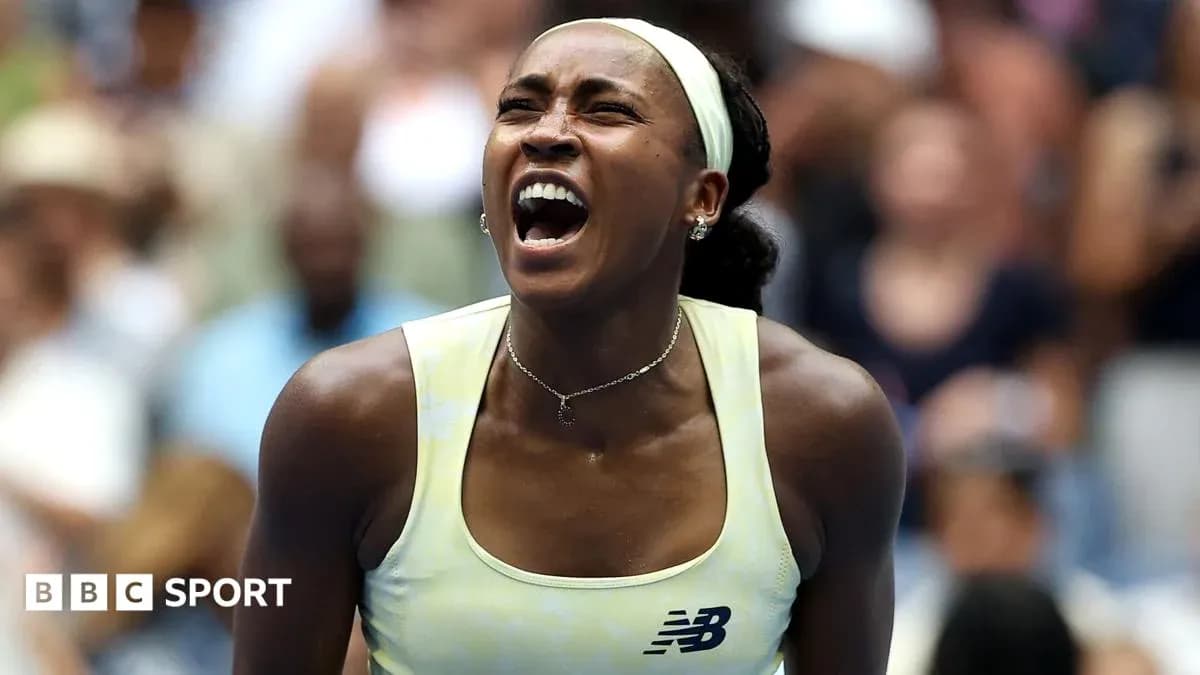
Coco Gauff walked to her chair after 26 minutes looking stunned, a set down and searching for a way out. By the end of the night, she was punching the air in Arthur Ashe Stadium, having escaped two match points and turned a beating into a statement.
From 2-6 down against Mirra Andreeva to a 2-6 7-6 (9-7) 6-2 victory, Gauff stitched together one of those New York comebacks that linger long after the scoreline fades. It booked her a US Open semi-final against incoming world number one Elena Rybakina and underlined, again, why the defending champion is becoming one of the sport’s most ruthless competitors when the walls close in.
From rout to resistance
The opening set was brutal. Andreeva needed just 26 minutes to tear through it, dragging errors out of Gauff’s forehand and silencing the crowd with her clean, early strikes. The fourth seed looked rushed, over-amped, and a step late in every rally.
But the match never felt truly settled because the stadium refused to let it be. Every small hold, every half-chance Gauff created in the second set drew a roar. She twice went up a break and twice Andreeva reeled her back in, the quality dipping into something scrappy and tense.
The pressure finally told in the tie-break. Gauff faced those two match points, staring down the exit door. She played them with clarity, not panic, leaning on her serve and her legs, forcing Andreeva to swing under the weight of the moment. Sixteen points later, the American had dragged the match into a decider and the noise in Ashe turned from anxious to expectant.
“At the end of the first set I was thinking about Frances and how he came back yesterday,” Gauff said, referencing Frances Tiafoe’s own escape against Alex Michelsen on Tuesday night. “We all want to do well in front of this crowd. Honestly, I was just trying to leave the court with no regrets.”
A mental battle, won in the third
Once the third set began, the dynamic flipped. The teenager who had raced through the opener started to look rushed herself. Gauff, roared on by a partisan crowd that sensed blood, settled into longer exchanges, made one more ball, then another, then another.
This stopped being about ball-striking and turned into a mental test. Gauff’s resilience, sharpened by a year of playing with a target on her back, became the difference. She broke early, held firm, and ran away with the decider 6-2, turning a night that could have ended in straight sets into another chapter in her growing New York legend.
The win sends the two-time major champion into back-to-back Grand Slam semi-finals and gives her a first US Open semi since lifting the trophy here in 2023. It also helps complete a rare alignment at the top of the women’s game.
With Gauff through, all of the top four seeds have reached the last four at a major for the first time since Wimbledon 2009. Top seed Aryna Sabalenka and third seed Jessica Pegula had already punched their tickets on Tuesday. Gauff joined them on Wednesday. One more piece remained.
Rybakina bends, then bites back
Earlier in the day, Elena Rybakina showed why she will arrive in that semi-final as the new world number one. For the first time this tournament, the second seed dropped a set, losing the opener 3-6 to Zheng Qinwen and then staring at break-point danger in the decider.
She didn’t blink.
Rybakina responded with a ruthless 6-1 second set, flattening her groundstrokes and taking control of the baseline. When the third set tightened, Zheng pushed again, even carving out that crucial break-point chance. Rybakina shut the door, then broke herself, closing out a 3-6 6-1 6-4 win that felt as much about steel as it did about shot-making.
Now New York gets what it craves: the defending champion against the incoming number one, Gauff against Rybakina, under the lights and under pressure.
Gauff has already shown she can survive a bad start and a hostile scoreline. Rybakina has shown she can absorb a punch and come back swinging. In a US Open that suddenly has its top four seeds exactly where they were supposed to be, the question is no longer who belongs.
It’s who dares to take the next step.