Champions League Draws and Transfer Myths: A Football Reality Check
Nightmare draws, imaginary blows and a shirt-number crisis. Welcome to another week in the football echo chamber, where everything is either “horror”, “nightmare” or “crisis” – even when it’s just a number on a back.
Champions League: apparently everyone’s in a “group of death”
Arsenal’s Champions League fixtures are “nightmare”. Manchester City’s draw is also a “nightmare”. Manchester United, we’re told, have suffered a “horror draw” that leaves them staring at a “nightmare” league phase.
Strip away the screaming headlines and the reality is duller and far more inconvenient for the drama merchants: the Champions League is hard now. For everyone. That’s the point.
United’s supposed ordeal is a perfect example. One prediction model has them finishing ninth in the new league phase. Not knocked out. Not humiliated. Ninth. That would make them the highest-ranked seeded side in the knockout play-off round, facing the lowest-ranked unseeded team.
In other words, a position most clubs would quietly take and move on from. Hardly the stuff of horror cinema.
Liverpool, United and the myth of “ruthless stealth”
Jeremy Cross’s broad point in the Daily Mirror lands cleanly enough: Liverpool, once the benchmark for smart recruitment, now look almost as chaotic as Manchester United in the market. But the romanticised version of Liverpool’s transfer work doesn’t survive contact with the facts.
We’re told Liverpool operated with “ruthless stealth”, keeping big deals hidden “until a deal was so close to being completed it would be made public”. Virgil van Dijk, Alexis Mac Allister, Alisson, Luis Díaz – all held up as examples of this silent efficiency.
Except everyone remembers what actually happened with Van Dijk. Liverpool were reported to the Premier League by Southampton for an illegal approach, forced into a public apology and temporarily backing away in embarrassment before finally getting their man. That wasn’t stealth; it was a very public mess that ended well because the player wanted the move and the club paid up.
The idea of Liverpool as some transfer ninja operation while United bumbled around in the dark has always been exaggerated. One club simply executed better for a period. Now both are capable of tying themselves in knots.
Look at the Bradley Barcola coverage. Cross frames Liverpool’s move for the PSG winger as a late act of desperation “less than a week before the transfer window closes”, after they pulled out of a deal for Brighton’s Yankuba Minteh. The problem? Liverpool have been trying to sign Barcola all summer. This is not a panic swipe at the market; it’s a long, complicated, expensive negotiation.
Big fees – the kind that hover around the £120m mark – don’t get wrapped up in a weekend. They drag. They stall. They leak. They frustrate. That’s not desperation, it’s just the modern market.
The shirt-number circus
From there, the discourse slides into full parody.
Bradley Barcola’s potential squad number at Liverpool is apparently both “bizarre” and a “dream”, depending on which outlet you click. The number itself hasn’t changed. Only the headline angle has.
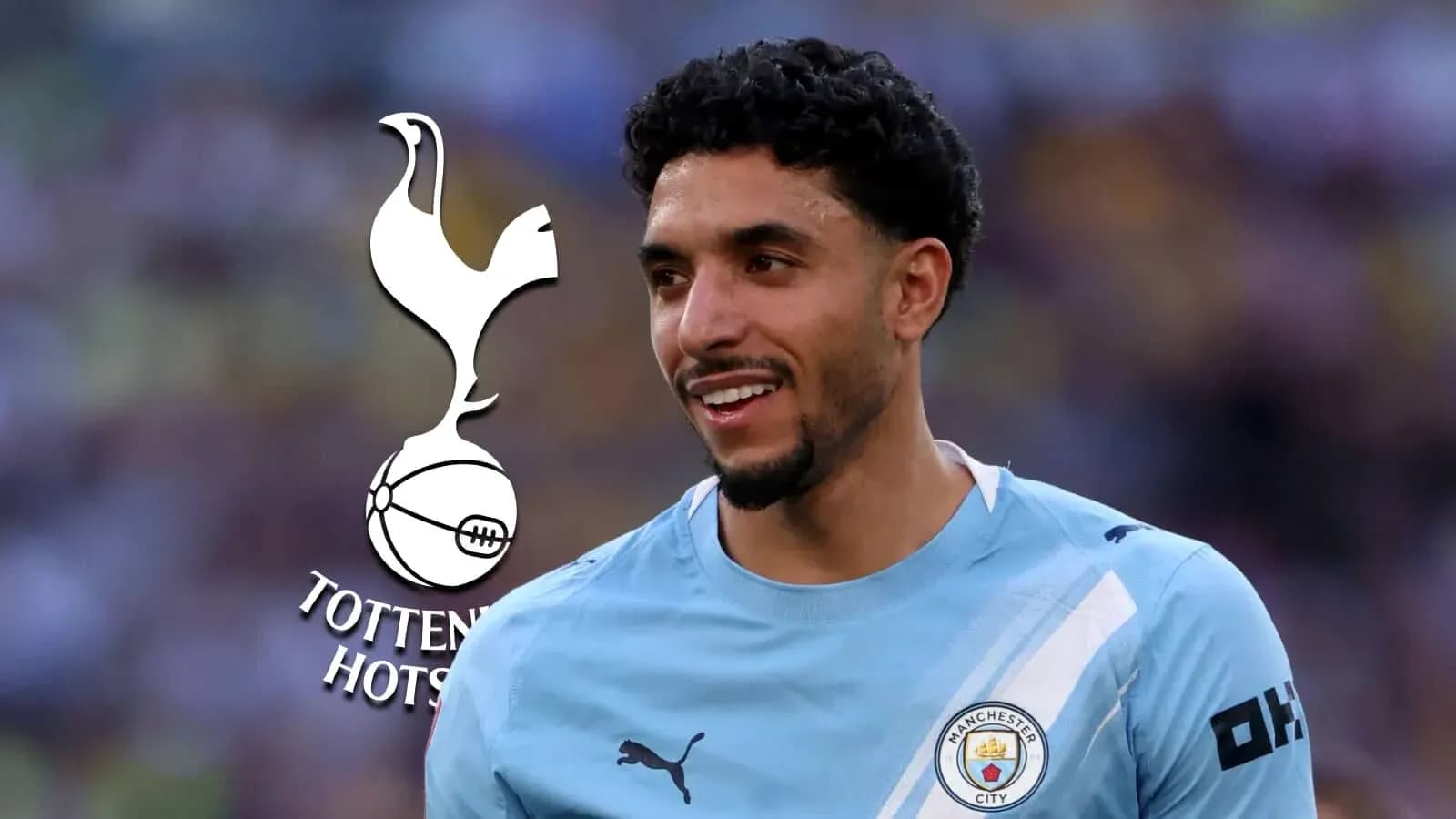
For Omar Marmoush, the stakes are even more apocalyptic, if you believe the billing. His move to Tottenham comes with an “immediate blow” after a Manchester City transfer breakthrough. The same framing was used for Carlos Baleba and his switch to Manchester United.
The “blow”? Not injuries. Not a blocked move. Not losing his place. A shirt number.
Marmoush, we’re told, will have to abandon his beloved No 7 because Xavi Simons already wears it at Spurs. That’s it. That’s the drama. A professional footballer, swapping clubs to play more regularly, might have to pick a different digit.
He started just eight Premier League games for City last season. Tottenham offer him more minutes, a bigger role, a new platform. Yet the headline crisis is that he can’t cling to a number on his back.
If that’s an “immediate blow”, what exactly counts as a minor inconvenience?
Ronaldo, United and the market that moved on
Samuel Luckhurst highlights a more serious issue at Old Trafford: Manchester United have not sold a single first-team player this summer. For a club trying to reset under new leadership, that’s a glaring problem. The inability to shift unwanted or high-earning players is one of the clearest signs of how far they lag behind Europe’s best-run clubs.
But the attempt to fold Cristiano Ronaldo into that argument doesn’t quite fit.
Luckhurst notes that “even one of the greatest” couldn’t attract buyers once he’d burned his bridges with United. After Ronaldo’s explosive interview with Piers Morgan in November 2022, Saudi Arabia emerged as his only viable destination. No European giant queued up. No Champions League contender made room.
That wasn’t because United suddenly became uniquely toxic in the market. It was because Ronaldo, at 37, on colossal wages and behaving like a man who believed he was bigger than the club, had priced himself – and carried himself – out of the elite shop window. Nobody wanted to take on the circus.
Of course United couldn’t find a buyer for him. That says more about Ronaldo’s stage of career and self-image than it does about United’s ability to offload, say, Joshua Zirkzee.
The real story at Old Trafford is not that “even Ronaldo” couldn’t save their sales record. It’s that, with a new structure in place and a clear need to reshape the squad, they still can’t move players on with anything like the efficiency of their rivals.
Football’s new normal: drama without substance
Strip away the noise and a pattern emerges. Champions League draws framed as existential nightmares when they’re just tough fixtures. Transfers described as desperate lunges when they’re long-term pursuits. Shirt numbers sold as crushing setbacks. A failed market for a 37-year-old superstar spun as a broader parable.
The football world doesn’t lack real issues: squad building, wage bills, tactical identity, ownership structures. But those take time and nuance. It’s easier – and louder – to scream “horror”, “nightmare” and “immediate blow”.
The season will expose what truly matters soon enough. Not who wears No 7, not who finishes ninth in a prediction model, but which clubs can still cut through the noise and actually get the important decisions right.