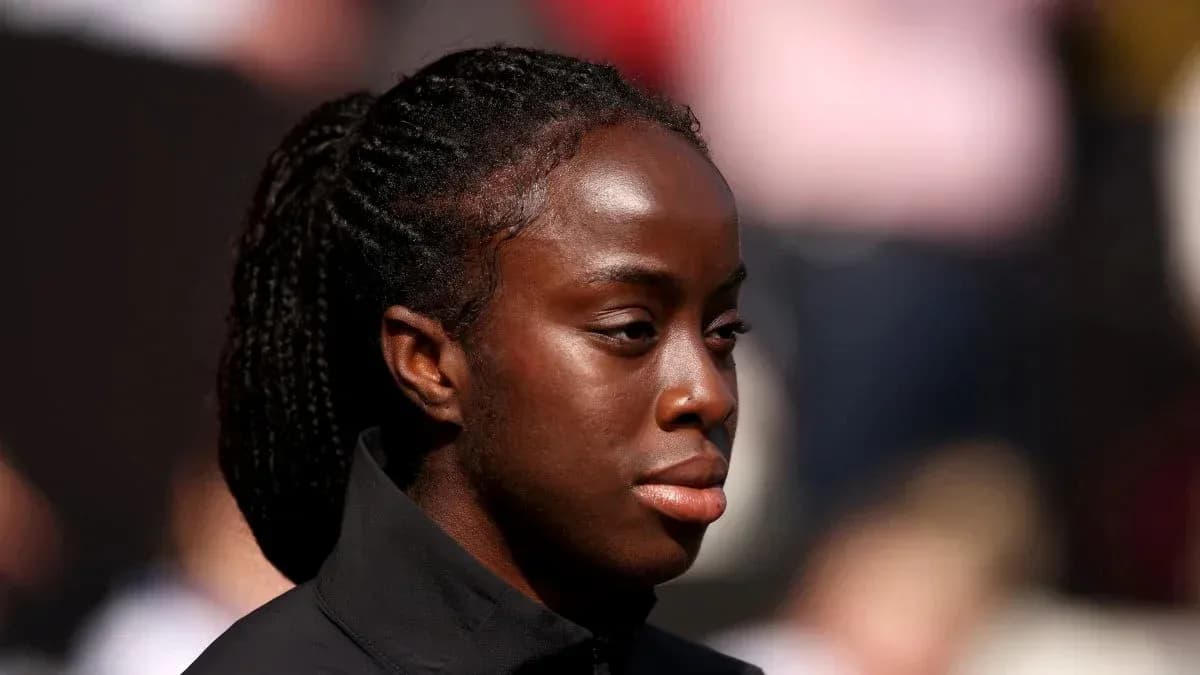
Casey Howe: A Rising Star in Scottish Women's Football
From the main road out of Maguiresbridge to the east end of Glasgow, Casey Howe’s journey has rarely been straightforward. It has, however, been relentless.
At 23, the Northern Ireland forward has already crammed in a debut for her country at 17, a treble with Glentoran, a stint in England with Nottingham Forest and promotion with Wolves. She has crossed leagues, borders and time zones in search of a higher ceiling.
Now she is at Celtic, and for the first time it feels like the stage truly matches the ambition.
A left foot, an 82nd-minute curl, and a statement
On only her second appearance in green and white, Howe announced herself.
Montrose had resisted, Celtic had pushed, and the clock had ticked into the 82nd minute in the SWPL when the ball dropped to the 14-cap international. One touch to set, one swing of that left foot, and the ball bent into the far corner. The deadlock snapped. The tension with it. Celtic went on to win 3-0, but it was Howe’s goal that broke the game open.
For a “young girl from Maguiresbridge”, as she calls herself, this is surreal territory: scoring decisive goals for one of the giants of Scottish women’s football, in a side built to attack and expected to win.
Yet nothing about this rise has been accidental.
Miles, motorways and a family’s gamble
Before the floodlights and TV cameras came the miles.
Her parents drove her from County Fermanagh to Ballinamallard, Cookstown and Belfast four or five times a week, chasing better training, stronger opposition, any opportunity that might move her one step closer to the elite.
“They wanted to give me the best platform to be the best I can,” she says now, fully aware of what that actually meant: long nights, longer roads, fuel bills, and a family calendar built around fixtures and training schedules.
Without those journeys, she knows she would not be at Barrowfield, Celtic’s state-of-the-art training base. Without those sacrifices, there is no 82nd-minute curler, no Celtic shirt with her name on the back.
Winning, she says, makes every one of those miles worth it. The way her career has unfolded, there have been plenty of those moments.
From home soil to the wider stage
Howe’s path through the women’s game reads like a tour of the Irish scene.
Linfield. Glentoran. Sligo Rovers. Each stop added layers to her game and sharpened her instincts. At Glentoran she won a treble and learned what it meant to carry expectation. At Athlone Town, in the League of Ireland Women’s Premier Division, she found form and ruthlessness, scoring often enough to draw attention from across the water.
That spell in Athlone changed her trajectory. It proved she could be a difference-maker, not just a promising talent. Offers followed, and with them the decision to leave home again.
England came next, with Nottingham Forest and then Wolves. Promotion with Wolves underlined that she could handle the physicality and intensity of the English game. But the move to Celtic feels different. Bigger. Sharper in focus.
Here, the environment matches the ambition she has carried since those long drives out of Fermanagh.
Freedom in the final third
Celtic’s approach suits her. This is a side built to attack, to dominate the ball, to overwhelm opponents with movement and pace. For a forward who thrives on expression and variety, it is close to ideal.
“We’re trying to play a nice attacking brand of football,” she explains, and you can hear the satisfaction in the way she describes it. This is not a team that cages its forwards in rigid patterns. It gives them the freedom to roam, to “make different runs, make different movements, and dribble and drive at people”.
She has known the other side of the game too. The “robotic” systems where every movement is pre-programmed, every run dictated. Do this, then that, then reset. Functional, but suffocating.
Celtic is the opposite. The structure is there, but within it, players like Howe are trusted to improvise. To see space and take it. To cause chaos.
That freedom, she believes, lifts the whole team. Everyone is moving. Defenders can’t settle. Passing lanes open and close in seconds. For a forward, being backed to play on instinct does more than just improve performances. It feeds confidence.
And a confident Casey Howe is a problem for any back line.
Barrowfield and beyond
Day to day, the demands are high. Tactically, she talks about a “big improvement” as she adapts to what head coach Grant Scott wants from his forwards. Styles change, roles tweak, and each session adds detail to her game.
She is not just here to enjoy the occasion. She is here to grow.
Every training drill at Barrowfield, every match in the SWPL, is another step in a development curve that still has plenty of room to climb. Celtic, with their resources, expectations and attacking identity, offer the perfect laboratory.
But her ambitions stretch beyond Glasgow.
The green shirt and a growing responsibility
Howe’s story is not only about club football. The green of Northern Ireland still matters deeply.
She pulled on that shirt as a teenager. She has watched the national team’s rise, felt the shift in standards and belief. Now, she wants to help push it further.
“I want to leave the Northern Ireland shirt in a better place than when I came in,” she says. It is not a throwaway line. It is a personal mission.
That responsibility runs in two directions. Upwards, to the results and performances that will define this era. And downwards, to the young girls in Fermanagh and beyond who are watching, wondering if there is a path for them too.
Howe knows their reality. She knows what it is to live miles from elite facilities, to rely on lifts and late nights, to juggle school and training with little margin for error. The infrastructure in her home county still lags behind. Many girls, she points out, still travel up and down the country just to train at the right level.
If she can make that road feel a little shorter for them, the work will have been worth it.
Legacy in motion
Her vision of success is simple and quietly ambitious.
“If I can leave women’s football in Northern Ireland, in Scotland, in England that 1% better than when I joined it – that’s a win for me,” she says. If that also nudges a girl in Fermanagh to believe this life is possible, better still.
From Ballinamallard United to Barrowfield, from treble wins to promotion campaigns, from a teenage debut in green to that curling strike for Celtic, Howe has already packed a career’s worth of chapters into her early twenties.
Yet standing on the training pitches in Glasgow, with trophies to chase, a national-team legacy to shape and a generation back home looking on, it feels less like a destination and more like a launchpad.
The roads out of Fermanagh took her here. The real question now is how far she can go from Celtic.