Carrick Reflects on Ferguson's Legacy and United's Challenges
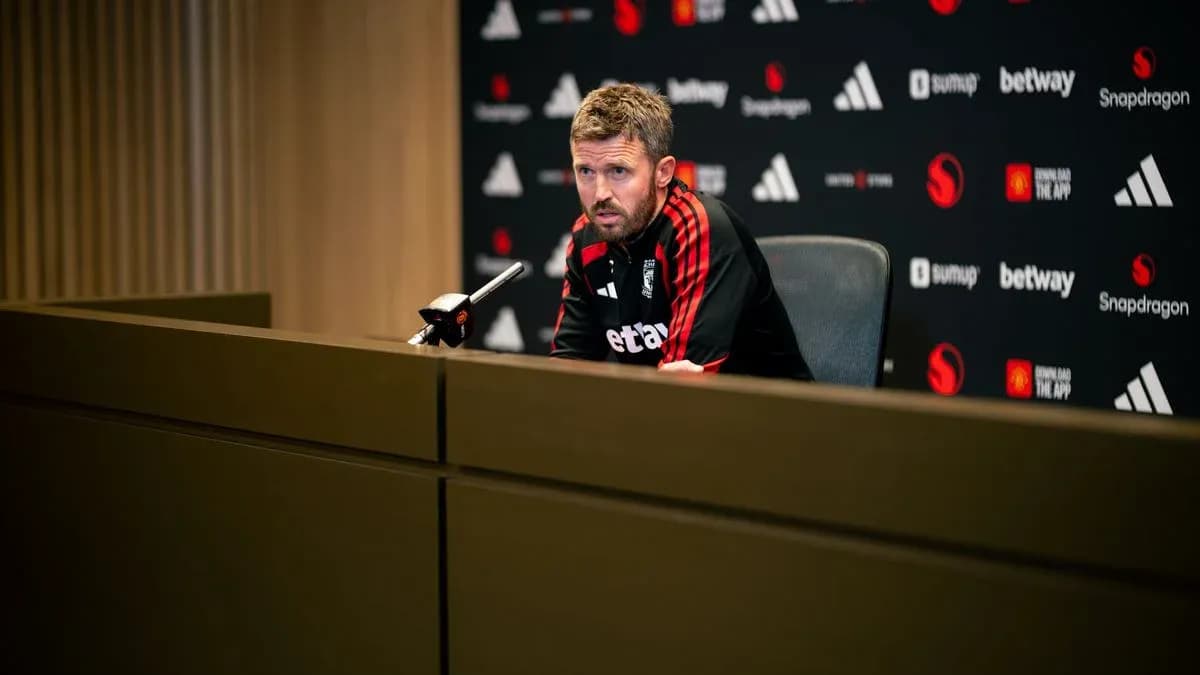
On the 40th anniversary of Sir Alex Ferguson walking into Old Trafford and changing English football forever, Michael Carrick sat in front of the cameras and laughed off the idea that he could ever be the next Ferguson – but he did not dismiss the scale of the ambition.
Forty years on from the day United turned to a hard-edged Scot from Aberdeen to save a drifting giant, the club once again sits in a precarious position: outside the relegation zone on goal difference. It is an eerie echo of 1986, a reminder of how far they have fallen since Ferguson’s 38-trophy reign ended in 2013, and how steep the climb back will be.
Carrick, though, refuses to accept that the Ferguson era is untouchable in spirit, even if the numbers look impossible.
“You’ve got to build, be realistic and put things in perspective,” he said. “It’s not going to happen in the blink of an eye.” The message was clear: the standards remain, the timeline has changed.
Ferguson’s shadow and Carrick’s reality
The backdrop to this week could hardly be more symbolic. Forty years since Ferguson’s appointment, United are again a club in crisis, again looking for stability and identity, again leaning on a manager who must navigate chaos while preaching patience.
“What’s not been said already?” Carrick remarked when asked about Ferguson. “It’s something worth celebrating: 40 years this week since he came here. The impact and everything he drove at the football club during the time he was here are incredible. I’m probably closer to him now than I was when I was playing.”
The game has moved on, the manager knows that. So has the tolerance for slow-burn rebuilds.
“The game has changed. It evolves and that’s how it is. We have to deal with what is front of us,” Carrick said, acknowledging that he will never be given the luxury of years in mid-table that Ferguson enjoyed before the trophies started to flow.
Yet Carrick still talks like a man building, not firefighting. He points to performances rather than just scorelines, to patterns of play rather than isolated moments.
“When you watch the game (Roma) back, the first half wasn’t so bad,” he said. “There were moments when we left ourselves short, and we need to fix them. The first half against Chelsea was very good. We’re showing signs of improvement, no doubt, and we need to take that forward.”
The comeback win over Roma at Old Trafford, wild and emotional, has bought him a sliver of breathing space. He is determined not to let it become another one-off European night filed under “great atmosphere, no follow-up.”
“It’s up to us to take it forward; it was a fantastic night as a one-off night,” he said. “It was a good night for us all, but nothing has been achieved yet, and it’s one moment we need to use to move forward.”
Injuries bite again: Baleba ruled out
If the Roma result gave United a jolt of optimism, the injury news that followed dragged them back into familiar territory.
Carlos Baleba, the £70million summer signing from Brighton, is out for “a number of weeks” with a hamstring problem picked up in that very game. The midfielder pulled up just after half-time, clutching the back of his leg after a surging run into the penalty area. The momentum of his evening, and his season, stopped in an instant.
Baleba had already missed the start of the campaign with an ankle injury sustained in pre-season. Now he faces another spell on the sidelines at the very moment he was beginning to impose himself.
“Carlos, we don’t know, but it will be a number of weeks,” Carrick confirmed. It was a blunt line, and a painful one for a player whose United career has yet to gather rhythm.
There was at least a flicker of positive news on Pat Dorgu, though even that came wrapped in caution.
“Pat has done a little bit of training, very small, we have to be patient with Pat,” Carrick said. No promises, no timelines, just the slow grind back to fitness.
Spirit, standards and a fragile momentum
Carrick knows results have not matched the rhetoric. He also knows the dressing room’s belief is under scrutiny.
“It’s a positive reaction, it’s not like all of a sudden we’re getting carried away,” he insisted. “I know what the players are capable of. We just haven’t proved it enough lately. The boys have trained really well, I’m not just saying that for the sake of saying it.”
The Roma game showcased both the best and the worst of this United side. The intensity of the comeback, the noise, the sense of defiance – all of it felt like old Old Trafford. Yet the defensive structure that allowed Roma to take the lead had supporters and pundits shaking their heads.
One tactical gripe in particular has dominated the debate. When Roma scored, Kobbie Mainoo was robbed of the ball, the Italians switched play, and Diogo Dalot was suddenly nowhere near his right-back slot, sprinting frantically back from a position on the left wing. A simple ball over Ayden Heaven dropped to Matias Soule, who had the time and space to pick his finish. One pass, one run, one gaping hole.
It was the kind of concession that fuels arguments that Carrick must scrap or at least rethink aspects of his full-back usage. Risk without reward is a hard sell to any fanbase, never mind one that has watched a decade of false dawns.
Mainoo, Rashford and the England door
Away from the club’s own problems, England provided another talking point. Kobbie Mainoo and Marcus Rashford were both left out of the latest national squad, a decision explained by Thomas Tuchel, who is currently working with the England set-up.
Tuchel pointed to Mainoo’s recent absence as a factor.
“I think Kobbie had a difficult spell now with his team and missed a lot of matches. In the meantime, it was Jobe who impressed,” he said. “The door is always open. The door is always open for younger ones to overtake or to make their mark, so that’s just a sign of the competition in central midfield.”
Mainoo missed four games with a minor injury before returning against Chelsea and starting versus Roma. His omission, in that context, is hardly a shock. The same goes for Rashford, who has been battling hip and thigh issues and has not featured for England since the squad that faced Leeds at Elland Road.
At club level, Rashford has been under the microscope again after a rare Q&A session with supporters in the Ambassadors’ Lounge before the Roma match. In front of fans who had paid for a high-end hospitality package – seats directly behind the dugout, a five-course meal, behind-the-scenes access and a live Q&A – he spoke candidly about his situation. The content of that conversation has since emerged in leaked audio, adding another layer of noise around a player already living in the spotlight.
Solskjaer, trust and time
Carrick’s own relationships were also in focus. Asked about Ole Gunnar Solskjaer, his former manager and close friend, he chose his words carefully.
“I’ve not seen it (Solskjaer interview), so it’s difficult to respond,” he said. “I don’t think there are too many people who actually know me, really. Ole is one of them.”
The bond between the pair remains strong.
“We’re friends and we’re still in contact now. I saw him not long ago in pre-season,” Carrick added, a reminder that the lineage from Ferguson to Solskjaer to Carrick is not just tactical or institutional, but personal.
That lineage brings expectation as well as support. Carrick is not just any coach trying to fix Manchester United; he is a former captain of the dressing room, a former assistant, a player forged under Ferguson’s glare. He understands what the club once was, and what it currently is.
And so he circles back to the same theme: time. Not the romantic, open-ended time Ferguson enjoyed, but the hard, modern version – enough weeks and months to show clear progress, to make nights like Roma the rule rather than the exception.
The next test comes against Aston Villa, another team trying to carve out its place among the elite. Carrick will walk into that game knowing the numbers, knowing the history, knowing the shadow that still stretches from Ferguson’s first day to this 40th anniversary week.
He cannot be Ferguson. He knows that. The real question, for him and for United, is whether anyone will be allowed long enough to build anything that even resembles it.