Carlos Alcaraz: Overcoming Intrusive Thoughts and Injury at US Open
Carlos Alcaraz has won seven majors. What has really been beating him this year, though, can’t be measured on a scoreboard.
The 23-year-old Spaniard admits it was the “intrusive thoughts” about his injured wrist – not the pain itself – that turned his longest spell out of singles into a mental grind. When would he be back? Would he be back in time for the big hard-court swing? Or would the entire American summer disappear in a fog of rehab and doubt?
For months, there were no clear answers.
A champion stuck in limbo
Alcaraz has not played a singles match since mid-April. For a player who thrives on rhythm, on repetition, on the constant duel, that silence felt deafening.
“Once I started to practice a little bit but didn't know when I'm going to return, those thoughts were really difficult to deal with,” he said. He did not know if his comeback would land in Cincinnati, at the US Open, or not at all during this part of the season. The uncertainty became its own opponent.
“That was really difficult to deal with, but finally here we are. Those intrusive thoughts were the most difficult things to deal with in this process.”
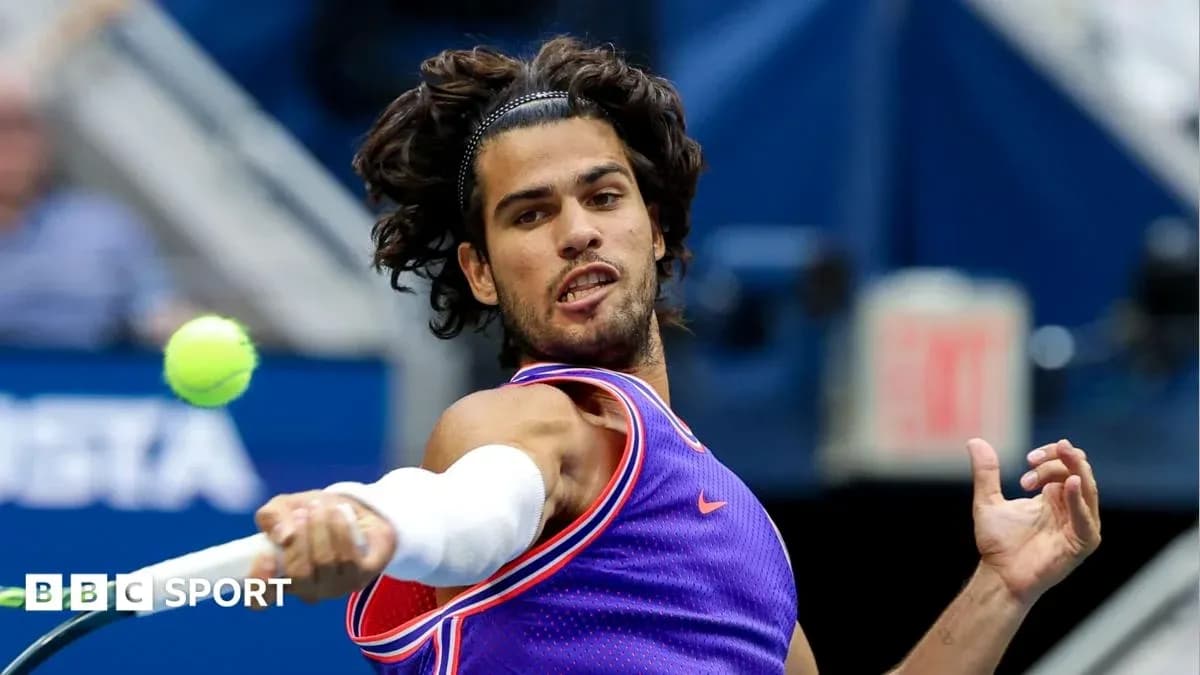
The process has been delicate. The diagnosis is believed to be tenosynovitis – inflammation of the sheath protecting the tendon on the inside of the wrist. For most people, it is an inconvenience. For a man who rips one of the heaviest forehands in the sport, it is a potential career pivot.
Every time Alcaraz unloads on that forehand, the joint in his playing wrist absorbs a brutal surge of force. One misjudged gamble with that area can cost a season, or worse. He could not afford bravado. He had to wait.
A quiet return, a loud stage
The first glimpse of Alcaraz back on a match court came not in singles but in the mixed doubles at Flushing Meadows earlier this week. The partner? Serena Williams, owner of 23 Grand Slam singles titles, a reminder of the company he keeps at the top of the sport.
It was a soft landing in a very loud arena, a way to taste competition again without the five-set demands that define his real job here.
Now the real test arrives.
On Sunday, under the New York glare, the defending champion opens his US Open campaign against Roman Safiullin, a powerful Russian whose ball-striking will probe every question about Alcaraz’s timing and toughness after months away. There will be nowhere to hide.
Alcaraz will walk on court still wearing a compression sleeve on his playing arm, a visible line of defence for a wrist that has dominated his year. The sleeve is part protection, part reassurance – a strip of fabric between him and those old intrusive doubts.
Trust, risk and five-set reality
This is not the ideal build-up for a major. No player would design a title defence on a foundation of missed tournaments and cautious practice blocks.
“It's really challenging. Probably, you know, in terms of preparation and everything, it is not the best time,” Alcaraz admitted.
Yet he will be seeded second in New York, a ranking that speaks to the damage he did before this lay-off and the fear he still inspires in a draw. The numbers say he belongs at the sharp end of this tournament. His body has been the only dissenting voice.
Now he leans hard on the people around him.
“We, my team and me, believe that I'm ready,” he said. “I've got to trust my team, I've got to trust my people that tell me it's going be fine. I just have to go 100%, and right now I think with the practices I have done so far, it's been all good. I'm trying to stay away from any fear and I'm playing normal.”
That is the balance he must strike in the coming days: play “normal” without forgetting what put him on the sidelines in the first place. Attack with the abandon that won him titles in New York in 2022 and 2025, while respecting a wrist that has already forced him to confront the fragility of a career that once felt unstoppable.
The stage is set, the doubts have been named, and the champion is back under the lights. Now the wrist has to survive the one examination no scan can simulate: a five-set dogfight at Flushing Meadows.