Carlos Alcaraz Dominates Tommy Paul at US Open
Carlos Alcaraz does not do gentle reminders. He delivers statements.
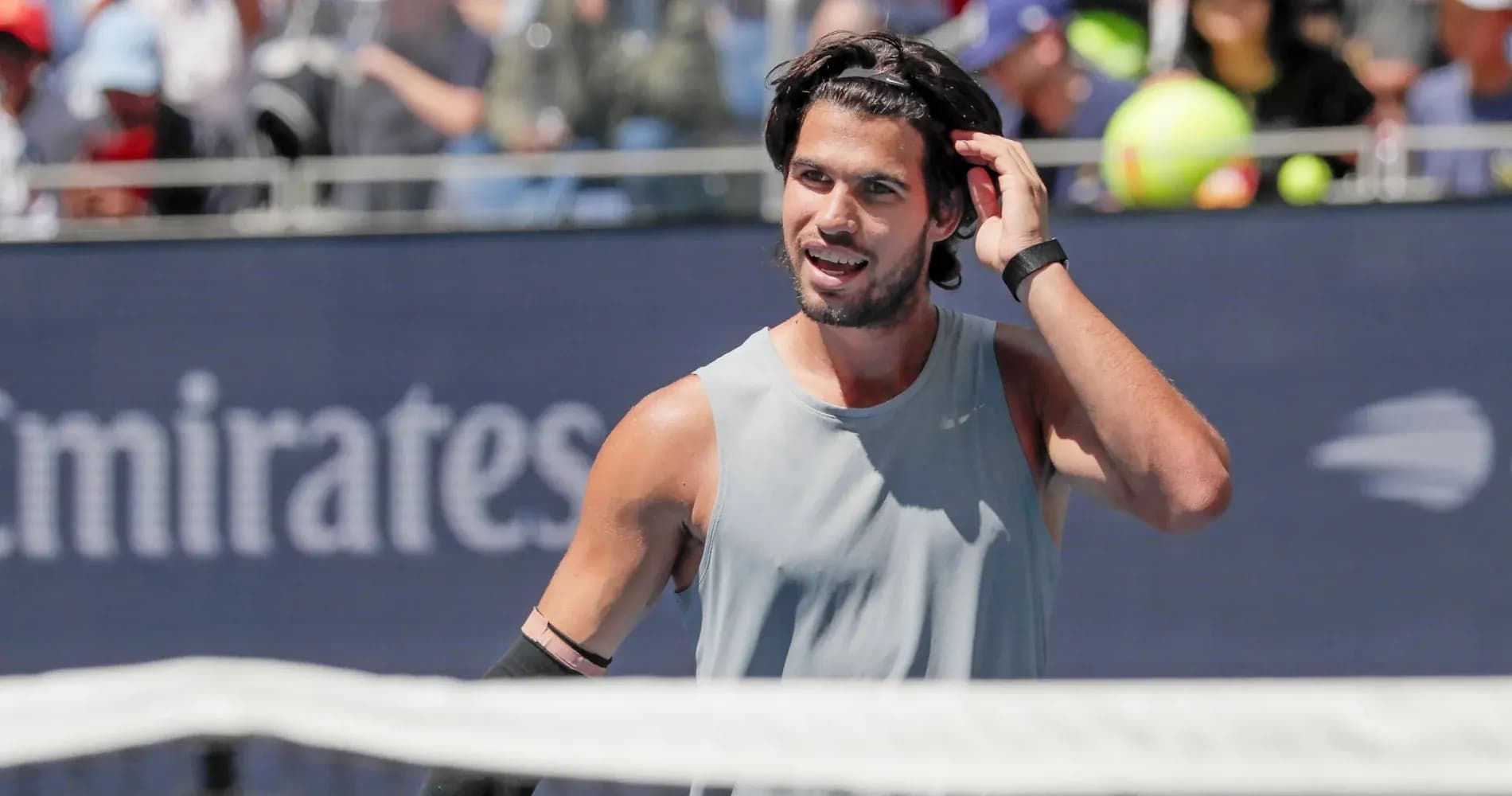
On a humid night at Flushing Meadows, the defending US Open champion turned what looked on paper like a tight three-setter into a quiet show of force, brushing aside Tommy Paul with the kind of cold efficiency that never quite made it onto the scoreboard.
The numbers told the truth. They usually do when one player finishes with 33 winners to his opponent’s 18, even with both leaking 32 unforced errors. Alcaraz owned the front of the court, charging the net 29 times and winning 23 of those points. He landed 67% of his first serves, faced just four break points across 15 service games, and surrendered his serve only once. On the other side of the net, Paul spent the night firefighting.
He did it bravely. He saved 10 of 14 break points, stretched rallies, found angles, and bought himself time. But that was all he bought. Across three sets, Alcaraz took 99 of the 173 points played, a gulf that made the “close” scoreline feel almost misleading.
There was one flicker of danger. Serving for the match at 5-4 in the third set, Alcaraz slipped to 15-40. For the first time all evening, the stadium sensed a twist. Two of the four break points he faced all night came in that single game. He erased them with the calm of a man who has lived on this stage for years, not seasons. Then he took the next two points as well: a crosscourt forehand winner for match point, a service winner to seal it at the first opportunity. Threat over. Door slammed.
He walked off court with another streak extended. Alcaraz has not lost at Flushing Meadows since 2024. This was his 11th consecutive win at the US Open, his 18th straight victory in hard-court majors, a run stretching back through last year’s title in New York and this season’s Australian Open crown. The result carried him into a 15th Grand Slam quarterfinal and left him three matches from becoming the first man to defend the US Open since Roger Federer’s five-title run from 2004 to 2008.
It also nudged him into rarified statistical air. His win rate at hard-court majors now sits at 86.79% in the Open era, trailing only Novak Djokovic and Federer. Federer’s 86.82% remains fractionally ahead, but Alcaraz has already moved past Pete Sampras on that list. These are not the numbers of a rising star. They are the numbers of a player building a legacy in real time.
His explanation for the performance was simple and ruthless: do not let Tommy Paul breathe.
“Tommy’s such a talented player,” Alcaraz said on court. “I think his shots are pretty dangerous and sometimes pretty difficult to control the ball when it comes to you. So I just tried to be ready for the battle, to be ready to run if it matters, and trying to be aggressive all the time, trying not to let him stay on the court. So I just think I did it pretty well.”
He did, and he did it from both ends of the rally. The aggression on return framed the entire match.
“I just put so much pressure on the return games, which for me it helps a lot to play relaxed, to play calm, to think clearly,” he said. That pressure told on Paul’s serve, even when the American managed to wriggle out of break points. The pattern was clear: Alcaraz dictated, Paul reacted.
The lingering question around Alcaraz this fortnight has been fitness, not form. Four and a half months away from full competition had left observers wondering whether the two-time champion was truly back at full power. His answer came with a shrug and a statistic.
“Except one year, since 2021 I make almost quarterfinal here,” he said. “So that means how special this place is to me, that means how good I’m playing every time that I come here.”
The record backs him up. Flushing Meadows is already his territory.
For Paul, this was another hard lesson in a growing collection against the Spaniard. He arrived in New York openly targeting a first US Open quarterfinal to complete the set after reaching the last eight at the Australian Open, Roland-Garros and Wimbledon. He leaves again in the fourth round, for the second straight year, and with the head-to-head reading seven losses in nine meetings with Alcaraz.
He had chances to make this one messy. He could not quite turn any of them into something more.
The road ahead for Alcaraz is loaded. Next up is the winner of the fourth-round clash between No. 8 seed Ben Shelton, the explosive American, and Greece’s Stefanos Tsitsipas. Lurking in the same half are No. 7 seed Daniil Medvedev, a former champion in New York, and American No. 11 seed Frances Tiafoe. On the far side of the draw waits top seed Alexander Zverev, the Roland-Garros champion.
The field is strong, the draw unforgiving. But on nights like this, with the numbers stacked and the pressure absorbed, one thought keeps returning: if he keeps playing like this, talk of his wrist will soon feel like a footnote to a very different story.