Carlos Alcaraz Advances in US Open, Defeating Wu Yibing
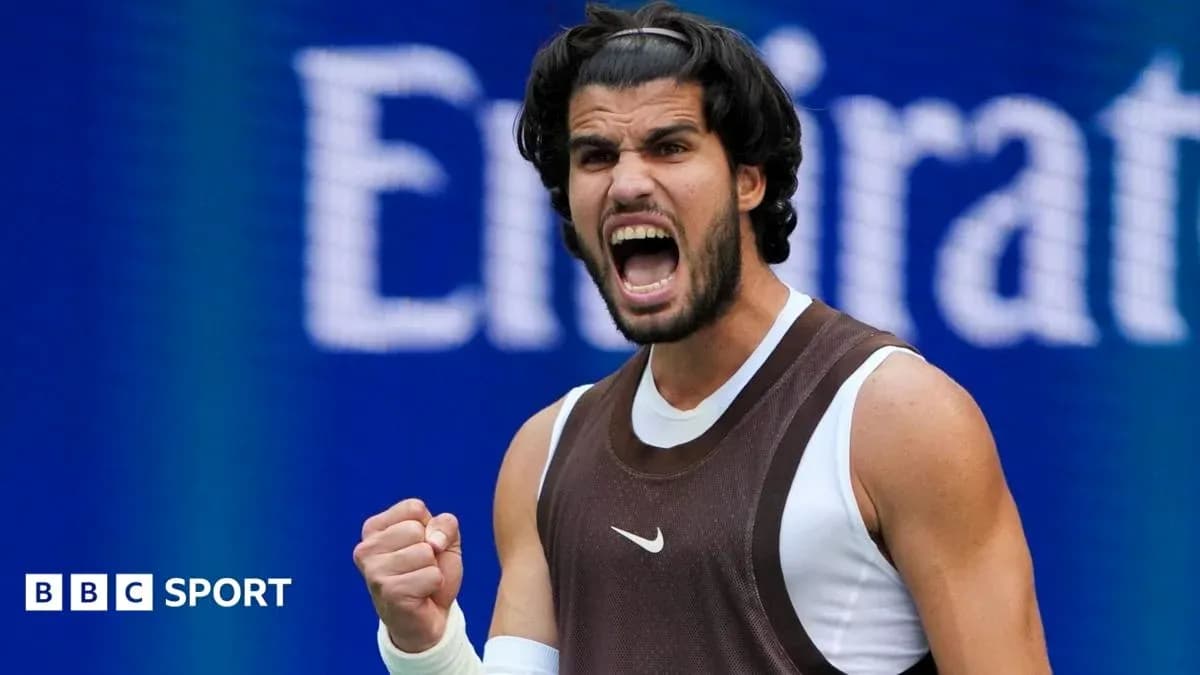
Carlos Alcaraz barely broke stride.
Under the lights of Flushing Meadows, the defending US Open champion brushed aside Wu Yibing 6-3 6-4 6-1 to reach the fourth round and send a clear message: the lay-off is over, the rhythm is back, and the title defence is very much alive.
This was supposed to be the tricky part. A long spell out with a wrist injury, 139 days without a singles match before arriving in New York, and a field that looked ready to test his match sharpness. Instead, Alcaraz is accelerating.
He handled his opener in straight sets, then had to scrap from a set down against Jaime Faria in round two. That could have sown doubt. It didn’t. Against Wu, the Spaniard looked like a player who had taken that scare personally.
He broke early, controlled the baseline, and never really let go. The first set went in 38 minutes, the second in a tighter arm-wrestle, and by the third the contest had tilted entirely his way. Wu’s resistance faded; Alcaraz’s authority grew. Two hours and 20 minutes after they started, it was done.
“I'm better than I thought,” Alcaraz admitted afterwards. “Physically I thought I was going to be bad after the first match, but I am recovering really well. I am doing great things off the court to be in a good state.
“Right now, I think my level is really good. I think I have caught the rhythm of the competition. Every time that I step on the court I give it all. I'm just trying to improve, be better every match and I think I'm getting there.”
On this evidence, he’s already a long way down that road.
A draw opening up
The landscape around him has shifted in his favour.
With Jannik Sinner absent through injury, the men’s draw has lost its world number one and the man who has so often stood opposite Alcaraz in the sport’s new wave of marquee matches. French Open champion and Wimbledon runner-up Alexander Zverev now tops the draw, but as second seed, Alcaraz can only see him in a potential final.
Even that prospect comes with a caveat. Zverev has been dragged into five-set marathons and left on court until 2am in both of his matches so far. Those nights leave a mark over two weeks in New York.
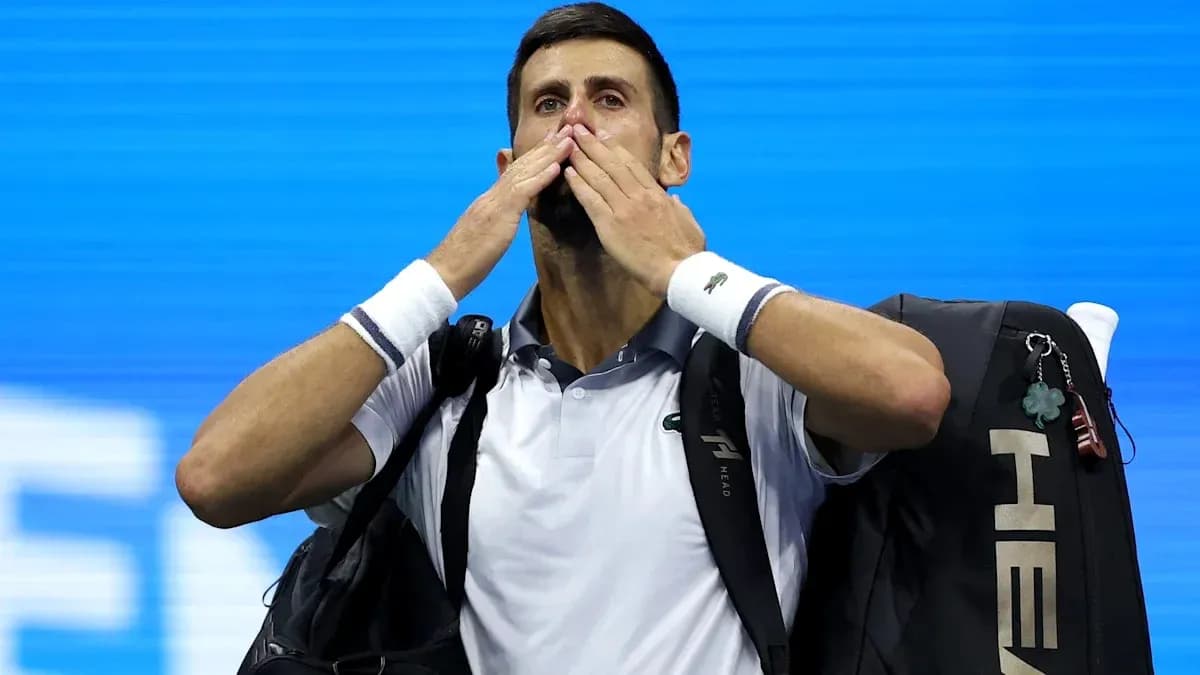
The shocks around them have only widened the path. Novak Djokovic, a pillar of the sport for more than a decade, went out in the first round to Mariano Navone. Felix Auger-Aliassime, seeded third, fell to Karen Khachanov in the second. The top of the men’s game has rarely looked this scattered at a major.
For Alcaraz, it means something stark: as things stand, American eighth seed Ben Shelton is the only top-10 opponent he can face before the semi-finals. Then comes the possibility of Daniil Medvedev in the last four.
The numbers favour him there too. He leads Shelton 3-0 in their head-to-head and holds a 6-3 edge over Medvedev, though the Russian did bloody his nose at Indian Wells in March. That result will sit in the back of Alcaraz’s mind, a reminder that reputations don’t win hard-court matches.
On the other side, Zverev’s potential route features home favourite Taylor Fritz and Roland Garros runner-up Flavio Cobolli. Both can hit through a court, both can ride a New York crowd. Neither will make the German’s life easy.
Paul next, history behind him
Before any of that, there is Tommy Paul.
The American 20th seed waits in the fourth round, the kind of opponent who usually thrives in these conditions: home support, fast courts, nothing to lose against the defending champion. Yet the head-to-head is brutally one-sided. Alcaraz has beaten Paul six times in a row.
That streak doesn’t guarantee anything in week two of a Slam, but it does frame the contest. Paul knows exactly how hard it is to push Alcaraz off his patterns; Alcaraz knows he can break Paul’s.
The difference this fortnight is the context. This isn’t just another major run. It’s a test of how quickly a 23-year-old, already a seven-time major champion, can rebuild his dominance after a long, enforced pause.
So far, the answers have come quickly. The movement looks sharp. The forehand is back to tearing open rallies. The competitive edge, the one that dragged him through against Faria, is clearly intact.
He insists he is still building. The draw, stripped of some of its biggest obstacles, might not wait for him to finish.