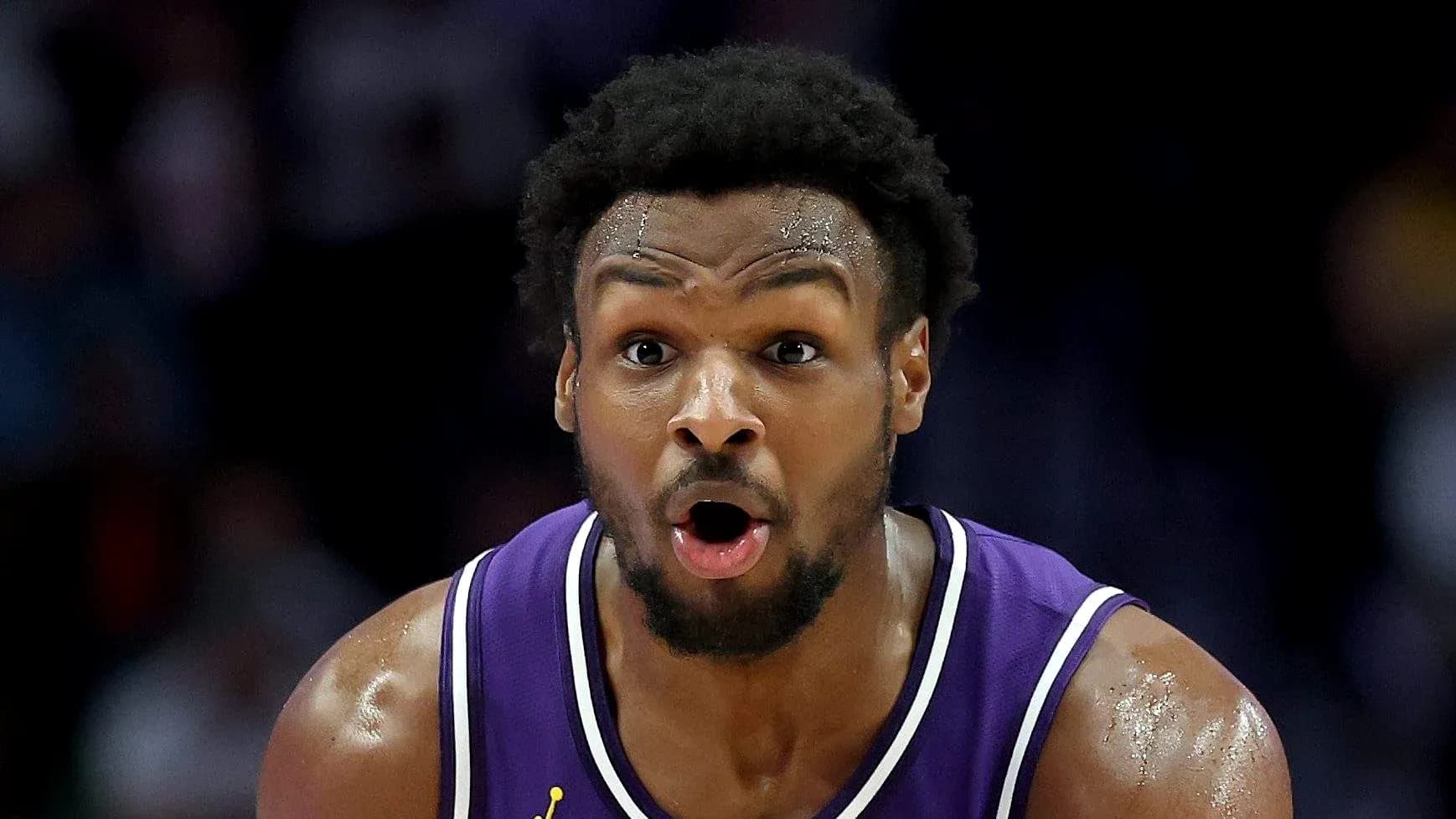
Bronny James: Out of Shadows, Facing Reality in NBA
Bronny James is out of shadows and out of excuses.
The safety net is gone. LeBron James is no longer on the Los Angeles Lakers’ roster, and with that, the conversation around his son changes. The surname still carries weight, but inside a franchise scrambling to claw its way back into title contention, sentiment doesn’t get you minutes. It barely keeps you a roster spot.
Bronny, now 21 and heading into his third NBA season, sits squarely on the edge of that reality.
A Name, But Not Yet a Role
Taken 55th overall in the 2024 NBA Draft, James arrived as a headline before he arrived as a player. The pick was instantly labeled controversial, framed as a gesture to LeBron as much as a basketball decision. The Lakers never confirmed that narrative, but they’ve lived with the noise ever since.
On the floor, the story has been far quieter.
Two seasons in, James has yet to crack JJ Redick’s rotation in any meaningful way. He’s flashed as a defender in spurts, showing the instincts and effort that made him intriguing as a prospect, but flashes don’t build a role. And right now, that’s the problem.
“Bronny James is a player without a position,” Tyler Watts wrote for LakeShowLife.com, capturing the core issue. Too small to be a traditional shooting guard. Not polished enough as a playmaker to run a team at point. That positional limbo has turned into a minutes problem, and the numbers tell the story.
James has never appeared in more than 42 games in a season. He has never averaged more than 8.9 minutes per game.
For a late second-round pick, that might be par for the course. For the son of the NBA’s all-time leading scorer, wearing purple and gold, it’s a spotlight.
Production That Hasn’t Moved the Needle
His rookie year was more novelty than impact. Sharing the court with his father created history and a wave of attention, but the box scores stayed modest: 27 games, 2.3 points, 0.7 rebounds, 0.8 assists on 31.3% shooting. The moments were memorable; the production was not.
Year two brought a slight uptick, but not a breakthrough. In 42 games, James averaged 2.9 points, 0.5 rebounds, and 1.2 assists while improving his field-goal percentage to 40.9%. He took more shots, looked a touch more comfortable, and earned a slightly bigger role. Still, his minutes mostly came in blowouts and low-leverage stretches. He was a reserve, not a rotation piece.
His best work has often come with the Lakers’ G League affiliate, where the game slows down just enough and the physical gap narrows. There, he’s shown more of the two-way potential that once made him a talking point at USC. But that version of Bronny has yet to consistently cross the line into the NBA game.
At this level, “decent defender” isn’t a label that keeps you employed if it isn’t paired with something else. James is undersized, and without a reliable three-point shot to stretch the floor, his value is hard to pin down. On a team that needs every roster spot to matter, that’s dangerous territory.
Contract Guaranteed, Future Anything But
The Lakers have already made one commitment. They guaranteed the $2.3 million James is owed this season on his rookie deal, a clear sign they weren’t ready to walk away just yet. But guaranteed money doesn’t guarantee a future in Los Angeles.
Watts didn’t sugarcoat it: if James can’t prove he belongs in the rotation this season, the franchise may have no choice but to move on, name or no name.
“The Lakers must quickly figure it out. Bronny has to improve and cement himself in the rotation. Redick gave him the blueprint, but James isn’t following it,” Watts wrote. The message is blunt. The opportunity exists. The rest is on the player.
For a team chasing contention, patience has a hard cap. Every roster spot must tilt toward winning. If James can’t help them win, the logic is brutal but simple: someone else will take his place.
A Career at a Crossroads
Strip away the family ties, and Bronny’s situation looks like that of many late second-round picks: fighting for relevance, trying to turn flashes into habits, and habits into a job. The difference is that every step of his journey has played out under a magnifying glass.
He entered the league as “LeBron’s son.” Two years later, he’s being forced to answer a tougher question: What is Bronny James, the NBA player?
Is he a defensive specialist who can hound guards, hit enough shots, and keep the ball moving? Can he grow into a combo guard who handles secondary playmaking duties and survives physically against bigger wings? Or does he remain stuck between roles, a tweener without a defined lane?
The 2026-27 season will start to answer that. The Lakers have put him on notice, whether publicly or not. This could very well be his final year in Los Angeles if he doesn’t take a leap.
The blueprint is there. The minutes are not. Not yet.
For the first time in his professional life, Bronny James stands on his own, without his father’s presence anchoring the narrative. What he does now will decide whether his story in Los Angeles is just a brief chapter in the LeBron era—or the beginning of something that finally belongs to him.