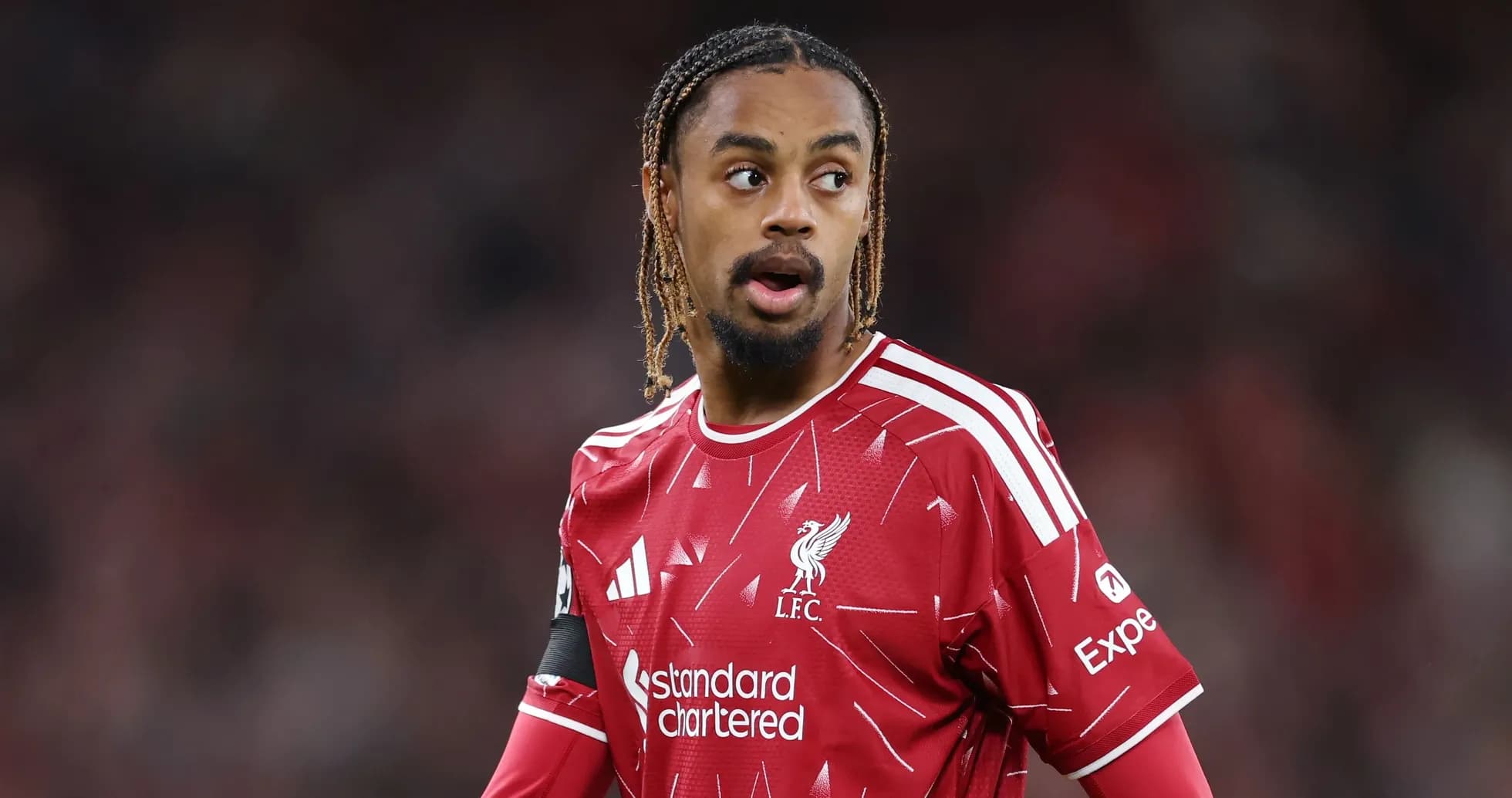
Bradley Barcola: A High-Stakes Transition to Liverpool
Bradley Barcola walks into Anfield carrying a price tag that bends the imagination. Up to £123 million. Second only to the biggest deal in Liverpool’s history. That kind of number doesn’t just buy talent. It buys expectation, pressure, and a spotlight that never switches off.
Emmanuel Petit has seen enough of the game, and enough of Barcola, to know this will not be a gentle landing.
“He needs to learn a different way”
To Petit, the gap between Ligue 1 and the Premier League is not just about pace or power. It’s about unlearning habits.
“Bradley Barcola needs to learn a different way of playing,” the former France midfielder told Boyle Sports, pointing straight at the contrast between Paris and Merseyside. At Paris Saint-Germain, he said, the football is almost mechanical. Movements drilled, responses rehearsed. “Everything is like an automation.”
Liverpool don’t work like that. The system is intense, aggressive, chaotic in controlled bursts, but it isn’t built around the same kind of pre-programmed patterns. Barcola, Petit argues, will have to rip up his PSG script.
Yet in that same breath, Petit identifies exactly why Liverpool have gambled so heavily on the 21-year-old.
Barcola, he says, brings something Liverpool have badly lacked for two seasons: a wide man who can carry the ball at speed, attack space behind defenders, break lines into the final third and live for one-on-one duels. A winger who doesn’t just receive the ball. One who drags the game with him every time he touches it.
That profile has been missing. The price tag reflects that.
Talent is not the question
There were glimpses of it in Europe. Barcola showed flashes of the player Liverpool think they’ve bought during a midweek Champions League win over Atletico Madrid. Sharp feet. Brave runs. The promise of a forward who can tilt a match.
But the Premier League is a different kind of storm. More physical. More direct. Less forgiving.
Petit is not worried about Barcola’s technique. He is worried about his head.
“Is Barcola going to play the same way he played for Paris Saint-Germain? No, because Liverpool don’t play the same way, but he will play with that same ability,” he said. The real issue, as Petit sees it, is whether Barcola can live with the noise around a nine-figure fee. “The only question is whether he has the mental strength to cope with the price tag of his transfer. We will have to see on that.”
This is not a project signing in Petit's mind. It is an instant-impact demand.
“He now has the chance to do that for Liverpool, and he needs to make an impact straight away. They cannot wait on him like Florian Wirtz or Alexander Isak.”
That line cuts to the heart of Liverpool’s situation. There is no luxury of time. No soft bedding-in period. Not when the team has already started the league campaign by dropping points in three of their first four Premier League games, and not after finishing fifth last season.
A bleak verdict on Liverpool’s season
Petit does not sugarcoat his view of where Liverpool stand in the bigger picture. His assessment of the club’s prospects this season is as stark as it gets.
“Liverpool and Manchester United have no hope this season,” he said bluntly. Too many goals conceded. Too many gaps. Too many questions left unanswered in the transfer market.
He lumped them in with Chelsea defensively, but went even harder on Liverpool and United’s overall planning. For him, both clubs enter this campaign short of what they need, structurally and personnel-wise, to be treated as serious contenders.
“They are both missing players and it’s hard to see how they can be favoured to finish in the top four, especially together. They may fight over that last place after Arsenal, Manchester City and Chelsea, but that place may go to another team.”
That is the warning. The old hierarchy is under threat, and Liverpool, in Petit's eyes, are standing on the wrong side of the shift.
Barcola as symbol of a bigger problem
Barcola’s arrival is meant to refresh an attack that had grown predictable. A new angle, a different rhythm, a winger who can break games open from wide rather than waiting for patterns to unfold around him.
Yet Petit's wider concern is that while Liverpool have invested heavily in one type of weapon, the rest of the squad still looks unbalanced. The forward line might gain variety, but structural flaws behind it remain visible. For all the talk of evolution, the team still leaks chances, still looks fragile when stretched.
So Barcola becomes more than a signing. He becomes a test case for the club’s direction.
For now, the spotlight sits squarely on his adaptation. Can he strip away the automatisms of PSG and embrace the relentless, high-octane demands of English football? Can he carry the ball with the same freedom while carrying the weight of a £123 million deal?
Petit believes the adaptation on the pitch can come quickly. He points to Barcola’s move from Lyon to PSG, when the winger needed only a couple of weeks before showing his quality in Paris colours. The tools are there. The track record of adjusting is there.
The unknown lies elsewhere.
Barcola has the pace, the dribbling, the bravery to be a game-changer at Anfield. Now the question hangs over him and over Liverpool’s season: in a league that exposes weakness without mercy, will his mentality match his talent when the pressure really bites?