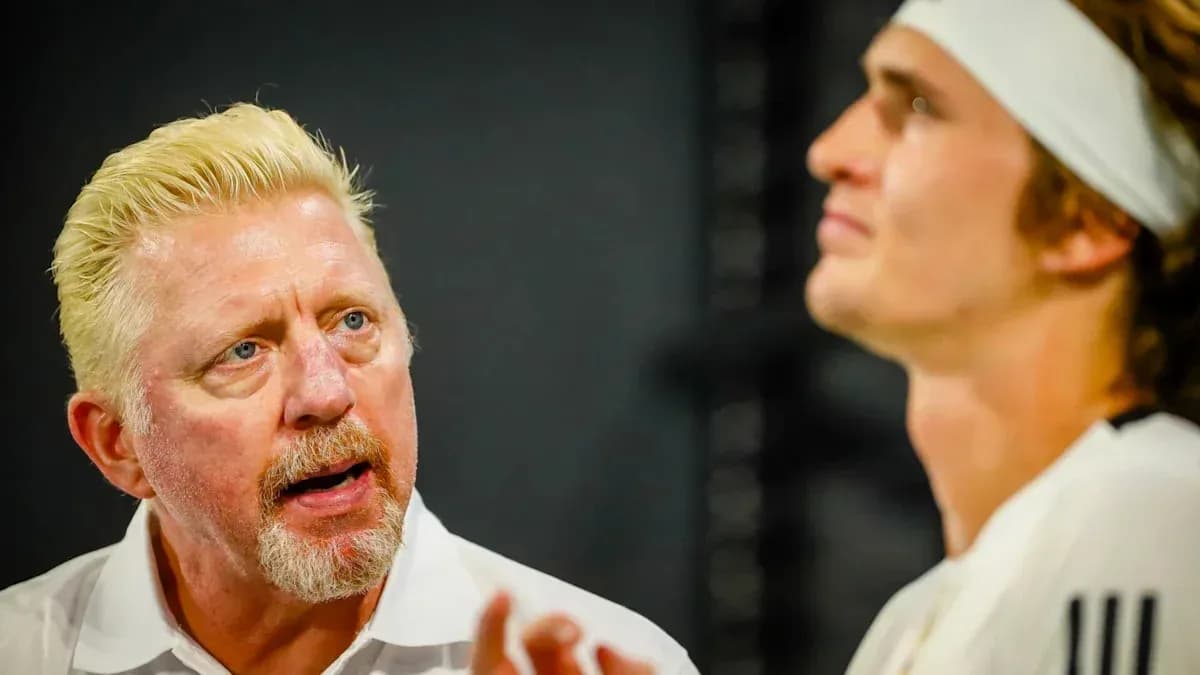
Boris Becker Ends Coaching Partnership with Zverev
Alexander Zverev has finally walked through the door that seemed permanently jammed shut. Roland Garros champion. US Open champion. World No. 1 at last.
For years he collected almost everything the sport could offer outside the Grand Slams, a glittering résumé with one glaring gap. In 2026, he erased that flaw with a season that will sit in bold type in German tennis history: the title in Paris, a run to the Wimbledon final, then the trophy in New York.
That surge has pushed him to the top of the rankings, though not everyone has been convinced by the pathway or the timing of his rise. Debate over the “validity” of his No. 1 status has followed him, even as the trophies stack up.
What is no longer up for debate is his place in German tennis folklore. Among the men, only Boris Becker can point to a more decorated career. The two have even shared a trench from time to time, Becker stepping into Zverev’s camp in spells across the years.
That chapter, Becker says, is closed. Firmly.
“I have to be the boss in the ring”
Speaking to Der Spiegel, Becker was asked if he could imagine coaching Zverev again. His reply cut through any nostalgia.
"I have to be the boss in the ring. If a family member then has a different opinion, in a language I don't understand, in this case Russian, then it's unacceptable," he said.
The image is clear: a crowded player box, competing voices, and a coach who feels his authority diluted. Becker painted the picture of a man who had thrown himself fully into Zverev’s cause.
"I was in his box at many matches, I was on the practice court, and I actively supported him.
"We've had our ups and downs. I'm 30 years older than him; I have children his age. You have to tell these young people what they don't like to hear sometimes.
"That might motivate them even more; they think, 'What's he talking about? I'll show that old guy.' That's okay. The main thing is that he wins. And he did this year."
There is respect in those words, and a hint of pride, but also a hard boundary. Becker will not step back into that particular arena.
Praise for a champion, distance from the project
Becker’s admiration for Zverev’s breakthrough has been clear since Paris. When the 29-year-old finally lifted his first major trophy at Roland Garros, Becker publicly lauded the achievement and the scale of the mental hurdle cleared.
Yet harmony between the two has never felt entirely secure. His latest comments underline that the relationship, while not hostile, is complicated. Mentor and protégé now stand as separate figures in German tennis, not as a reunited team.
Zverev, for his part, has answered almost every question the sport could throw at him this year. Two Slams. A Wimbledon final. The No. 1 ranking. His game has matured, his resolve hardened. Whether he needed Becker in his corner to get there is now purely hypothetical.
Becker weighs next move
What Becker has not ruled out is a return to the ATP Tour in another role. Far from it.
"There have been several inquiries; of course I won't mention any names! Let's see what happens next year," he revealed.
So the door is shut on Zverev, but not on coaching. A different player, a different box, a different dynamic. The six-time Grand Slam champion still sees a place for himself in the modern game, just not alongside the man currently carrying the German flag at the very top of the rankings.
Zverev moves on as a multiple Grand Slam winner and world No. 1, Becker as the only German man with a bigger haul and a coach in demand once more.
The question now is not whether they will work together again. Becker has answered that. It is who steps into his corner next—and whether he can help shape another champion in an era Zverev is suddenly trying to rule.