Big Bash League Set for Ownership Change
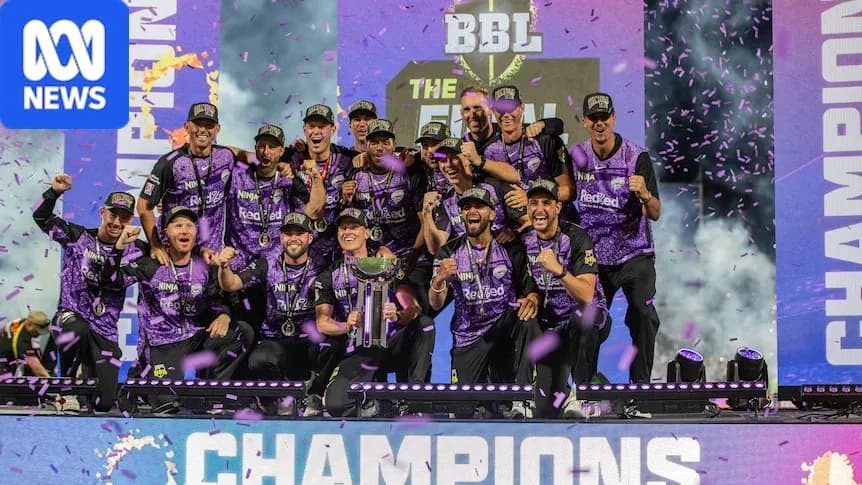
The Big Bash League is about to change shape. Not on the field, but at the ownership table.
In one of the most significant structural moves Australian cricket has seen in decades, Cricket Australia (CA) is set to partially privatise the BBL, opening the door for states to sell up to 49 per cent of their franchises.
Power play in the boardroom
The call was effectively made at a CA board meeting last week and is expected to be formally signed off on Monday night. A public announcement is slated for Tuesday, with several Australian cricket superstars to be rolled out alongside the governing body – a notable win for CA given early resistance from the Australian Cricketers’ Association (ACA).
Not everyone is celebrating.
New South Wales and Queensland, long regarded as heavyweight states in Australian cricket politics, are firmly against the plan. They will watch on as CA presses ahead without their full support, a move that will only deepen existing tensions over the game’s financial direction.
Tasmania, Victoria and Western Australia are backing the shift. The green light will allow those states to start a market-sounding process to sell minority stakes in their BBL teams. South Australia sits somewhere in the middle – cautious, but more open to the idea than NSW or Queensland.
Players’ slice of the pie
The ACA has not tried to block privatisation outright. Its position is more nuanced: it supports the move, provided the long-term interests of the game are protected and players are properly rewarded.
That is where the next battle lies.
The players’ union is still locked in negotiations with CA over how much of the new money flows into player payments. Those talks will be folded into a fresh memorandum of understanding between the two parties, with the ACA arguing for a greater share of revenue for its members.
The stakes are clear. If private equity pours in and the league surges in value, players want to be at the centre of that uplift, not watching from the edges.
Philosophical divide
Behind the headlines sits a stark philosophical split.
Cricket New South Wales has long argued that private equity is little more than a short-term sugar hit. In its view, Australian cricket needs deeper structural reform to secure financial stability, not a one-off cash injection that papers over cracks. NSW has been contacted for comment, but its stance is well known within the game.
CA sees it differently. The governing body believes opening the BBL to private investment is essential if the league is to keep pace with booming T20 competitions overseas. In that model, proceeds from any sales would not just sit with the clubs, but be spread across the broader Australian cricket ecosystem.
It is a bet on scale and speed: bring in outside capital, grow quickly, and hope the rest of the game rises with it.
Global money circles the BBL
The timeline is aggressive. Transactions could be completed before the start of next season.
Prospective international team owners are expected to be courted over the coming summer, with potential buyers likely to be in Australia to study this year’s BBL tournament up close. The league, once a domestic curiosity, is now a shopfront.
The groundwork has already started. In June, the process accelerated when Cricket Victoria moved early, drawing up plans to sell the Melbourne Renegades while retaining the Melbourne Stars licence. It was a clear signal to the rest of the country: the market is open.
Several state chief executives have since flown to India and the UK, meeting prospective investors and testing the appetite for stakes in Australian clubs. Those trips came even before formal approval from CA to launch a sell-off process – another sign of how quickly the landscape is shifting.
The BBL was built as a domestic entertainment product. Soon, it may be part-owned by the same global operators who already control slices of T20 leagues in India, the Caribbean, South Africa and beyond. The question now is not whether the money will come.
It is what Australian cricket will look like once it does.