Ben Shelton's Historic US Open Final Run Ends Against Alexander Zverev
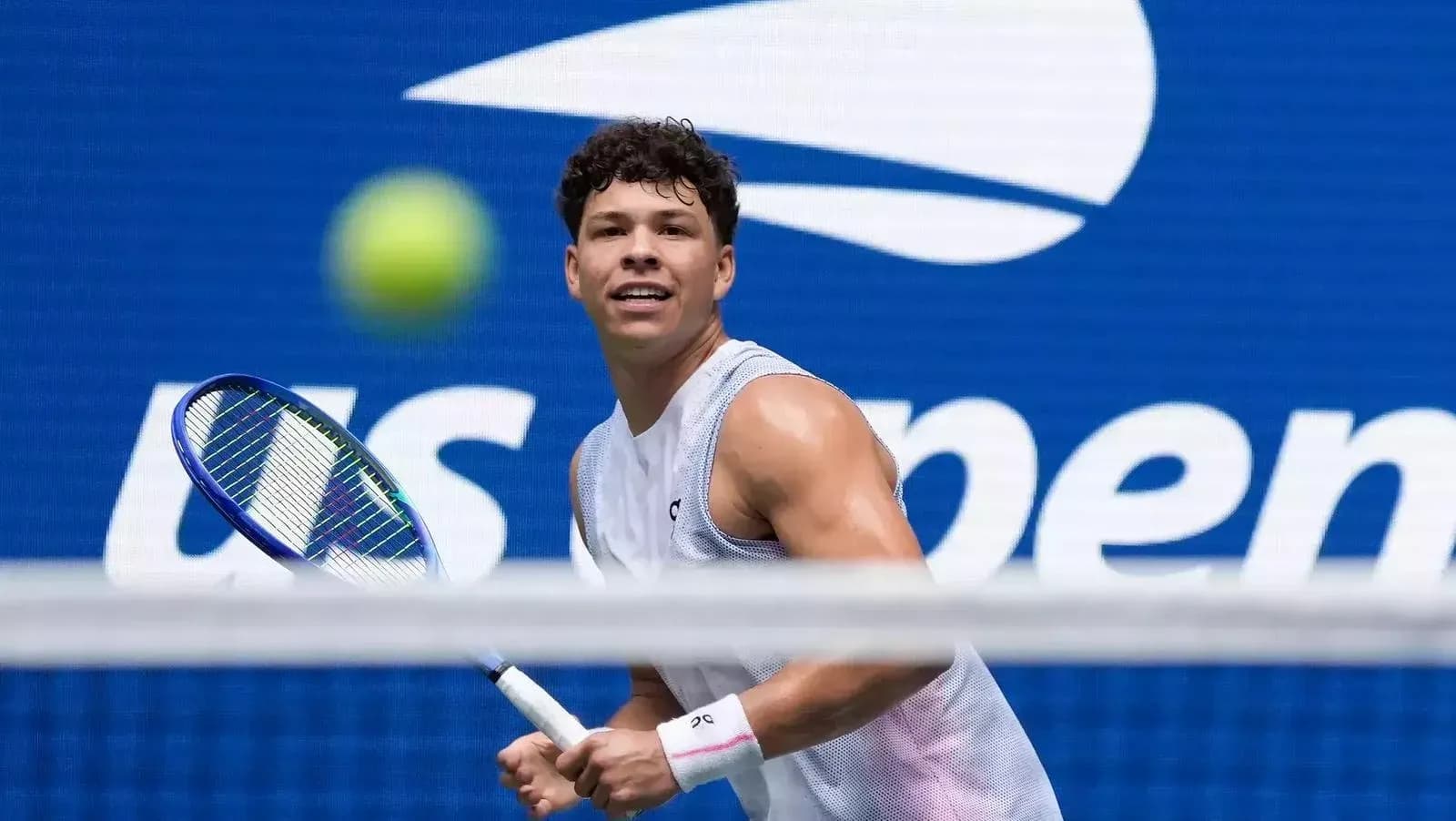
NEW YORK, N.Y. – Under the lights of Arthur Ashe Stadium, Ben Shelton’s audacious US Open run finally met its ceiling – and it was the world No. 1 standing there.
Alexander Zverev, unflinching in the big moments and ruthless on the return, beat Shelton 6-3, 7-6(2), 5-7, 6-2 on Sunday night to claim his second major title of the year and reinforce his grip on men’s tennis. The win lifts the German to a remarkable 25-2 in majors this season and 6-0 in his head-to-head with Shelton.
Shelton walked off without the trophy, but with history at his back.
He is the first former NCAA singles champion to reach a Grand Slam final since 1986 and the first African American man to play in a Grand Slam singles final since MaliVai Washington at Wimbledon in 1996. On Monday, he will rise to a career-high No. 4 in the PIF ATP rankings – the highest-ranked former college player on tour since James Blake in 2006.
Nerves, errors, and a ruthless No. 1
The opening set told the story of a young contender feeling the weight of the stage and a seasoned No. 1 ready to pounce.
Zverev broke early for 2-0, setting the tone with heavy, deep returns and the kind of baseline discipline that has defined his surge this season. Shelton, jittery but dangerous, clawed back to 4-3 by taking the seventh game and briefly ignited the crowd. Just as he threatened to settle, the nerves crept back in. Serving to stay in the set, Shelton double-faulted to hand Zverev the opener, the kind of gift a top seed rarely refuses.
From there, Zverev tightened the screws.
The second set finally produced the first deuce game of the match, in the opening game, and Zverev edged it to keep his nose in front. Shelton responded with a love hold and, for a while, both men traded blows, game for game, in a pattern that hinted at a long night.
The tension peaked in the tiebreak. Zverev didn’t blink. He stormed to a 5-0 lead, suffocating Shelton with depth and consistency, and closed out the breaker 7-2. Through two sets, the numbers underlined what the eyes already knew: Zverev was in control, forcing long, grinding exchanges that Shelton could not consistently solve. The American’s serve, usually a weapon, misfired too often. He piled up 29 unforced errors across those first two sets, and against the world No. 1, that margin was fatal.
Shelton finally breaks through
Set three began with a familiar pattern – both men holding, both probing. Zverev kept landing aces, eight by the time he leveled the set at 5-5, and looked poised to close the door in straight sets.
The pressure finally told, but this time in Shelton’s favor.
At 5-5, he dug in, extended rallies, and for the first time all night began to consistently push Zverev off his spots. Then came the breakthrough that had eluded him for more than two hours: Shelton broke Zverev’s serve for the first time, ending an astonishing run of 66 consecutive service games held by the German.
With the stadium rising behind him, Shelton seized the moment. Serving for the set at 6-5, he held his nerve while Zverev faltered, sending a shot wide to hand the American the set 7-5. What had looked like a procession suddenly felt like a contest again.
Zverev slams the door
Any thought of a full-scale comeback, though, was quickly checked.
As the match moved into its third hour, Zverev reset and struck first in the fourth set, breaking for a 2-0 lead. Shelton, still swinging, dragged the set back to 3-2 and kept the crowd engaged, but Zverev’s authority at the net and on key points returned with a vengeance.
He surged to 5-2, one game from the title, stepping forward to finish points and refusing to let Shelton dictate. Serving for the championship, Zverev earned match point and watched as Shelton’s final return sailed long. No drama, no wobble – just a clean, decisive close from the top seed to lock in his second major of the season.
Shelton’s night ended in defeat. His tournament did not end in disappointment.
From college courts to the US Open final in a dizzying rise, he leaves New York not just as a finalist, but as a new force at the top of the sport – and as the standard-bearer for a new generation of American men’s tennis.