Ben Shelton Outlasts Carlos Alcaraz in Epic U.S. Open Match
Ben Shelton didn’t just outlast Carlos Alcaraz. He outlasted the clock, the night, and the kind of match that usually belongs to the defending champion.
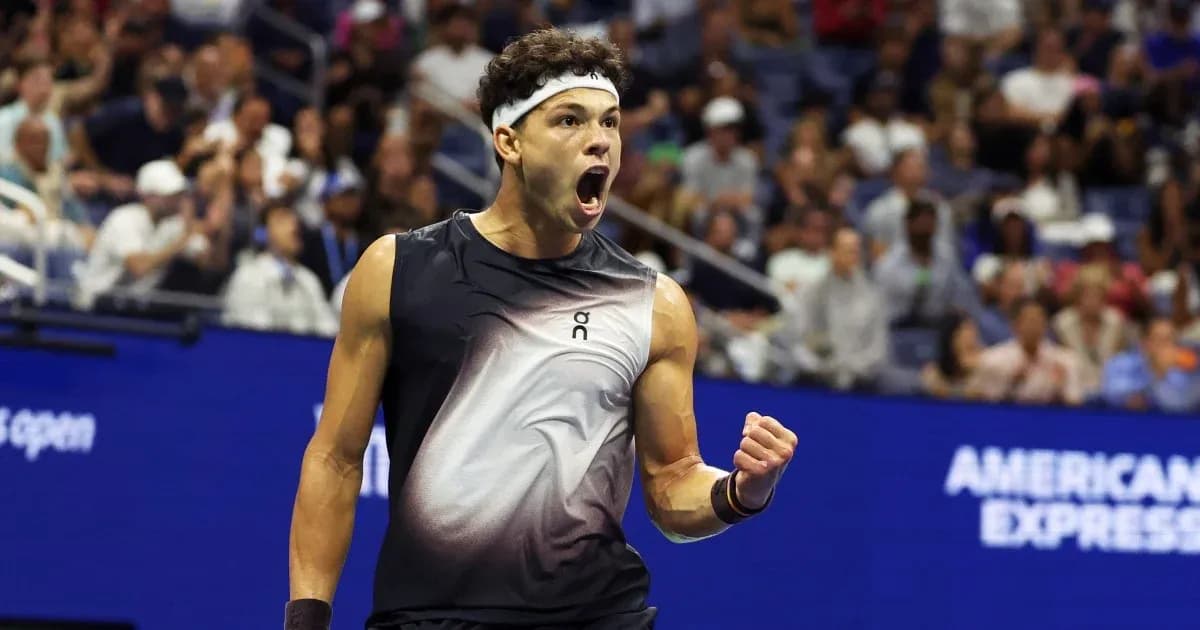
At 3:33 a.m. in Arthur Ashe Stadium, with thousands still on their feet and refusing to leave, the 21-year-old American finished off a five-set epic to reach the U.S. Open semifinals and snap Alcaraz’s 18-match Grand Slam winning streak. The scoreline felt almost secondary to the spectacle. Almost.
What mattered most was this: Shelton, the No. 8 seed, is still standing after 4 hours and 28 minutes of heavy hitting, nerve, and sheer stubbornness. Alcaraz, the sport’s electric frontman, is not.
A Night That Wouldn’t End
New York has seen late nights. This one rewrote the script.
Under the Ashe lights, with the air thick and the crowd louder than any reasonable hour should allow, the match swung like a pendulum. Alcaraz snatched the first set in a tiebreak, looking every bit the two-time major champion rediscovering his rhythm after a season hampered by a wrist injury.
Shelton didn’t blink. He punched back, taking the second and third sets with the kind of fearless shot-making that has made him the most explosive of the new American wave. The rallies stretched, the tempo rose, and the physical toll showed; at one stage, Alcaraz could be seen vomiting into a towel, a stark image of how brutal the night had become.
The champion responded with fury. Alcaraz tore through the fourth set 6-1, ripping returns, stepping inside the baseline, and briefly restoring the sense that order would be restored, that the No. 2 seed would steady and march through as he so often does in best-of-five.
Instead, the match descended into a final-set street fight.
Trading Blows to the Very End
Every service game in the fifth felt like a mini-crisis. Shelton leaned on his booming lefty serve and a forehand that refused to play safe. Alcaraz countered with elastic defense and lightning counters, the two men trading blows as if daylight depended on it.
They couldn’t break each other. Could barely separate each other.
The pressure finally told in the deciding tiebreak. Shelton surged, Alcaraz chased, and point by point the American edged closer to the biggest win of his career. At 10-7, it was over. Shelton roared, the stadium erupted, and the clock confirmed what everyone already knew: they had just witnessed the latest finish in U.S. Open history.
That record had belonged to another Alcaraz classic, his 2:50 a.m. win over Jannik Sinner in the 2022 quarterfinals, a match that helped launch him to his first title in New York. This time, he walked off on the wrong side of history, left to regroup and chase again the form that once made him the sport’s unstoppable force.
An American Finalist Guaranteed
Shelton’s reward is a semifinal against Francis Tiafoe, who earlier in the day outlasted fellow American Alex Michelsen in another bruising contest, mounting repeated comebacks to get through. Between them, they guarantee something the home crowd has craved for two decades: an American man in the U.S. Open final.
Not since Andy Roddick lifted the trophy in 2003 has a U.S. man won a Grand Slam. On Sunday, one of Shelton or Tiafoe will walk onto Ashe with a chance to end that drought.
It capped a day of drama in Flushing Meadows, where three of the four singles quarterfinals went to match tiebreaks. The tone was set early by Aryna Sabalenka, who edged Wimbledon champion Linda Noskova to keep alive her bid for a third straight U.S. title. The marathon theme never really let up.
New York, Unfiltered
What did not waver, even as the clock lurched past midnight and then well beyond, was the noise. Both Shelton and Alcaraz drew loud, partisan roars, the crowd split between the home hope and the global star who has already become a New York favorite.
“It’s incredible,” Shelton said on court, soaking in the scene. “I always say that this is the greatest sports city in the world, I say that this is the greatest stadium in the world. I’m just hoping that my best friend and my sister over there don’t have to be at work at 6 a.m. in three hours.”
They might be tired. So will he. But Shelton will wake up a semifinalist, carrying a city’s energy and a nation’s hopes into a showdown that suddenly feels bigger than just another match on the schedule.
The night belonged to him. The question now is whether the tournament will too.