Ben Shelton Triumphs in Epic U.S. Open Match Against Carlos Alcaraz
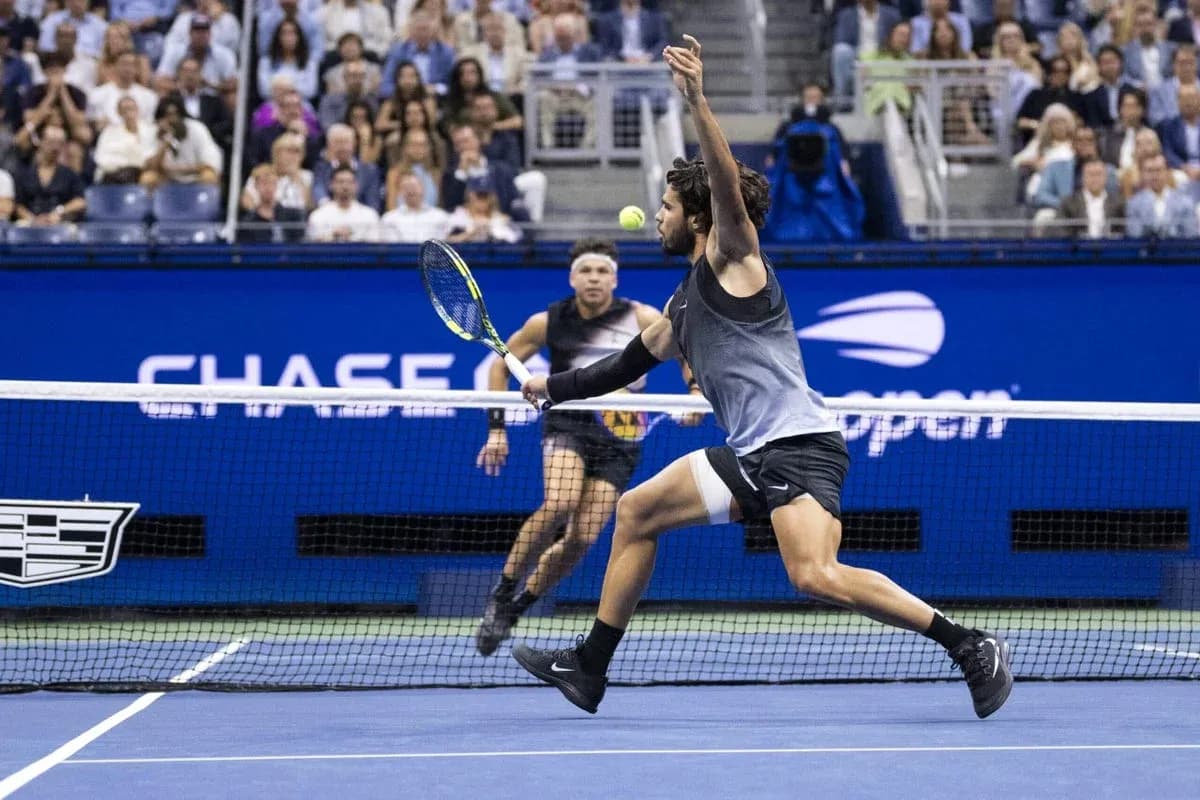
NEW YORK — By the time Ben Shelton uncorked a 146 mph ace to end it, Arthur Ashe Stadium felt less like a tennis court and more like a boxing ring that had somehow stayed upright until 3:33 a.m.
This wasn’t just a match. It was a late‑night title fight between an American showman and a Spanish prodigy who has already bent the sport to his will. Rackets and balls were the tools, but what Shelton and Carlos Alcaraz staged in the latest finish in U.S. Open history was about nerve, endurance and a refusal to bow to the clock.
Shelton survived, 6-7(5), 6-1, 6-3, 1-6, 7-6(10-7), and roared into the darkness, arms wide to the faithful few who refused to go home.
“It was a war. Epic match. So physical,” Shelton said afterward, calling it “the most enjoyable match I’ve had in my career.” Across the net stood a 23-year-old already described as one of the great champions of the sport. On this night, the American finally found a way through him.
A heavyweight entrance, a brutal first blow
They didn’t strike a ball until 11:05 p.m. ET, a pay‑per‑view main event start time in front of nearly 24,000 fans. The atmosphere fit the hour: loud, restless, waiting for someone to land the first clean shot.
The opening set played to script. Alcaraz and Shelton traded haymakers, each trying to string together enough blows to wobble the other. Shelton matched the seven-time Grand Slam champion stride for stride, but at 5-5 the familiar pattern with Alcaraz emerged. A couple of loose strokes here, a missed first serve there, and the Spaniard pounced for the break.
Shelton hit back immediately. Alcaraz, so often a model of precision, shanked two forehands badly, a reminder that he had spent nearly five months out with a wrist injury. For almost anyone else, the rust would be expected. For a player who had looked so sharp through four rounds, it jarred.
The tiebreak turned wild. Both men blinked, then produced a point that brought the stadium to its feet: lunges, desperate improvisation, Shelton finishing with a delicate lob that left Alcaraz sliding toward the back fence, back to the net. Shelton led 5-3. He could feel the set.
Then the champion’s surge arrived.
Alcaraz rushed him into a routine backhand miss, lasered a backhand up the sideline, followed with a forehand into open space, then dragged Shelton through one of those all‑court rallies that leave opponents questioning everything. Shelton’s outrageous tweener save only delayed the inevitable. First set, Alcaraz.
Shelton had taken a full‑blooded cross to the jaw. More than an hour of effort, nothing on the scoreboard to show for it. It felt like so many of his recent nights against Alcaraz and Jannik Sinner.
Shelton flips the script
What came next said plenty about both men.
The next set and a half slipped away from Alcaraz in a blur of errors. Seventeen unforced in the second set alone, against just eight winners. Shelton broke once. Then twice. Then a third time. The scoreboard blinked 6-1 Shelton, and suddenly the match was level.
Shelton’s serve, always his lifeline, now manacled Alcaraz just enough. The first set’s intensity had drawn something out of the Spaniard. Maybe it was the layoff finally catching up. Maybe the hour. Nobody trains to play elite tennis at 2 a.m., not even a Spaniard raised on late nights.
Shelton had already done this shift earlier in the tournament, staggering through two sets before steadying himself to beat Denis Shapovalov after a long Williams sisters doubles match. He understood what it meant to find clarity in the fog.
The third set belonged to him. Shelton stepped forward, hammering body serves, driving the ball into the corners, forcing Alcaraz to chase. He grabbed an early break again. Midway through the set, Alcaraz finally tried to rouse himself, pumping his fists, shouting toward his box, anything to shake off the daze.
Shelton, though, kept coming. Serving for the set, he found himself at 30-30 in yet another outrageous rally, both men sprinting for sharply angled drop shots, covering impossible ground. Alcaraz finished it with a twisting forehand winner while drifting toward the back wall, the kind of point he usually uses as a springboard to a run.
Shelton knew the danger. He walked to his towel. As he passed, his father and coach, Bryan, leaned over the video board and extended a hand. Keep going. Keep running.
Shelton slapped it. Three pumped serves. Three Alcaraz errors. The set was his. One away from the finish line.
Alcaraz’s last stand
On the changeover, Alcaraz sat with his head between his knees, looking spent. When he rose for the fourth set, he seemed to be moving on instinct. Shelton sensed it. A forehand error from Alcaraz opened the door for a knockout punch. Shelton missed with a backhand. Another loose Alcaraz shot, another chance. This time Shelton pushed a forehand long.
He didn’t panic. Alcaraz was giving him looks. Surely another would come.
It didn’t. Alcaraz found a way to raise himself from the canvas. He serve-and-drop-volleyed off a rocket return, drew one more error, and finally roared. The champion flickered back to life.
Tennis turns quickly. Moments earlier, Shelton had been cruising. Now his radar deserted him. Alcaraz sensed the wobble, dragged him corner to corner, and broke him for the first time since late in the opening set. The fourth set rushed away 6-1. At just before 2 a.m., with around 10,000 still in their seats, this thing was heading the distance.
Nothing good is supposed to happen after 2 a.m. Unless two otherworldly tennis players decide that’s the perfect time to test each other’s limits.
Into the record books
Fifth set. 2-2. Alcaraz carved out break point with a ripping forehand. The moment screamed for a kill shot. Shelton refused.
He hopped back, rose into an overhead and crushed it so hard that Alcaraz tumbled to the court. Shelton held, then turned to the crowd, racket raised, demanding more noise. “U.S.A” chants rolled around Ashe.
At 2:45 a.m., Bryan Shelton stood, urging his son on. By 2:51 a.m., Shelton and Alcaraz had crossed into history, passing the previous latest finish at the U.S. Open, set in 2022 when Alcaraz and Sinner played a quarterfinal that changed the sport’s present.
Now Alcaraz hunted another escape. Shelton earned three chances to move within a game of serving for the match. On the first, he floated a chip approach instead of ripping it. As the ball landed, the net-post lights flashed red. Out. Not this time.
On the second, Alcaraz ripped a running crosscourt pass. On the third, Shelton drove a backhand into the net. Three hours had become four. The clock hit 3 a.m.
At 3:20, almost 14 hours after the first ball had been struck in Arthur Ashe Stadium that day, they faced the final test: a 10-point tiebreak for the match. “Let’s go Ben” rang around the arena. Fans clapped, shouted, clung to every point. In the quiet between serves, the beep of garbage trucks preparing the Billie Jean King National Tennis Center for sunrise cut through the air.
Shelton jumped ahead 3-1. Then the nerves bit. Three errors in four points, plus one heavy Alcaraz forehand, flipped the breaker and silenced the chants.
They didn’t stay quiet for long.
Alcaraz started to leak. Shelton slammed another serve. The Spaniard sent a forehand long. “Let’s go Ben” swelled again. Shelton moved to 8-7, serving, the match sitting on his racket.
One serve into the body. 9-7.
He bounced the ball, stared down the baseline, and went for his signature. Ace. Knockout. The American dropped his shoulders, then exploded, a 23-year wait for a U.S. men’s Grand Slam champion suddenly feeling less like a statistic and more like a challenge.
On Sunday, one American man will play for the U.S. Open title. Shelton still has to get through Frances Tiafoe first.
At 3:33 a.m., with the stadium half-asleep and fully spellbound, it felt like the start of something rather than the end.