Ben Shelton's Defeat: Zverev Claims Second Grand Slam Title
Ben Shelton’s roar came late. One fist pump, one cupped ear to Arthur Ashe Stadium, one brief crackle of belief at the end of a third set he had no right to steal. For a moment, the match felt alive again.
It didn’t last.
Facing a relentless Alexander Zverev, Shelton had been outgunned and outplayed for nearly three hours. Down two sets and serving at 5-6 in the third, he finally swung with abandon, thundering forehands and attacking returns to break the German for the first time. The crowd woke up with him. A fourth set beckoned. The possibility of something wild flickered.
Then the fourth set began, and reality reasserted itself with brutal speed.
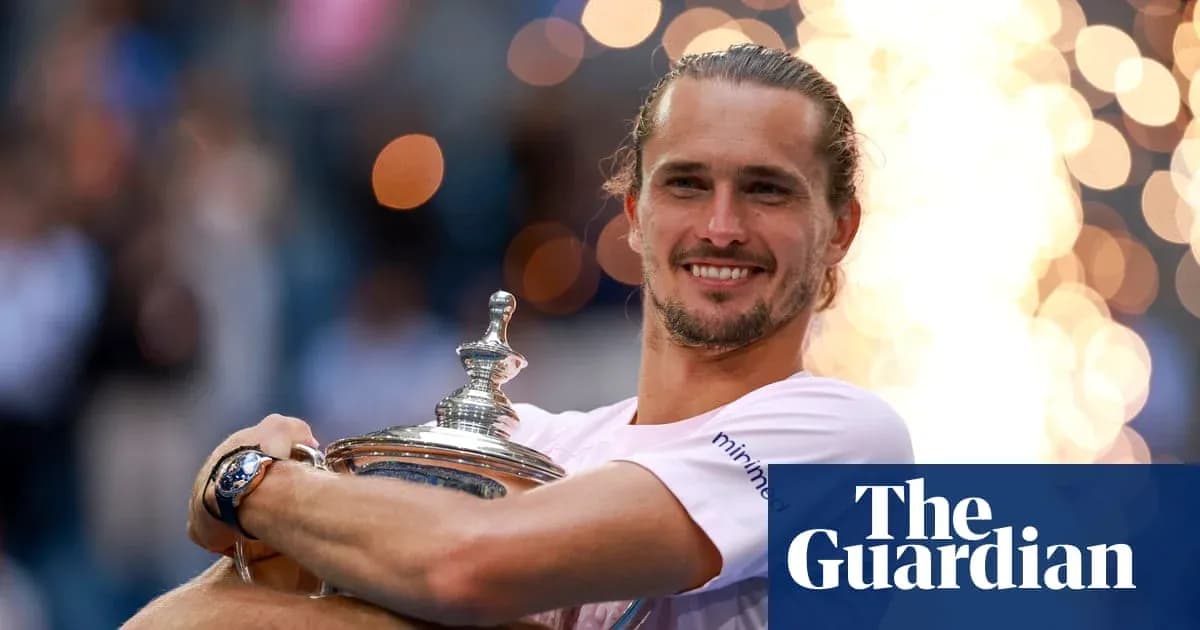
Shelton opened with a nervous, ragged service game and was broken immediately. The spark he had worked so hard to ignite never caught fire. Zverev, unshaken, tightened his grip and closed out a 6-3, 7-6 (2), 5-7, 6-2 win to claim his second grand slam title of the year and a US Open that had often felt like a test of endurance more than brilliance.
Zverev’s season of seizing the moment
At the start of the year, Zverev stood in a familiar place: highly ranked, highly regarded, and still without a major title. That particular burden has now vanished in emphatic fashion.
By lifting his second slam of the season, the German joins a rare group. Only Jimmy Connors, Guillermo Vilas and Jannik Sinner had previously claimed their first two grand slam titles in the same campaign in the open era. Zverev now stands alongside them, his long, uneven journey finally producing the trophies that once seemed to slip from his grasp.
This one also carried a slice of American history with it. Shelton was trying to become the first Black American man since Arthur Ashe in 1968, and the first American man since Andy Roddick in 2003, to win the US Open. Zverev shut that door with clinical efficiency.
The match-up itself told its own story. Zverev now leads their head-to-head 6-0, a lopsided record that speaks less to chance than to patterns. The German’s game chews through Shelton’s strengths: a superior serve over the long haul, fewer wild swings from the baseline, and a world-class two-handed backhand that blunts the left-hander’s explosive forehand.
Shelton can hit through almost anyone. He cannot yet hit through Zverev.
A serving contest decided in the mind
With two of the biggest servers on tour, the script looked simple: hold serve, grab a chance, live in tie-breaks. Zverev embraced that brief. Shelton flinched.
From the opening game, the 23-year-old American wore his nerves on his racquet. Serving at 0-0 in the first set, he double-faulted on break point to hand Zverev an immediate advantage. The pattern returned at the worst possible time. Serving at 3-5, trying to at least ask a final question in the set, Shelton double-faulted again—this time on set point. Two costly lapses, two breaks, one set gone.
From the back of the court, the gap widened. Shelton’s forehand, his calling card, sprayed errors under pressure. Zverev, by contrast, built the points with cold precision, directing rallies into the American’s weaker patterns, absorbing pace and redirecting it with that rock-solid backhand.
The serve numbers underlined the difference. Zverev landed 69% of his first serves and won 85% of those points, a suffocating combination that left Shelton little room to breathe on return. When the German needed a first serve, he usually found it. When Shelton needed one, doubt crept in.
The second set offered the American a foothold. He steadied on serve, found better rhythm, and at least dragged Zverev into a tie-break. The stadium leaned in. If Shelton could steal this, the match might crack open.
Instead, Zverev slammed it shut.
He grabbed the first mini-break with a searing forehand passing shot, punishing a timid approach from Shelton. Moments later, in another tense exchange, he ripped a vicious forehand down the line for a second mini-break. Two unreturned serves followed. In a blur, Zverev led 5-0 in the breaker. The set, and almost the match, slipped out of Shelton’s hands.
A season of opportunity, and who took it
The result fit the broader shape of a strange grand slam year on the ATP tour. Carlos Alcaraz and Jannik Sinner, the two young stars who had seemed poised to dominate, spent long stretches battling injuries and physical issues. Their absences and limitations opened the door for others to storm through the biggest draws in the sport.
Very few did.
Zverev was the exception. While others faltered, he kept turning up deep into majors, stacking semi-finals and finals, staying healthy, and holding his nerve often enough when it counted. Each run hardened him. Each win added another layer of belief. By the time he walked into Arthur Ashe Stadium for this final, his presence there felt less like a breakthrough and more like a new normal.
Yet his success continues to arrive with a cloud that will not disperse for many.
Zverev has been accused of physical abuse by two former girlfriends, Olya Sharypova and Brenda Patea. During his run to the French Open final in June 2024, he settled an assault case in Germany relating to allegations that he pushed and strangled Patea, the mother of their daughter. The case ended without a verdict, with a court spokesperson stating: “The truth remains open.” Zverev has denied those charges and all other allegations against him.
The tension around his presence at the top of the sport has surfaced publicly before. At the Australian Open last year, a fan heckled him before his trophy ceremony, shouting: “Australia believes Olya and Brenda.” His three grand slam finals this season, including this one, unfolded without incident from the stands. He remains a popular figure at the majors. The discomfort, though, lingers for many watching from afar.
Shelton’s rise, and the gap that remains
For Shelton, this defeat closed the most important summer of his young career. He arrived on the North American hard courts trying to shake off the sting of a painful first-round exit at Wimbledon. He leaves with a second Masters 1000 title, claimed at the Canadian Open, a first grand slam final, and a new career-high ranking of No 4.
Those are not consolation prizes. They are markers of real progress.
His serve remains one of the most explosive weapons in the game. His athleticism and swagger have turned him into a box-office draw wherever he plays. His willingness to compete, even when overmatched, carried him all the way to this Sunday afternoon on the biggest tennis stage in the world.
But the harsh truth of elite men’s tennis is that the very best expose every weakness. Zverev did exactly that. Shelton’s return of serve still lags behind the top echelon. His ground game, especially under sustained pressure, can fragment. Against most players, his firepower covers those cracks. Against someone of Zverev’s control and resilience, they widen into chasms.
At 23, Shelton has time—plenty of it. Time to sharpen his return, to tighten his forehand in long rallies, to learn how to manage the biggest moments with something closer to Zverev’s composure. This loss will sting, and it should. It also sets a clear target.
On this lonely afternoon inside Arthur Ashe Stadium, the gap between promise and supremacy was laid bare. The question now is simple: how quickly can he close it?