Australian cricket captains urge government to address Imran Khan's treatment
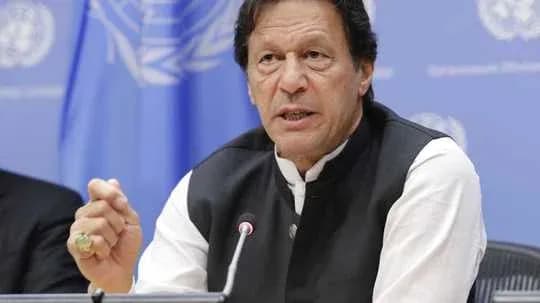
Seven of Australia’s most respected cricket captains have broken ranks with convention and written directly to Foreign Minister Penny Wong, urging the government to raise concerns with Pakistan over the treatment of former prime minister and World Cup-winning captain Imran Khan.
Allan Border, Greg Chappell, Ian Chappell, Belinda Clark, Kim Hughes, Mark Taylor and Steve Waugh have put their names to a letter that steps carefully around politics but lands heavily on principle.
They stress they are not entering Pakistan’s legal or political arena. They are entering, as they see it, a moral one.
“We take no position on the legal or political case against him. That is Pakistan's business. But the treatment of any person in detention is a matter of basic humanity, whatever their politics,” the letter states.
The former captains highlight reports of limited medical care, heavily restricted contact with Khan’s family and minimal access to legal counsel. Those claims, they note, have now been echoed publicly by Khan’s own relatives.
What troubles them most is the sense that nothing is changing.
“This is not the first time international captains have raised this concern. It has been brought to public attention on two separate occasions in the past six months, and the reports since then – now echoed by his own family – suggest the situation has not improved,” they write.
Their request to Wong is direct: use Australia’s voice.
“We would be grateful if the Australian Government could raise this directly with the relevant Pakistani authorities,” the letter concludes.
A growing chorus
This latest intervention did not come out of nowhere. It follows an increasingly loud and unusual campaign from some of the game’s biggest names, cutting across eras and national loyalties.
In February, 14 former international captains – among them Sunil Gavaskar, Kapil Dev and Greg Chappell – called for improved medical care and humane conditions for Khan in detention. That in itself was striking: Indian, Australian and other former leaders of national sides aligning on the treatment of a man who has long been one of cricket’s most polarising figures.
Six months later, the pressure rose again. In August, 21 former captains renewed the appeal, this time responding to developments around a Supreme Court-directed medical examination and family visits. The message was clear: scrutiny of Khan’s welfare would not quietly fade away.
The Atherton interview that lit a fuse
The issue flared again last month at Lord’s, of all places, during the second England–Pakistan Test.
During the lunch break, former England captain Michael Atherton conducted a televised interview on Sky Sports with Khan’s sons, Sulaiman and Kasim. They spoke about their father’s deteriorating health and the conditions in which he is being held.
That conversation, beamed into living rooms and press boxes, cut through the usual mid-session analysis. It also provoked an angry response.
The Pakistan Cricket Board lodged a formal complaint over the broadcast. Reports then emerged of a threat that the Pakistan team would not return to the field after lunch in protest at the segment being aired.
Play continued. The controversy did too.
Cricket’s conscience
For the Australian signatories, the line they are trying to walk is a narrow one. They are adamant they are not endorsing Khan’s politics or challenging Pakistan’s courts. They are appealing, instead, to what they describe as “basic humanity”.
That distinction matters to them. Many of these captains have spent decades insisting sport should not be a pawn in political games. Yet they also know cricket has always reflected the world around it, from apartheid-era boycotts to modern debates over sportswashing and human rights.
Now, a group of men and women who once led Australia on the field are asking their own government to quietly but firmly step in off it.
The ball is in Canberra’s court.