Aryna Sabalenka Survives Thrilling US Open Quarter-Final
Aryna Sabalenka looked up at the Arthur Ashe scoreboard and, for a moment, seemed to accept the inevitable. The US Open crown, the one she has guarded so fiercely, appeared to be slipping away.
Then she tore the script up.
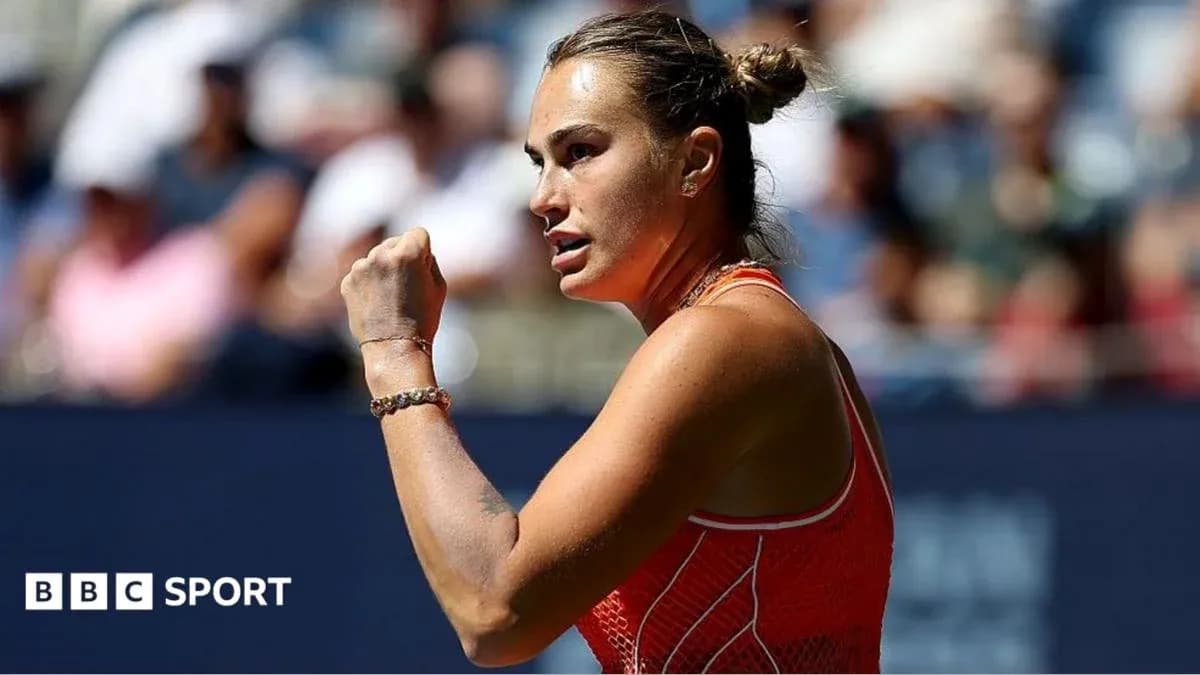
The two-time defending champion survived a ferocious challenge from Wimbledon winner Linda Noskova, clawing back from the brink to win 7-6 (7-1) 3-6 7-6 (10-7) and reach yet another semi-final in New York. It took just under two and a half hours, and every ounce of her nerve.
This was not the front-running Sabalenka who has bulldozed so many on hard courts. This was the survivor.
A champion on the ropes
For the first time this fortnight, Sabalenka was dragged into a deciding set. For the first time, she looked genuinely vulnerable.
She trailed 4-2 in the third. Then 2-0 in the match tie-break. Noskova, the sixth seed, was the one dictating rallies, hitting more winners, making fewer unforced errors, and repeatedly standing firm on break points, saving seven of nine.
Sabalenka, by contrast, wrestled with the worst parts of her game. The double faults – four in total – arrived at the worst possible moments. Break points came and went. The match threatened to follow the same painful pattern as her French Open quarter-final collapse, where her emotions cracked open a door her opponent gladly walked through.
This time, she slammed it shut.
“I’m speechless right now. I was pushing to the limit in this match, especially in the third set,” she said afterwards. “I honestly thought that that’s it, the match is over, but probably that’s what helped me to feel loose and go after my shots. [I’m] super happy to get the win.”
Loose, at last. But it took a long, chaotic road to get there.
Flying start, sudden turbulence
The opening felt like a routine defence of a major champion’s territory. Sabalenka broke Noskova in the Czech’s first service game, stamped her authority from the baseline and surged into a 5-2 lead. The ball flew off her racket; Noskova chased shadows.
Serving for the set, though, Sabalenka’s serve wobbled. A double fault crept in. The game slipped away. The door opened.
She recovered in style in the tie-break, ripping through it 7-1 with the kind of controlled aggression that has become her trademark in New York. But that double fault in the previous game was not a one-off. It was a warning.
The second set turned on those small fractures. Sabalenka created three early break points and squandered them all. At 3-2 down, another double fault, this time at 30-40, handed Noskova the crucial break. The Czech didn’t hesitate. She drove through the set, 6-3, and forced a decider that felt increasingly like her territory.
Sabalenka’s body language sagged. Her serve, again, betrayed her. Two more double faults led to a third break against her, and when Noskova held to love for a 4-2 lead in the third, the defending champion looked spent.
Turning the storm
That was the moment Noskova could almost touch the biggest win of her career. Eleven straight singles victories at Grand Slams had carried her to this point. Her groundstrokes stayed clean, her decision-making bold. She looked ready to push the door off its hinges.
Sabalenka refused to let her.
She tightened her margins without retreating, stepped into returns, and began to bully the rallies again. Three games in a row flew her way. The momentum flipped. Noskova, so composed for so long, suddenly had to chase.
The third-set tie-break felt like a test of nerve more than shot-making. Sabalenka fell behind 2-0. Then she settled, trusting the heavy, fearless swings that have built her hard-court reputation. Point by point, she dragged herself back.
By the end, she owned the moment. The final act said everything: a second-serve ace on match point, struck with no hesitation, to close out a 10-7 breaker and a 10th consecutive tie-break win at the US Open, a streak stretching back to 2021.
Champions talk about embracing pressure. Sabalenka served straight into it.
History, and a hint of transformation
This was Sabalenka’s 19th consecutive win at the US Open. She has not lost here since the 2023 final. She now becomes the first woman since Serena Williams in 2016 to reach six straight semi-finals at Flushing Meadows.
The numbers are imposing, but the context matters. This has not been a smooth season since her early hard-court surge, when she swept titles in Brisbane, Indian Wells and Miami. Since March, this was only her second quarter-final victory. Clay and grass brought frustration. Toronto and Cincinnati ended in last-16 exits. The aura dimmed.
New York, though, seems to restore something in her. She has never lost a US Open quarter-final in six attempts. Under the lights, with the noise, with the tension, she somehow finds a way to bend matches back in her favour.
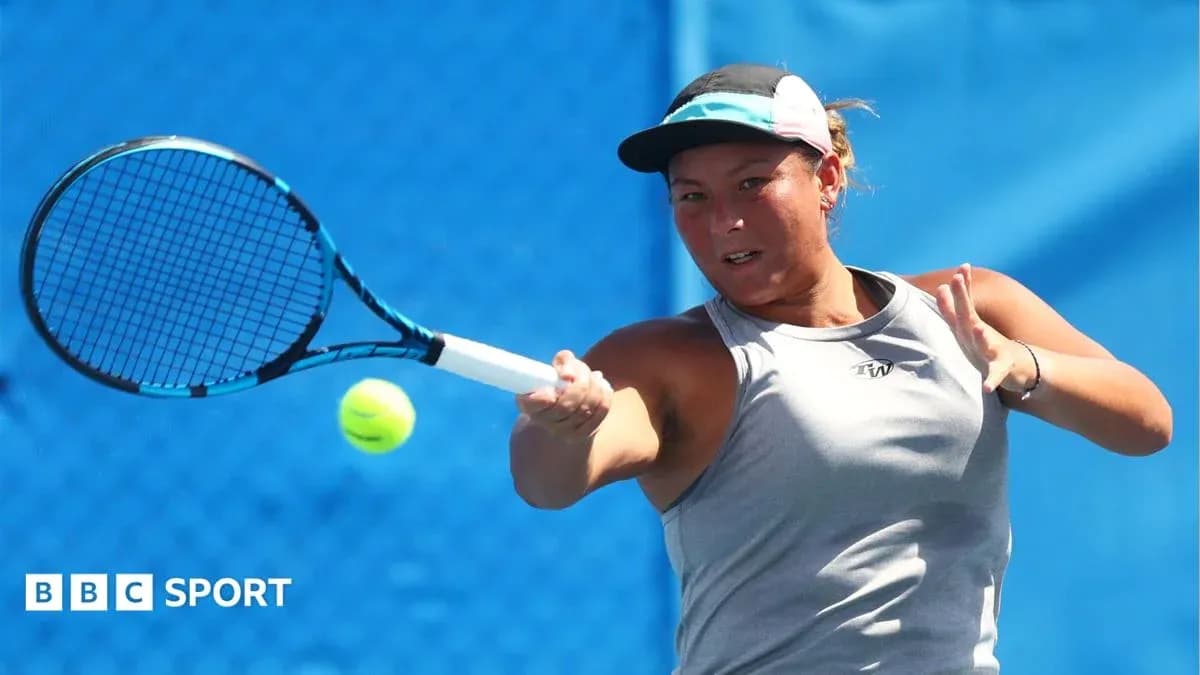
This week, there is another layer: control. Against Taylor Townsend in the previous round, she was broken four times and trailed 3-1 in the second set, yet kept her composure. Against Noskova, she stared down her worst habits and didn’t let them run the match.
For a player with a history of emotional eruptions on court, that restraint feels significant. It might be the difference between another deep run and something greater.
Rankings, rivals, and what comes next
The win keeps Sabalenka, for now, on top of the world rankings. But only temporarily. If world number two Elena Rybakina beats Zheng Qinwen on Wednesday, Sabalenka will lose the number one spot regardless of what happens in the rest of the tournament.
That is the strange tension of her week: she is the reigning queen of New York, yet her global crown may slip even as she marches on.
Her next step is clear. She will face either American third seed Jessica Pegula or 26th seed Emma Navarro for a place in a fourth consecutive US Open final. Both offer very different challenges. Pegula brings relentless consistency and home support. Navarro, on this stage, brings the freedom of a player with less to lose.
Noskova, meanwhile, leaves with numbers that would usually win you a match of this magnitude. More winners. Fewer unforced errors. Seven of nine break points saved. Eleven straight Slam wins snapped not by collapse, but by a champion who refused to fold.
Sabalenka walked off Ashe still the player to beat in New York, her title defence intact, her flaws exposed yet overcome. The question now is simple: if she can survive this kind of storm, who out there can actually finish the job against her?