Aryna Sabalenka's Resilience Amidst Summer Struggles
NEW YORK — Scroll through Aryna Sabalenka’s Instagram and you’d never guess anything was wrong.
Sun-drenched beaches. High-fashion shoots. A black mesh dress here, a bikini there. The world No. 1 smiling her way through Greece with her fiancé, posing with friends like Paula Badosa, living the kind of life that fuels endless comments and even more assumptions.
On court, though, the pictures have been far less flattering.
A World No. 1 Under Scrutiny
Sabalenka hasn’t been past the fourth round in her last few events. For a player who has bullied hard courts for years, her summer has looked strangely fragile. Upsets, blown leads, old frustrations flickering back to life.
This is not the profile of a woman about to join Serena Williams as the only player in the last decade-plus to win three straight U.S. Open titles.
Sabalenka doesn’t buy that storyline for a second.
“Maybe there’s something wrong with people,” she snapped when asked what was wrong with her game.
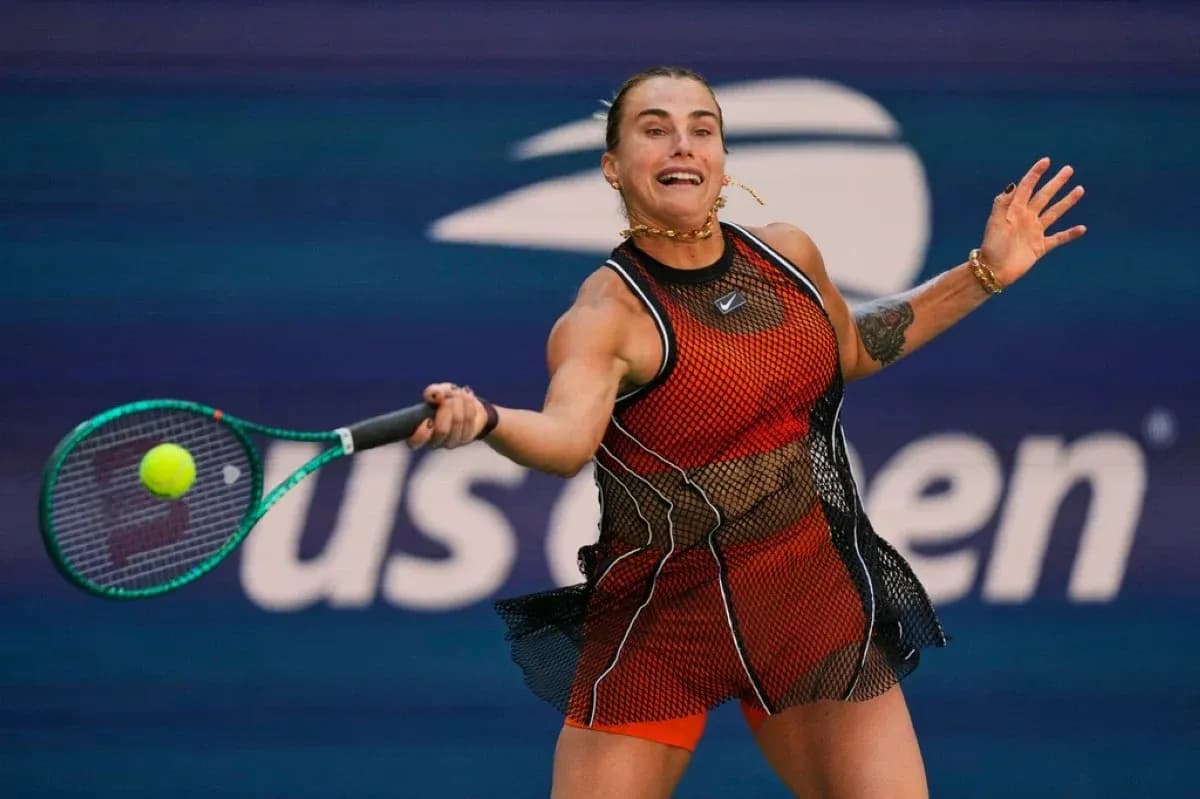
The same energy met questions about her bold, black, mesh-covered outfit in New York.
“Who cares about people, right? All matters for me is that I love it,” she said.
The message is clear: she’s not here to please anyone.
From Early Surge to Sudden Stall
The irony is that 2024 once looked like the year she might run away from the field.
She opened by reaching the Australian Open final, losing to Elena Rybakina but confirming her grip on the top of the women’s game. Then came a statement stretch: back‑to‑back hard-court titles at Indian Wells and Miami, the kind of double that cements a No. 1’s authority.
Even after Naomi Osaka bounced her in the fourth round at Wimbledon, there was little real concern. Sabalenka on North American hard courts is usually a storm: heavy serves, ferocious groundstrokes, opponents overwhelmed.
That storm never really arrived.
In Toronto, Ekaterina Alexandrova sent her out in the fourth round. In Cincinnati, she led both sets against Sara Bejlek and still lost, the match slipping through her hands as irritation with her own game began to resemble the raw, combustible Sabalenka of a few years ago.
Something was clearly off. She just isn’t ready to share what.
“It wasn’t the best period. I don’t want to defend myself, but obviously I just don’t want to talk about that period. I’ve been dealing with several things,” she said.
She paused, then pushed the conversation forward.
“But who cares, right? Yeah, I didn’t perform my best. These tough lessons are definitely going to make me way, way stronger and working even harder. I work on my mental side of the game. I was trying to reset my mind and to come back stronger, so it’s only going to make me stronger. It’s only a matter of time for me to come back.”
New York, Old Power
If there is anywhere she can flip the script, it is here.
Sabalenka’s relationship with the U.S. Open has grown into something formidable. She claimed her first title in New York in 2024, beating Jessica Pegula in the final. She backed it up a year later, defending the crown against Amanda Anisimova.
This place has already seen her at her most ruthless.
Now it might need to see her at her most resilient.
The stakes are heavier this time. The No. 1 ranking, which once looked nailed down, has started to wobble after her summer slump. Rybakina and Pegula are edging closer, the margin for error shrinking with every early exit.
Sabalenka knows the math. She also knows the noise.
Life at the Top, Life Online
Being No. 1 has opened doors far beyond the baseline. Endorsement deals. Fashion shoots. Mid-season trips to Greece. A curated life that plays well on social media and badly with critics who equate any sign of joy with a lack of grind.
The narrative writes itself: too many photo shoots, not enough practice.
Paula Badosa, one of Sabalenka’s closest friends on tour and a regular presence in those glamorous posts, rejects that idea outright.
“She’s still No. 1 in the world. So I think the results are there,” Badosa said.
“Of course, everyone is going to expect for her to win every tournament. That’s very, very difficult. And at the moment, that one player is not winning what they expected. Of course, they’re saying that it’s because of the photo shoots or the TikToks and all this stuff, and I’m not going to lie, she’s been doing that since she was maybe out of the top 100. And when she was winning, nobody says anything, you know? And when she loses a couple of matches, it’s because of that. I think it’s none of it.”
The criticism, in other words, is nothing new. It’s just louder when the losses come closer together.
Defiance as Fuel
Sabalenka isn’t asking for sympathy. She’s not offering explanations, either. What she is offering is a challenge — to the sport, to her rivals, to the narrative around her.
“Well, that’s the beauty of the sport,” she said. “Throw tough challenges at me, I will come back only stronger.”
The rankings table says she’s vulnerable. Her recent results say she’s out of rhythm. Her words, and her history in New York, say something else.
Is this a wobble at the top, or the prelude to another hard-court surge? The answer will not come on Instagram. It will come under the lights in Queens.