Aryna Sabalenka vs Elena Rybakina: A Battle for Dominance at the US Open
Aryna Sabalenka has known the maths for weeks. Win the US Open or watch Elena Rybakina walk past her into the world number one spot. Even then, it might not have been enough.
Now the equation is brutally simple. The rankings race is over. The rivalry is not.
Rybakina secured top spot the moment she reached the semi-finals in New York, ending Sabalenka’s 99-week stay at the summit and confirming a changing of the guard at the very top of the women’s game. On Saturday, the pair meet in the final with more than a trophy on the line. Pride, payback, and a shifting power dynamic all crowd into the same rectangle of blue hard court.
A new number one, an old score
For Kazakhstan’s Rybakina, the job is already done in one sense. She will be world number one on Monday, her consistency over the season and her run in New York enough to haul her above Sabalenka regardless of what happens in the final.
But this is not just about a ranking. Not for these two.
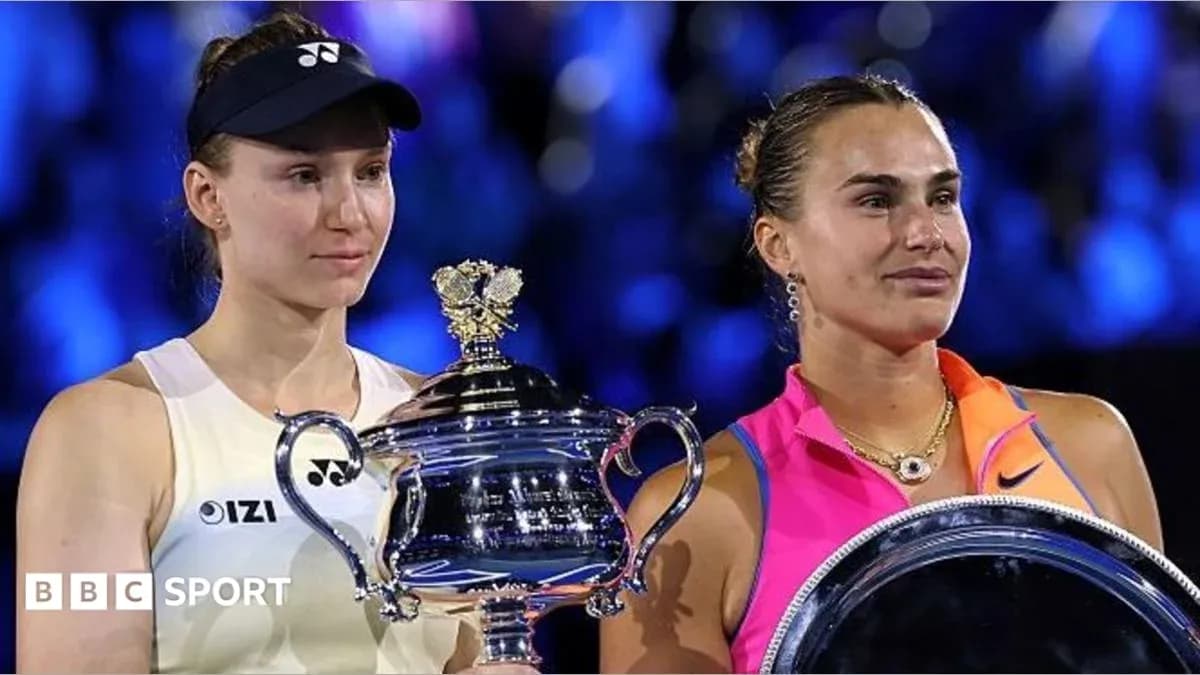
Rybakina has already cut Sabalenka once this year where it hurts most, beating her in the Australian Open final to claim the Melbourne crown. Now she stands one match away from compounding the blow: taking Sabalenka’s title in New York to go with her status as the sport’s new standard-bearer.
For Sabalenka, that prospect is a provocation.
"It is going to be red rag to a bull for her – she is not going to be happy," said former British number one Annabel Croft on BBC Radio 5 Live. "Now she has the opportunity to end this year on a high."
That opportunity is vast. Win, and Sabalenka becomes only the third woman in the Open era to win the US Open singles title three years running, joining one of the sport’s most exclusive clubs. Lose, and the season that began with her as the game’s dominant force will end with Rybakina holding both the ranking and the psychological edge.
Sabalenka’s reset
The version of Sabalenka that dismantled American third seed Jessica Pegula in the semi-finals looked a world away from the player who has wobbled through the past five months. Against Pegula, she struck with clarity and conviction, playing with the kind of fire and freedom that once seemed to come naturally but had lately deserted her.
It was her sharpest performance in months, a reminder of why she has four Grand Slam titles and why, until this week, the number one ranking had felt like a permanent fixture next to her name.
Afterwards, Sabalenka brushed off the loss of her ranking, joking that she did not care. The body language said otherwise. So did her camp.
Her coach Anton Dubrov laid it out plainly.
"I actually like this [losing the ranking] happened. It's ended and it's extra fuel," he said. "There is no more extra draining [of mental energy] or thinking about it.
"There's a next chapter right now. You have to chase again. It's extra motivation for you. Just go and get it."
The chase is something Sabalenka understands. She has built her career on aggression and relentlessness, on taking the ball early and the initiative even earlier. But in recent months, that certainty has frayed.
Cracks in the armour
Sabalenka arrived in New York as a two-time defending champion yet surrounded by doubt. Not about her power, which remains unmatched, but about her ability to close.
Over the past five months, the 28-year-old has repeatedly let winning positions slip away against opponents she was expected to handle. The most jarring collapse came at Roland Garros. Leading by a set and a double break against 25th seed Diana Shnaider in the French Open quarter-finals, Sabalenka imploded, losing 3-6 7-5 6-0 in a match that left a scar.
The clay swing offered more evidence of a fraying edge. In Madrid, she squandered six match points against Hailey Baptiste. In Rome, she took the first set from Sorana Cirstea and then faded, her focus drifting, her game unravelling in ways rarely seen in her prime years on the WTA Tour.
The pattern followed her to the North American hard courts. In Cincinnati, she built clear advantages against 20-year-old Czech Sara Bejlek, only to lose in straight sets. Each defeat fed the same narrative: the most imposing front-runner in the sport had suddenly forgotten how to finish.
Yet inside Sabalenka’s camp, there was no rush to hit the panic button.
"We all understand that this is just part of the thing," said her high performance coach Jason Stacy. "We just give her space to be herself, help her figure out what might work for her right now.
"Giving her that freedom, but also knowing that she has the guidance of all of us, I think that just gives her a power that few are lucky enough to have."
That balance – space and structure, freedom and guidance – has started to show again in New York. The wild swings in concentration have eased. The racket throws and spiralling body language have been replaced by a more measured intensity. She still roars, still stares down opponents, but the chaos feels controlled.
Rybakina again, and the sting of Melbourne
Standing across the net is the one player who has repeatedly disrupted Sabalenka’s sense of control this season.
Rybakina took the Australian Open title from her in January, outlasting her in Melbourne and planting a seed of doubt that has lingered. Since then, Sabalenka has struck back, beating the Kazakh in Indian Wells and Miami to level the emotional score, if not the Grand Slam ledger.
Saturday’s final will be their fourth meeting of the year, a rivalry now stretching across surfaces and continents. Each match has carried its own tension. This one carries something more: the sense of a hinge moment.
Rybakina walks into it with the calm assurance of a player whose ranking is already secure. Sabalenka walks in knowing that her reign at the top is officially over, but that the story of who truly rules the women’s game is still being written.
She has lost her number one. She has not lost her edge. Not yet.
The bull has seen the red rag. Now the question is simple: does Sabalenka charge, or does Rybakina complete the takeover on the sport’s biggest hard-court stage?