Aryna Sabalenka Dominates Iatcenko in US Open Match
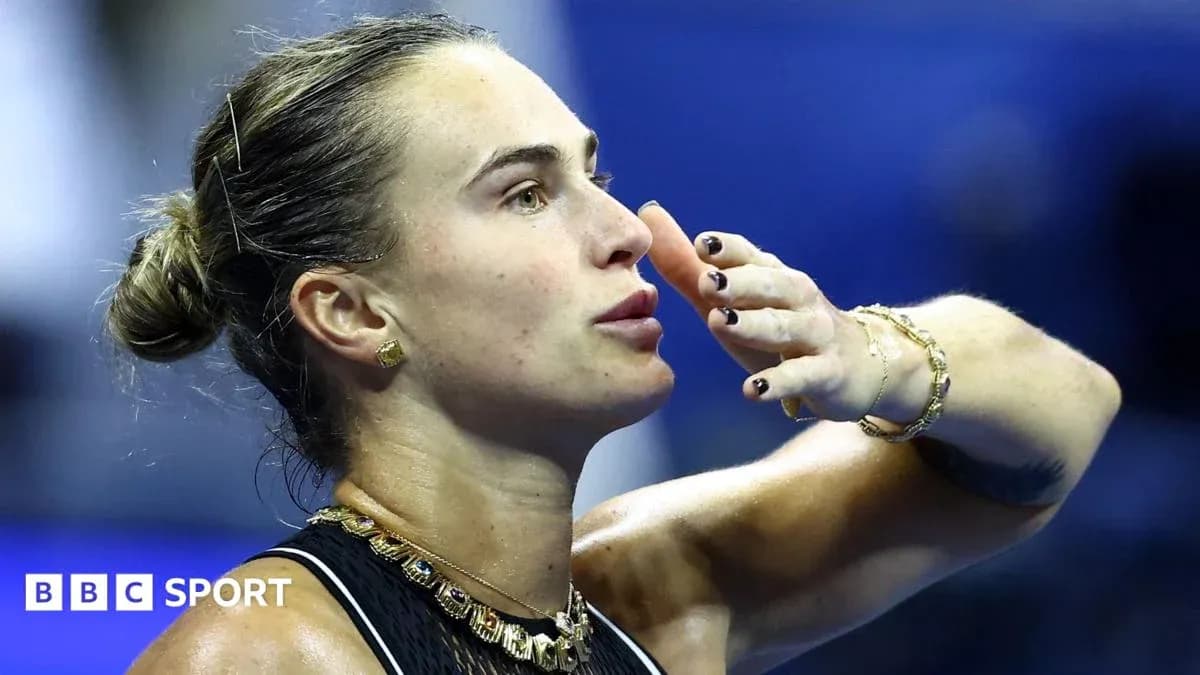
Aryna Sabalenka was off court almost before the Arthur Ashe crowd had settled into their seats. Fifty-three minutes, 6-1 6-1, and the two-time defending US Open champion had flattened debutant Polina Iatcenko with the kind of cold, ruthless efficiency that turns a night session into a formality.
Yet the world number one walked off looking anything but satisfied.
This is a strange season for Sabalenka. She has been devastating at times, untouchable even, but arrived in New York trying to pull herself out of a clear dip in form. On Wednesday, the scoreline screamed dominance. The body language told a more complicated story.
A mismatch on the court
For Iatcenko, ranked 160 in the world and making her US Open debut, this was a brutal introduction to tennis at its highest altitude. Sabalenka’s pace and weight of shot pinned her back from the first game; rallies were short, the patterns one-way.
The Belarusian cracked 24 winners. Iatcenko managed three.
Sabalenka tore through the first set, breaking twice and bullying the qualifier into errors. At 5-0, Iatcenko finally steadied herself, held serve, and flashed a relieved smile as she got on the board. It was a small victory on a very big stage.
Any hint of a foothold disappeared almost immediately. Sabalenka held to love in less than 90 seconds to close out the opening set, the kind of blink-and-you-miss-it hold that underlined the gulf between them.
Despite spending only 24 minutes on court, Iatcenko opted for a bathroom break at the set changeover, officially to change her kit, though it felt more like a desperate attempt to reset her mind. Sabalenka stayed loose, stayed busy, sending down practice serves on Ashe as she waited.
When play resumed, the pattern did not change. Sabalenka surged to a double-break lead at 3-0 in the second set, the match now little more than a training exercise against a visibly overawed opponent.
It was not flawless. A sloppy game cost Sabalenka her serve at 3-0, a brief lapse that underlined how far this was from maximum pressure. But she snapped straight back, broke twice more, and closed the door on Iatcenko’s first taste of tennis’s biggest arena with a harsh lesson in the standards at the top.
For the Russian, there is consolation. Experience against the world number one on the sport’s grandest court, and a serious financial boost. She arrived in New York with $300,000 in career prize money; she leaves with an extra $190,000 and the chance to reinvest in her future.
A champion with something to prove
The numbers say Sabalenka is still the player to beat here. Two US Open titles in a row. World number one. A 53-minute demolition job in round two. Yet the wider picture is more fragile.
At the start of 2026, Sabalenka looked immovable. She reached the Australian Open final, then stormed through Indian Wells and Miami to complete the Sunshine Double. Across her first 27 matches of the year, she lost once – to Elena Rybakina in Melbourne.
Since then, the machine has stuttered. Coming into the US Open, her record since Miami had slipped to 17 wins and 7 defeats. Only one WTA semi-final in five months for a player who had seemed to be operating on a different plane.
Before arriving in New York, Sabalenka admitted she had been “dealing with several things” during that dip, fully aware that her level had dropped far below her own standards. Matches like this one against Iatcenko don’t offer many clues about where she really stands. They do, however, restore a little of that old swagger.
And she needs every bit of it.
Sabalenka must lift the trophy again in New York to have any chance of holding onto the number one ranking. Even that might not be enough. If Rybakina reaches the semi-finals, the Kazakh will climb to the top of the rankings regardless of what Sabalenka does.
So the defending champion finds herself in an unusual position: winning, and still under siege.
Next up is Kamilla Rakhimova of Uzbekistan in the third round. A step up from Iatcenko, no doubt, but still a match Sabalenka will be heavily favoured to control. The real examination of her form will come later in the fortnight. For now, she is doing exactly what a reigning champion should do: brushing aside those she is expected to beat.
Tension in the press room
If the match was straightforward, the post-match press conference was anything but.
Sabalenka bristled when a reporter suggested she had been at “lots of parties” in the build-up to the tournament, referencing social media posts of her at brand events.
“What kind of question is that? Just because I posted some activities with brands, you think that I've been partying [and] not training?” she shot back, visibly irritated.
When the same reporter followed up by asking if she was “getting serious” now that the US Open had started, Sabalenka’s reply dripped with sarcasm.
“Oh yeah, I wasn't serious before that. Next question.”
It was a sharp reminder that, beneath the big smiles and booming groundstrokes, there is a player feeling the pressure of expectation, scrutiny and a ranking that may soon slip away.
Pegula, Gauff and the ranking chase
Sabalenka is not the only one eyeing the top spot.
Earlier on Wednesday, third seed Jessica Pegula kept her own push for a first Grand Slam singles title alive with a composed win over fellow American Sofia Kenin, 6-3 6-1. Pegula, like Sabalenka, has a route to number one if she can go all the way in New York.
So does fourth seed Coco Gauff, who also advanced in straight sets and remains very much in the conversation at the top of the women’s game.
Around them, the draw continued to follow the script. Wimbledon runner-up Karolina Muchova moved through without fuss. Two-time major semi-finalist Marta Kostyuk joined her in the next round. Teenage American Iva Jovic added to the home crowd’s optimism with another assured straight-sets win.
Few shocks. Fewer slip-ups. The leading names are holding their nerve.
Sabalenka did far more than that against Iatcenko. She overwhelmed her. She imposed herself. She reminded everyone how brutal she can be when the engine is humming.
Now comes the real question: can she sustain this level long enough to complete a historic US Open three-peat while the ranking she fought so hard to claim hangs in the balance?