The Art and Science of Fielding in Cricket
T Dilip has spent four years living in the shadows of the scoreboard. The former India fielding coach works in a space where the most important contributions rarely show up in numbers, where a fingertip on the ball or a half-step in the right direction can tilt a match – and then disappear into the scorecard as a dot ball no one remembers.
In the second part of his conversation with Cricbuzz, he pulls that hidden world into the light.
The science behind a simple catch
To the crowd, a catch is either taken or dropped. To Dilip, it starts long before the ball leaves the bat.
“With catching, we look at the player’s starting position,” he explains. How early he picks up the ball. Whether his head stays still. How his hands move in relation to his body. The checklist is relentless.
And it changes with every position.
A slip catch, a high outfield skier, a flat chance drilled inside the circle – they are not variations of the same skill, they are different crafts. A slip fielder needs soft hands and lightning reactions. A boundary rider judges height, wind, lights, rope. The inner-ring specialist fights for fractions of a second and centimetres of angle.
Ground fielding, he says, begins even earlier than that.
“The player must anticipate, remain balanced and make an efficient first movement. Reaching the ball is not enough.” The ideal fielder arrives under control, body set, hands low, ready for a clean pick-up and an immediate throw. Chaos on the surface, but underneath it all, a rehearsed sequence of movements.
Throwing, too, is stripped down and rebuilt. It is not just about power. Speed of release. Accuracy. Decision-making. Which end to throw at. Which fielder’s skills suit which part of the field.
“I would not give a slip fielder, an inner ring fielder and a boundary fielder the same programme,” Dilip says. The fundamentals connect them, but the practice must mirror the situations they actually face.
Why multi-sport kids make better fielders
The conversation drifts to childhood. To kids who play football, basketball, hockey – anything that forces them to solve different movement problems.
Fielding, Dilip says, is unpredictable by nature. The ball never arrives at the same height, speed or angle. The more varied the movement challenges a child faces, the more adaptable he becomes later.
Playing other sports will not, by itself, turn anyone into a complete fielder. Cricket still demands its own reading of the bat, its own way of judging trajectory, its own understanding of surfaces and bounce. But those early lessons in balance, coordination and reaction feed directly into the chaos of a live fielding moment.
IPL and the fielding revolution
On one point, Dilip is unequivocal: “Without any doubt, the IPL has had a positive influence on Indian fielding.”
The league did not just improve standards; it changed the way fielding is valued.
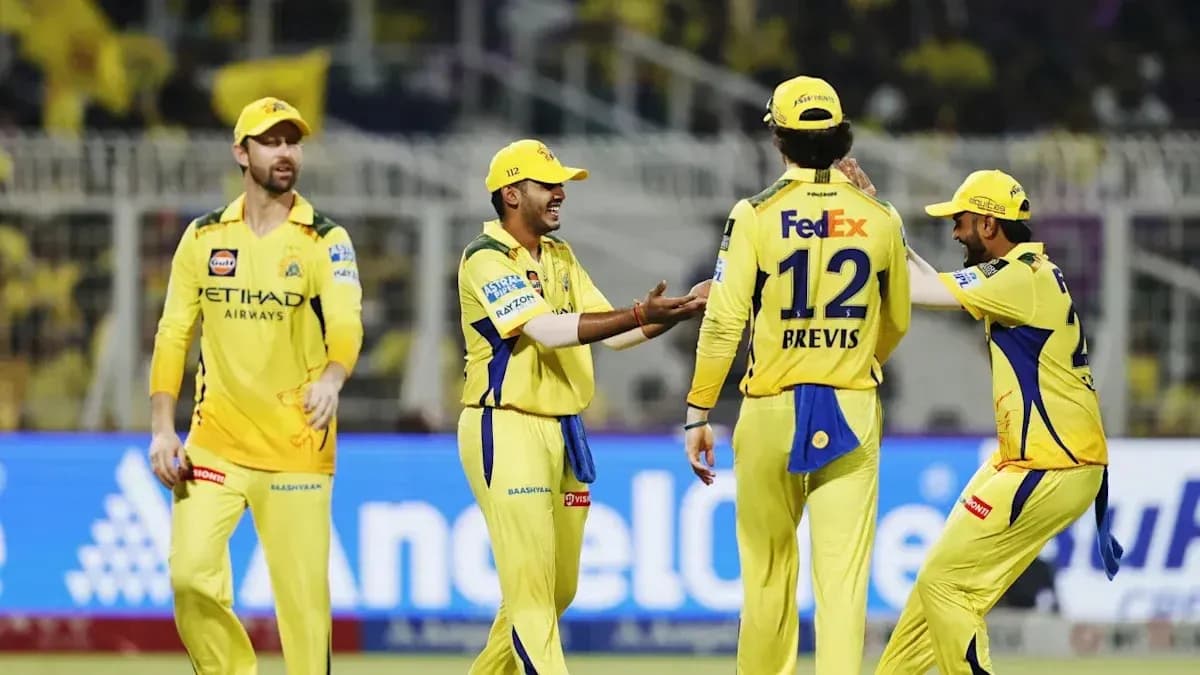
A young Indian cricketer can now walk into an IPL dressing room and share space with some of the best fielders on the planet. He watches how they warm up. How they attack every ball. How they stay locked in even when they have not batted or bowled.
“That kind of exposure can accelerate a player’s development tremendously,” Dilip says.
Recent data has shown some fluctuation in catching efficiency. That, he agrees, needs a closer look. But he rejects the idea that the IPL has damaged Indian fielding. For him, it has transformed it. It has raised expectations, widened the pool of good fielders and proved to a generation that fielding can swing a result as decisively as a fifty or a four-wicket haul.
The missing numbers in a data-obsessed game
Cricket has learned how to measure almost everything a bowler does. Seam position, swing, speed, length. For fielders, the numbers barely scratch the surface.
“Fielding is more complex,” Dilip says. Position, distance, angle, surface, anticipation, decision-making – all collide in the same play. Right now, catches and run-outs tell only a small fraction of the story.
He sketches the data he wishes existed: where the fielder stood when the ball was hit, his reaction time, the efficiency of his route to the ball, the time from pick-up to release. For throws, not just velocity and accuracy, but whether he chose the correct end.
Even catching percentage, the favourite metric in broadcast graphics, can mislead. A more athletic fielder might reach a ball that most would never touch, get a hand to it, and be marked down for a drop. A slower fielder does not get there at all – and escapes statistical blame.
“Ideally, every opportunity should be judged by its difficulty,” he says. Reaction time. Distance covered. Speed of the ball. Direction of movement. Proximity to the boundary. All of it tied to the player’s athletic ability.
The same goes for runs saved. If a fielder turns a likely two into a single, that one run should not vanish into the background. Over a tournament, those small margins add up to something enormous.
Bowlers who stopped seeing fielding as a chore
Ask a coach to pick one player he is proudest of, and you usually get a name. Dilip refuses.
“It is always difficult for me to say that a player improved ‘under me’,” he says. A modern international cricketer moves through state teams, IPL franchises, national sides, private coaches. No one owns his progress.
If he has to single out one group, though, it is the bowlers.
Their improvement went beyond cleaner techniques or better catching drills. It was about ownership. Fast bowlers and spinners began to take genuine pride in saving a run, backing up a team-mate, clinging on to a chance after a draining spell.
They stopped seeing fielding as something tacked on to their primary job and started treating it as part of their identity. That, for Dilip, was one of the most rewarding shifts of his tenure.
The most overlooked part of fielding
At the top level, he insists, no major fielding skill is truly underestimated. Players arrive with awareness and experience. Still, there is one area he keeps circling back to: what a fielder does before the ball is struck.
It is not guesswork. It is anticipation built from game awareness, angles, and the discipline to stay engaged before every delivery.
A good first step can turn a tough stop into a routine one. A poor first step can make a reachable ball look impossible. That micro-movement – the instant after the ball leaves the bowler’s hand – is where so many chances are won or lost.
Dilip does not call it an ignored skill, just a space where players at every level, from junior cricket to the international game, can keep finding small, meaningful gains.
T20, packed calendars and rusty hands
T20 cricket, in his eyes, is not the villain. If anything, the format has dragged fielding into a new era. Players are quicker across the turf. Boundary catching has become an art form. Pick-up and release times have shrunk.
The problem lies elsewhere: in the schedule.
Matches, travel, recovery – they roll into each other. Players naturally funnel most of their energy into their primary skills, batting or bowling. In franchise cricket, fielding practice can be optional on certain days as teams manage workloads and niggles.
That is where the danger creeps in. The volume and “feel” of catching work can drop. The first few catches in a match start to double up as practice. For a professional, that is a risky place to be.
Dilip’s solution is not to flog players with longer, draining sessions. It is to ring-fence a small, non-negotiable block of high-quality catching work, even on optional days. Players, he believes, must take ownership of that preparation not only during tournaments but also in pre-season and the off-season.
“Ultimately, consistent catching comes from consistent effort,” he says. There is no shortcut.
Touch, confidence and the coach’s real job
Even with the best fielders in the world, the basics never stop. New series, new venue, new lights, new wind. The ball carries differently. The angles change. A player might find himself in an unfamiliar position or standing to a different type of bowler.
Catching, Dilip insists, is about touch and confidence. A few focused repetitions at the start of a tour help hands and body adjust to those conditions. Sometimes the coach does not need to correct anything. He just needs to help the player find his rhythm for that specific tournament.
In an era obsessed with data, power-hitting and mystery spin, Dilip’s world runs on quieter details: a first step, a clean pick-up, a throw to the right end. The kind of moments that rarely make a highlight reel – until they decide a season.