Argentina’s World Cup Fallout: Bans and Strategic Maneuvering
Argentina’s defeat to Spain in the 2026 World Cup final was supposed to be the end of a story. Instead, it became the start of a disciplinary saga that now stretches well beyond that night – and deep into the next cycle.
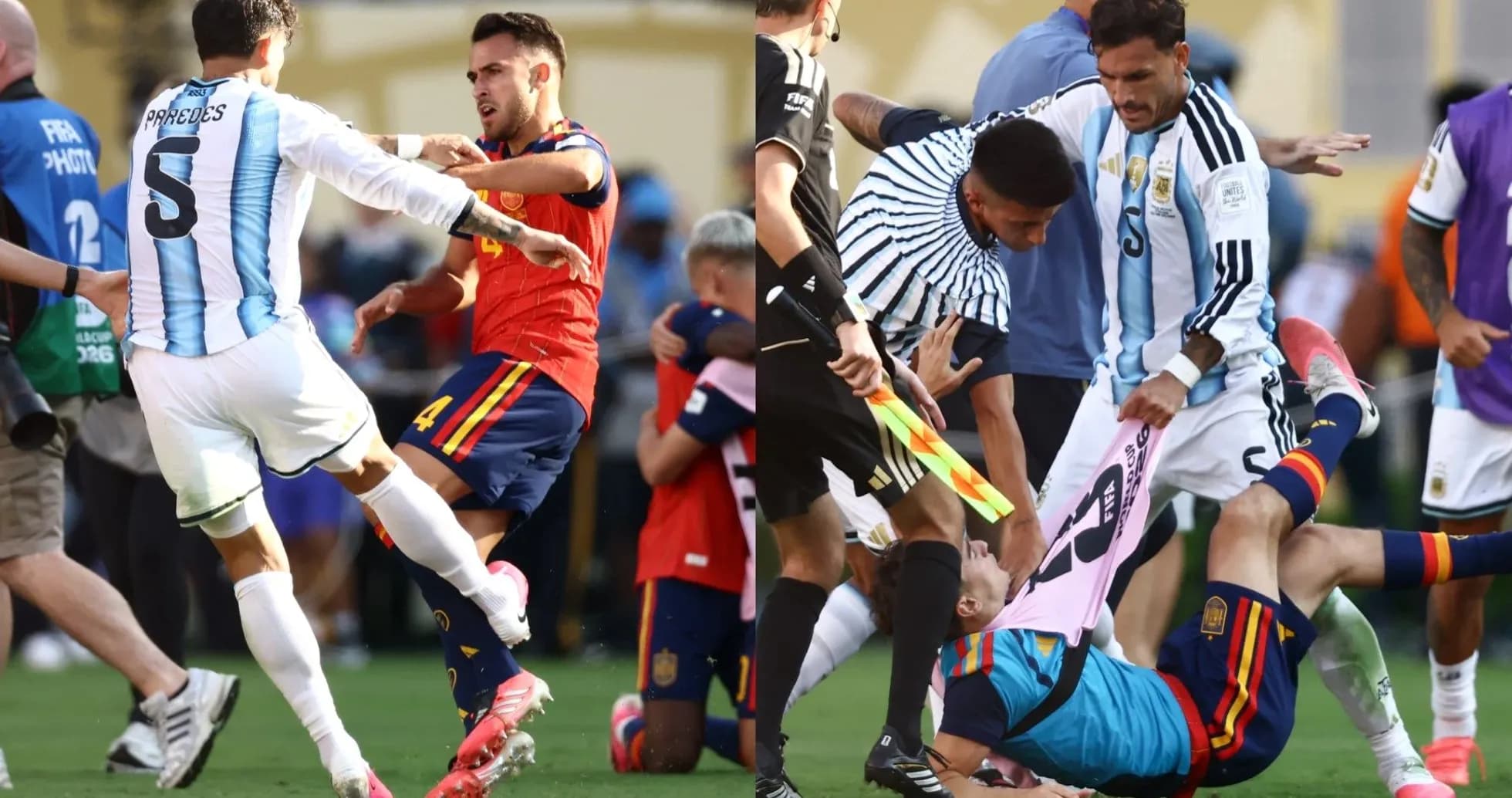
The 1-0 loss in the final has been eclipsed by what came after the whistle. A mass confrontation, punches and shoves in front of the watching world, and a FIFA response that cut straight into the core of Lionel Scaloni’s squad.
Paredes Hit Hardest
No one has been punished more severely than Leandro Paredes. The 32-year-old midfielder received a 10-match suspension and a £65,000 fine after grabbing Eric Garcia by the throat, striking Gavi in the face, and then shoving the teenager to the ground.
It was the kind of flashpoint FIFA could not ignore. Ten games is a statement. For a player of Paredes’ influence, it is also a sporting wound for Argentina.
Nahuel Molina did not escape either. The right-back was handed a seven-match ban for striking Spain captain Rodri in the torso, an incident that helped ignite the wider melee between both sets of players. Thiago Almada and Gavi were also caught in the disciplinary net, each receiving a one-match suspension for their roles in the chaos.
Assistant coach Roberto Ayala joined the list of those sanctioned, as FIFA moved to underline that the behaviour of Argentina’s staff and players in the final fell far below what the governing body is prepared to tolerate on its biggest stage.
AFA Plays the Long Game
Faced with a stack of bans that threatened to strip key fixtures of major names, the Argentine Football Association chose not to simply accept the damage. It moved quickly, and strategically.
In a formal statement, the AFA confirmed it had asked FIFA to allow the suspensions from the World Cup final – and the sanctions on the association itself – to be served in Class A friendlies and/or official matches, whichever comes first. FIFA’s Disciplinary Committee approved that request under current regulations.
That decision changes everything.
Instead of losing Paredes, Molina and others deep into the next competitive cycle, Argentina can burn through those bans in non-competitive fixtures. The AFA has already signalled its intention: a busy calendar of international friendlies is coming, designed to clear the slate as fast as possible.
At the same time, the federation is not dropping its guard. It is waiting for the written reasoning behind FIFA’s decisions and plans to file appeals to the FIFA Appeals Committee, with the Court of Arbitration for Sport (CAS) sitting as a potential final stop if it chooses to push the case that far.
Political Flashpoint After England Win
The World Cup final brawl was not Argentina’s only disciplinary headache at the tournament.
After their semi-final victory over England, several players – including Lionel Messi, Cristian Romero, Giovani Lo Celso and Lisandro Martinez – celebrated with a banner asserting that the Falkland Islands belong to Argentina. The image ricocheted around the world, and calls for individual bans followed.
Those never arrived. The players avoided direct personal punishment, but FIFA still acted. The AFA received a £235,000 fine, with £73,000 of that amount suspended. It was a clear warning over political messaging on the international stage, even without sidelining the stars involved.
There was more. Argentina will play their next two home matches in front of reduced crowds, with stadium capacity capped at 50 per cent. One of those partial closures is suspended, but the message from FIFA is unmistakable: the line on conduct, on and off the pitch, has been crossed too often.
A Free Pass to 2030 – And Time to Reset
On the sporting side, Argentina’s situation is unique. As co-hosts of the centenary World Cup, they already have their place secured at the next tournament. That removes the immediate pressure of qualifiers and, with it, the fear that long bans could derail a campaign.
Their next meaningful competitive action will not come until the 2028 Copa America. Between now and then, the calendar is a blank canvas.
For the AFA, that is an opportunity. It can stack Class A exhibition games, work through the suspensions of Paredes and Molina, and gradually fold those sanctioned players back into the group without risking qualification or tournament momentum.
For the team, it is something else: a test of discipline and identity. Argentina walk into the next cycle as reigning continental champions, recent world champions, and now, the subject of some of FIFA’s most severe recent sanctions.
The trophies are in the cabinet. The scars of 2026 are still fresh. The question now is simple: when the bans are finally served and the stadiums are full again, what kind of Argentina will step back onto the big stage?