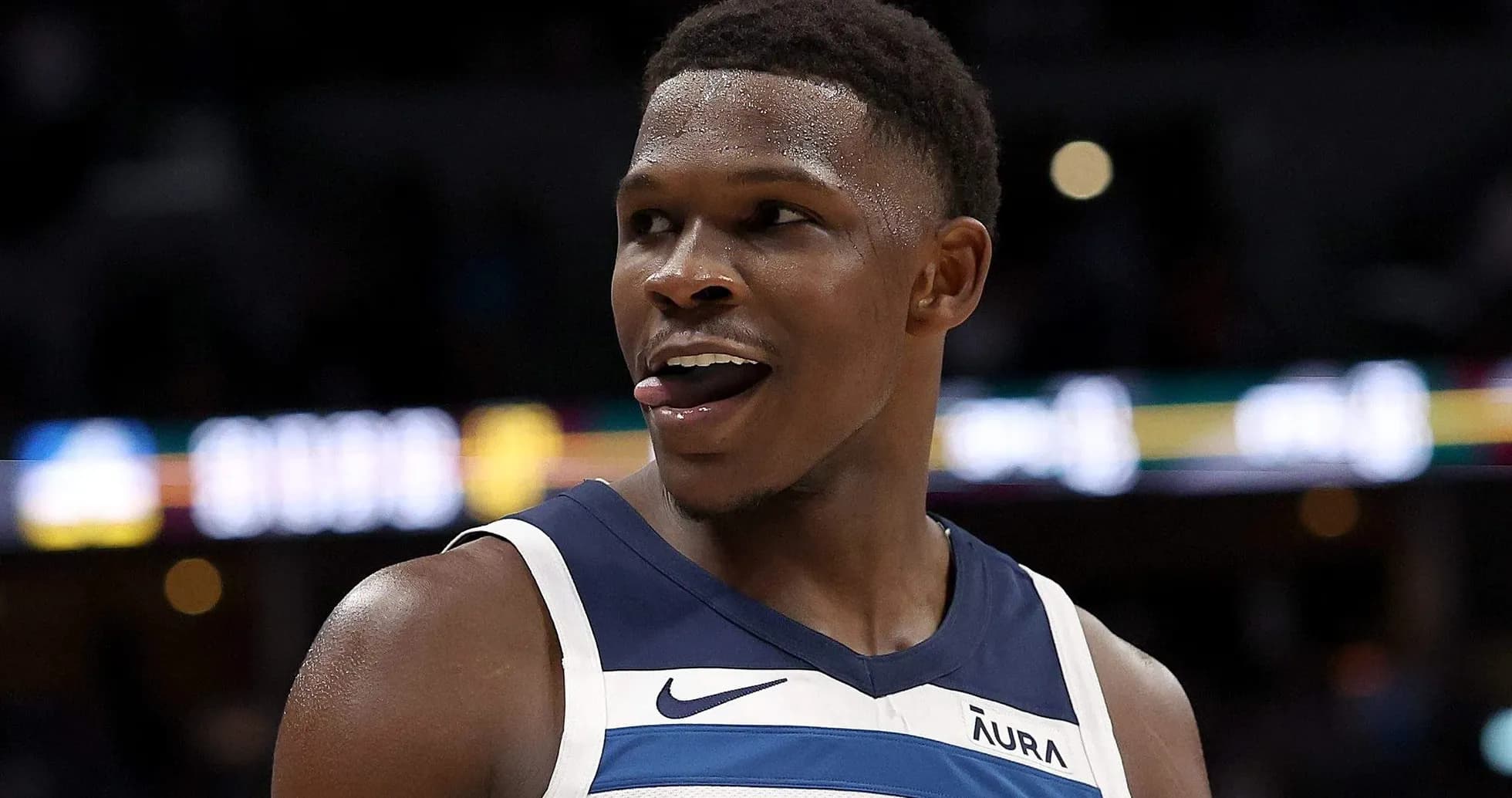
Anthony Edwards Drives Minnesota Timberwolves’ Offseason Success
Anthony Edwards didn’t just sign off on the Minnesota Timberwolves’ offseason. He drove it.
The franchise star is said to be “very pleased” with the Wolves’ summer, and it’s not hard to see why. Minnesota has torn up its old blueprint and handed Edwards the keys to a sleeker, guard-driven machine built to run, attack and, crucially, defend.
A New Backcourt, A New Identity
The headline move is bold enough on its own: Julius Randle and Naz Reid out, LaMelo Ball and Jonathan Kuminga in.
Minnesota has pivoted from a frontcourt-heavy look to a high-octane perimeter core. Ball arrives as the creative engine, a playmaker with the vision to unlock Edwards’ scoring in new ways. Around them, the Wolves have tightened the screws rather than starting from scratch.
Ayo Dosunmu and Bones Hyland stay on to stabilize the second unit. Jaylen Clark gets rewarded with an extension, a nod to his two-way potential. Trey Lyles comes in as a versatile, floor-spacing big who can keep the offense humming when the stars sit.
This isn’t tinkering. It’s a full recalibration around Edwards’ prime years.
ESPN’s Brian Windhorst summed up the mood on the “Hoop Collective” podcast: Edwards, he said, is “very pleased with the Wolves offseason,” highlighting the Ball trade and the Kuminga deal as the kind of swings that move a franchise’s ceiling.
Windhorst even floated a what-if: if Edwards’ extension were on the table right now, this kind of aggressive retooling might be the sort of thing that pushes a star to sign on the spot.
Edwards the Recruiter
The Timberwolves didn’t just win the trade market. They won the recruitment battle.
Jonathan Kuminga had options — serious ones. The Los Angeles Lakers, Chicago Bulls and Portland Trail Blazers all came calling. Minnesota still got him, and that didn’t happen by accident.
“Ant was super active in the recruitment of him,” Kuminga’s agent Aaron Turner told The Athletic.
Edwards didn’t pitch shots, touches or billboards. He sold defense.
“One thing he did was focus his message on, we’re gonna really guard here,” Turner said. While much of the league fixated on what Kuminga could do with the ball, Edwards and Kuminga zeroed in on what he could become without it.
That message landed.
Turner described a conversation in the gym this week. The question to Kuminga was simple: what’s the best basketball situation? The answer came back just as simply: Minnesota. If that’s the answer, Turner said, “nothing else matters.”
It wasn’t just Edwards working the phones. Jaden McDaniels and LaMelo Ball also reached out, according to Turner, reinforcing a theme that clearly resonated with Kuminga — respect, from top to bottom of the organization.
“It was such a solid respect factor from top to bottom,” Turner said. For a young forward looking for the right stage and the right structure, the Wolves offered both.
From WCF Regulars to Western Hunters
Minnesota enters this season with scars as well as belief.
After back-to-back trips to the Western Conference Finals, the Wolves stalled in the second round this year, falling to the San Antonio Spurs. The exit came with context: Edwards played through a bone bruise in his left knee, Donte DiVincenzo never saw the floor in the series, and Ayo Dosunmu missed time with a calf injury.
The run ended earlier than the previous two, but it didn’t feel like a collapse. It felt like a warning that depth and durability still separated Minnesota from the West’s true standard-setters.
So the front office pushed harder.
Now, across the conference, the Wolves sit in a small, dangerous tier. Many analysts place them just behind the Spurs and the Oklahoma City Thunder in the race for the top of the West, a half-step away rather than a full rung below.
ESPN’s projections have Minnesota slotted as the No. 3 seed. Tim MacMahon went even further, branding the Edwards–Ball tandem as the “league’s most talented backcourt” — a statement that underlines just how dramatically the Wolves’ identity has shifted.
Sports Illustrated’s Charlie Walton landed in the same place, also forecasting a third-place finish and framing the Ball and Kuminga moves as ambitious swings that could reshape the conference hierarchy.
“Things can still change between now and the start of the season. Much more will inevitably change before April rolls around,” Walton wrote. But he didn’t hedge on the Wolves’ upside: they look built for the top half of the bracket, not the play-in scramble.
He acknowledged the risk: Connelly’s trade for Ball could misfire. The Kuminga gamble could, too. These are not safe, incremental moves. They’re bets on star power, fit and competitive edge.
For now, though, those bets have given Minnesota something it hasn’t always had — momentum and a clear, aggressive direction.
Edwards wanted help. He got a playmaking partner, a hungry two-way forward and a deeper supporting cast. He wanted a team that would guard. He helped recruit one.
The Wolves have already climbed to the edge of the Western elite. The question now is blunt and unavoidable: with this new backcourt and this new belief, are they finally ready to break through it?