Alfie Hewett Denies Tokito Oda Grand Slam Sweep in US Open Final
Alfie Hewett arrived in New York with scars. The kind only sport can leave. A 6-1 6-1 humiliation at Wimbledon, a season dominated by Tokito Oda, and the sense that the balance of power in men’s wheelchair tennis had shifted for good.
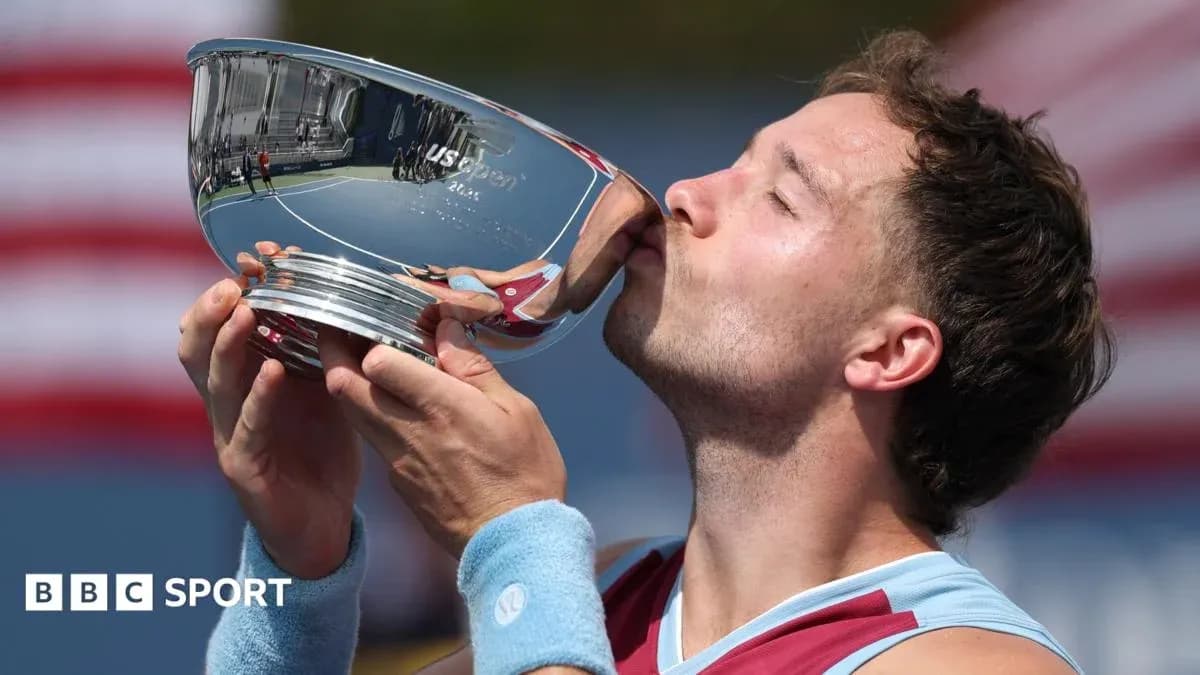
He left with a fifth US Open singles crown, an 11th Grand Slam title, and his aura not just restored but roaring back to life.
On Arthur Ashe, the Briton dismantled the Japanese world number one 6-0 7-6 (7-5), snapping Oda’s run of six straight major singles titles and stopping him one step short of a calendar-year Grand Slam in 2026.
For Hewett, this was not just a win. It was a reclamation.
From “shell of myself” to possessed
The context made the scoreline all the more striking. Oda had beaten Hewett in the French Open and Wimbledon finals earlier this year. At SW19, Hewett managed only two games. He called that version of himself “quiet”, “timid”, “a shell of myself”.
That defeat forced a reckoning. He spoke of “looking in the mirror”, of six weeks spent “champing at the bit” to rediscover the fearless, combative player who built his career on big-point courage, not caution.
New York saw that player again.
The tone was set immediately. Hewett faced a break point in the opening game, stared it down, and held. From there, he tore through the first set in a blur of aggression and clarity, sealing it 6-0 with a vicious backhand return winner that underlined the shift in mood. He later described that opening set as “possessed”. It looked like it.
Oda, who had swept the Australian Open, Roland Garros and Wimbledon and was closing in on a historic clean sweep, suddenly found himself suffocated. The angles Hewett carved, the depth he found, the way he stepped into returns — this was the complete inversion of that flat, subdued performance at Wimbledon.
Oda responds, Hewett refuses to blink
A player of Oda’s class was never going to drift quietly out of a Grand Slam final. The second set turned into a test of nerve and resilience.
This time it was Oda who surged ahead, twice breaking to move into a commanding position. The Japanese top seed earned three set points, the match seemingly drifting towards a decider and a familiar script: Oda weathering the early storm, then pulling away.
Hewett ripped that script up.
He clawed back the double break, refused to yield on those three set points, and dragged the set into a tie-break. The pressure, which had briefly lifted from Oda’s shoulders, came crashing back down.
In the breaker, Hewett’s clarity returned. He played on the front foot, took the ball early, and trusted the instincts he had spent those six weeks trying to rediscover. At 7-5, with the title on his racket, he closed it out to complete one of the most emotionally charged wins of his career.
A Grand Slam dream denied
For Oda, the defeat cut deep. The 20-year-old had been chasing one of the sport’s rarest feats: all four majors in a single year. Three were already in his pocket. New York was supposed to be the coronation.
“Definitely I was trying to get the calendar year [Grand Slam] this year,” he admitted on court. “This was the last part of it so it’s really tough for me, but I think Alfie deserved it today.”
There was no argument there. Hewett had not only matched the world number one; he had out-fought him when the match teetered on the edge.
Double delight in New York
The singles title completed a memorable fortnight for Hewett, who had already lifted the doubles trophy on Friday alongside long-time partner Gordon Reid. That partnership has defined British wheelchair tennis for years. This time, though, the singles win carried a different weight.
This was about pride. About response. About proving, to himself as much as anyone, that the man who once dominated these stages had not faded away, just been temporarily drowned out by doubt.
In a sport increasingly shaped by Oda’s rise, Hewett’s performance in New York felt like a statement. Not a farewell, not a throwback, but a reminder.
If this is the new rivalry at the heart of men’s wheelchair tennis, what comes next might be even bigger than the title he just reclaimed.