Alexandra Eala's Inspiring Journey in Singapore
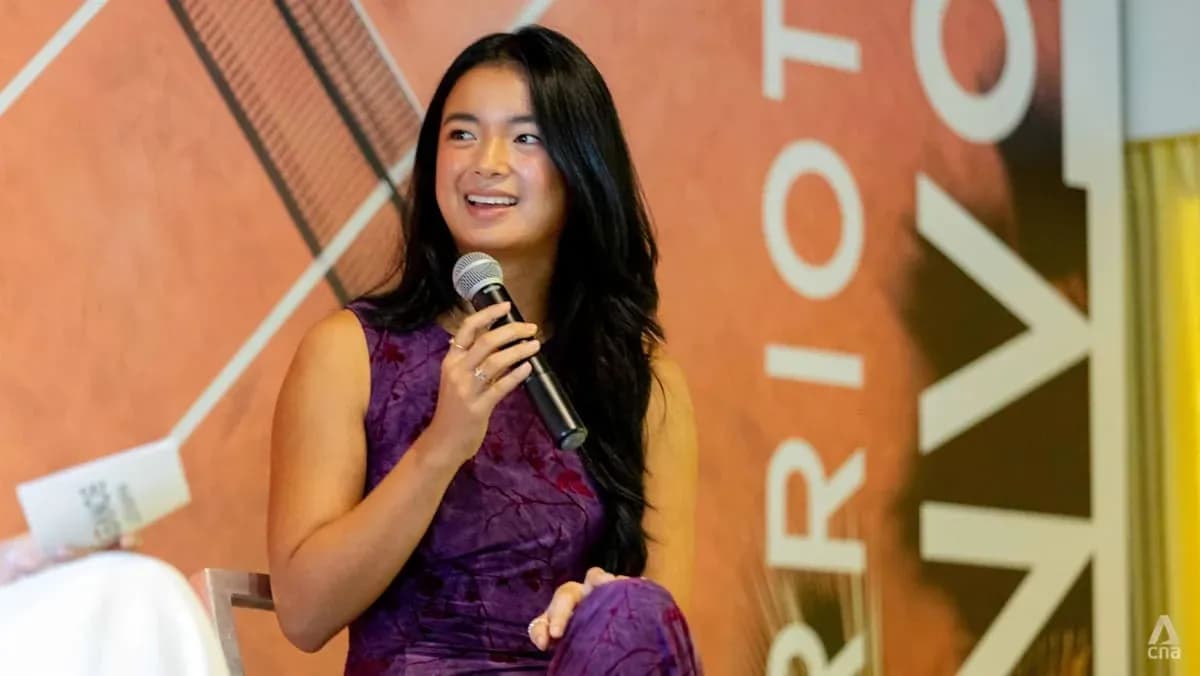
Alexandra Eala steps into the arrivals hall in Singapore with the calm of someone who has just torn up a script and written her own.
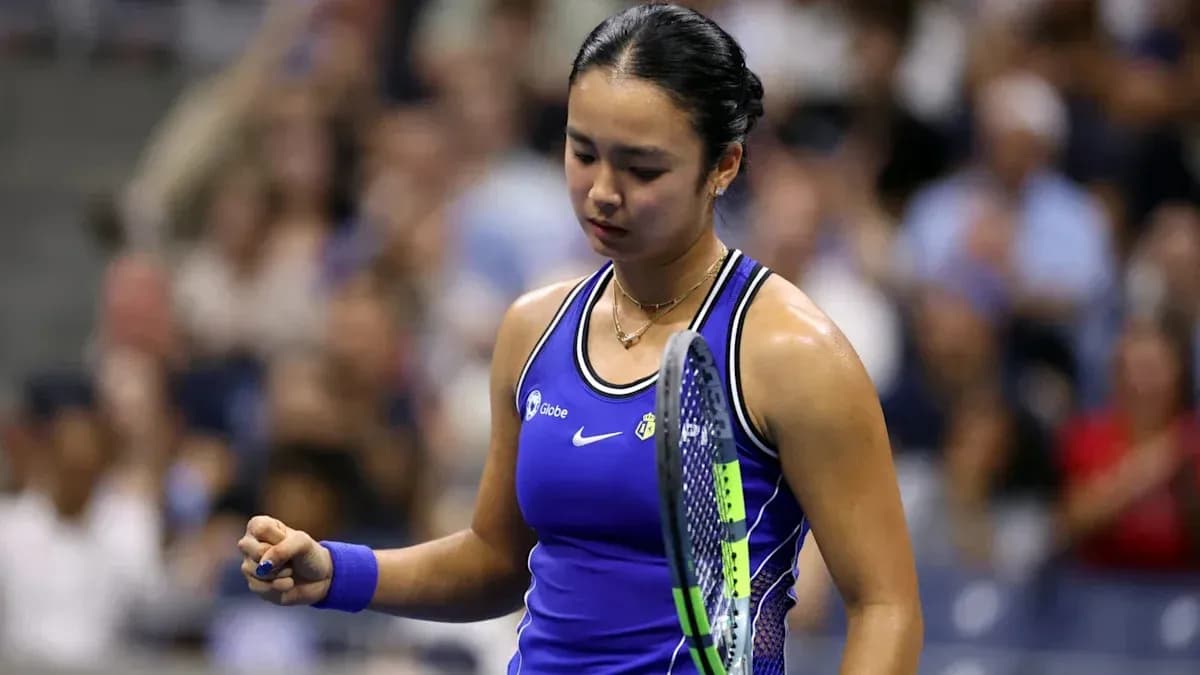
At 21, the Filipino has packed a decade’s worth of milestones into one season. A career-high world No 18. A statement win over world No 3 Jessica Pegula in Washington to claim her first WTA Tour singles title – the first Filipino ever to do so. A fearless Wimbledon run that saw her knock out defending champion Iga Swiatek and surge into the fourth round, the first Filipino to reach the second week of a Grand Slam singles event in the Open Era.
Now she is back where part of this journey quietly began, in Singapore, for the Singapore Tennis Open, a WTA 500 event at the OCBC Arena from Sep 21 to 27. The spotlight is far brighter this time.
Learning to live with the glare
Sitting at The NCO Club at JW Marriott Hotel Singapore South Beach on Friday, the Marriott Bonvoy brand ambassador looked relaxed, but the conversation quickly turned to the strain behind the poise.
“For not knowing how to do things, it's very normal,” she said, talking about the off-court storm that has swirled around her breakout season. “But at the same time, I just kind of face these things head-on. You have to be confident. You have to be yourself and just be genuine.”
The trophies have brought attention. Attention has brought a new reality.
“I've had to rediscover my relationship with so many things this year because of the extra exposure and just becoming a more public figure,” she said. She talked about boundaries – a word that rarely enters the vocabulary of a teenager chasing points and wildcards, but one that now shapes her daily life.
Boundaries with media. With fans. With people she meets on the road. Even with the endless stream of opinions that trail every top player online.
“I'm learning a lot about myself and about what works best for me,” she said. “I'm still 21, so at the end of the day, you have to recognise that I'm still growing and I'm still growing into myself.”
Social media has become another arena to manage, not just a place to scroll.
“I definitely appreciate criticism. At times, I think it is very helpful. But I can't value too much an opinion where they don't know the whole story, or if it's unsolicited.”
When the noise spikes, she leans on empathy. She reminds herself that the fans jostling for a photo or an autograph are often just excited, overwhelmed by seeing in person the player they have watched on screens.
“I've learned the importance of compartmentalising; I'm also now familiar with what keeps me sane and what keeps me happy and healthy, so I focus on that,” she said.
The wins have changed her ranking. The year has changed her as a person.
Singapore, and the comfort of familiar ground
For Eala, constant travel is no longer an adventure. It is the job.
“I do travel a lot because of what I do, so it's become a part of my life,” she said. “And now, I have so many 'homes' around the world.”
Singapore is one of those places that doesn’t feel foreign when she lands. It feels remembered.
She first played here as a child at the WTA Future Stars event in 2016 and 2017. At 11, she received the Li Na Inspiration Award, a recognition of sportsmanship that hinted at how others already viewed her.
“I love Singapore. I used to compete here very often as a kid because this was one of the hubs for tennis in Southeast Asia,” she told CNA Lifestyle. “There's also obviously a very huge Filipino community here. I do have close relatives here that, whenever I was in town, I'd go see.”
That sense of home stretches beyond the Filipino diaspora. It is rooted in a wider Southeast Asian identity she carries on tour.
“Southeast Asian culture in general is very close-knit, and I think we find that sense of community in each other,” she said.
On the circuit, she gravitates towards fellow Southeast Asian women. They share stories of SEA Games campaigns, jokes that don’t need explaining, references that don’t need context.
“We can relate on things like SEA Games, and we know that doesn't happen for all the other players,” she said. Those shared threads make a week in Singapore feel less like another stop and more like a return.
Even the light-hearted choices come with a regional flavour. Asked to pick between balut and durian, she paused, laughed, weighed the options, then sided with the king of fruits. Durian wins.
From fan to figurehead
Eala grew up watching Serena Williams, calling her the GOAT. She studied Maria Sharapova. But it was Li Na – the first Asian player to win a Grand Slam singles title – who showed her what it meant to see someone from her part of the world lift the biggest trophies.
“There's a huge power when you see people from where you come from, and knowing they're successful,” she said.
Now the roles have flipped. She is the one young Filipinos and other Asian girls point to on TV. She is the one whose name appears in Grand Slam second-week graphics, whose results make headlines back home.
“Being able to connect with them is a part of my job and a part of my life – that is really very sentimental,” she said. “It's opened my eyes to the power of representation and what it can do for people, how it can inspire and how it can touch.
“I look back at myself as a young girl; I know that I went through that same inspiration with Li Na and other Asian tennis players.”
With that comes weight.
“I'm not gonna say that it doesn't weigh at all,” she admitted. The expectations, the messages, the sense that every match is more than just a personal result.
But she has chosen her framing.
“I see it as an opportunity for me to grow, to develop my character, to become more brave, to be more self-confident,” she said. “More than pressure, I see it as an opportunity for me to improve myself and to do my little part in giving back to the community through inspiration.”
She is acutely aware that her rise sits on the shoulders of others.
“I'm so grateful to everyone who has paved the way before me,” she said. “Every single woman who has played tennis has contributed to its history and to the progression of the sport.
“I hope to, in my own little way, whatever it is, leave tennis better than I found it.”
A growing game, and a growing responsibility
Eala’s story resonates most loudly in the Philippines and across Southeast Asia, where tennis has long fought for space in a sporting landscape dominated by other games.
The support she receives from that region is not abstract to her. It is visible, and loud, in every city she visits.
“It means so much, and it adds so much meaning to an already very meaningful job and an already meaningful sport,” she said. “They really do show up for me, and I do my best to show up and give back to them. So every chance I can, I want to say thank you.”
This week in Singapore, the thank you will come in the form of forehands and fight, of another attempt to stretch a remarkable season a little further.
The rankings will track her rise. The trophies will mark her progress. But in a city that once handed her an inspiration award as a child, the real measure now may be how many young faces in the stands see her walk onto court and think: that could be me.