Agarkar's Future Uncertain as BCCI Delegates Decision
The BCCI’s Annual General Meeting in Mumbai was expected to bring clarity. It did the opposite.
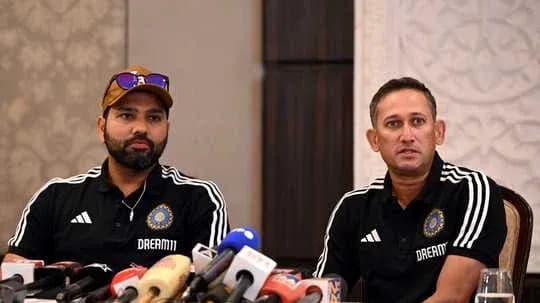
Ajit Agarkar walked into the week as India’s chairman of selectors, contracted until October 2026. He walks out of it with his future still dangling, his fate now effectively placed in the hands of the BCCI’s top brass rather than the wider house. The AGM on Friday did not take a definitive call on his position, but it did something almost as significant: it authorised the board’s office-bearers to decide the composition of the senior men’s selection committee.
In Indian cricket politics, that kind of delegation speaks loudly.
Clouds Over the Chairman
Agarkar’s role has come under growing scrutiny in recent weeks. His absence from a key review meeting earlier this month, convened to assess India’s tour of the UK, raised eyebrows even as the BCCI publicly downplayed it. The chatter, though, hasn’t stopped.
Tension sharpened around the episode involving Rohit Sharma before the Lord’s ODI. Selectors, it is understood, informed the former captain he did not figure in the team’s plans. The BCCI then stepped in. When administrators override selectors on a player of Rohit’s stature, questions follow quickly. Who really runs selection? How secure is the chairman?
For now, Agarkar remains in the chair he took over in July 2023. On paper, his contract stretches another two years. On the ground, it feels far less secure.
Business as Usual – For Now
Despite the noise, the machinery has not stopped. The selection meeting to name India’s squads for the West Indies ODIs, the Irani Cup, and the India A teams went ahead earlier this week without any visible disruption. Those in the room described it as routine. The selectors went about their work. No drama, no walkouts, no grand gestures.
That calm, though, sits over a fault line.
If the board’s office-bearers decide Agarkar’s time is up, the BCCI cannot simply tap the next man on the shoulder the following morning. There is a set process to follow: a formal advertisement, applications, a round of interviews, and only then an appointment. It is not a quick fix, particularly with a busy international calendar ahead.
In that context, one name has begun to circulate with some consistency: Parthiv Patel. The former India wicketkeeper-batter is understood to be a potential successor should the BCCI opt for change at the top of the selection pyramid. Nothing formal, no offer on the table yet, but his candidacy is being talked about in the corridors that matter.
Junior Panel Still in Limbo
The uncertainty is not confined to the senior setup. The junior selection committee remains incomplete, its own appointment process still stuck in the middle.
The BCCI advertised for five positions on August 24. Since then, silence. Interviews are yet to be held. The expectation inside the system was that the new junior committee would be unveiled around the AGM, giving age-group cricket a clear roadmap heading into a crucial phase. That hasn’t happened.
The latest indication is that the process will drag on until the end of the month. Age-group structures, feeding the next generation into the senior side, must now wait on administrative timelines.
Ranchi Stays on the BGT Map
Away from the selection intrigue, one issue was firmly put to bed. Reports that Ranchi might lose its Test in next year’s Border Gavaskar Trophy prompted swift pushback from the Jharkhand State Cricket Association.
Saurabh Tiwary, the JSCA secretary, made it plain: Ranchi is not going anywhere.
The five-Test series against Australia will start in Nagpur on January 21. Chennai, Guwahati, Ranchi and Ahmedabad will host the remaining four matches, in that order. No reshuffle, no late switch.
“There is no change in the venue. If anybody has to write to the BCCI about it, it should be me and I have not written it,” Tiwary told the media, cutting through the speculation with a single line.
Governance Battle Lines
Inside the AGM, the conversation was not just about squads and venues. The National Sports Governance Act also found its way to the table.
The Supreme Court has asked the BCCI to clarify its position on the legislation, forcing the board to prepare a formal stance. That will not be a small moment. The Act, and the question of whether cricket falls under its definition of a “designated sport,” goes to the heart of how independently the BCCI can operate.
So far, the board has held its ground. In the Odisha Cricket Association case and elsewhere, it has consistently argued that cricket does not fall under that “designated sport” bracket. That line is unlikely to soften easily, not with autonomy seen as a prized asset in Indian cricket’s power structure.
A Decision That Shapes the Dressing Room
For now, the scoreboard reads like this: Ajit Agarkar is still chairman of selectors, the senior committee is functioning, the junior panel is pending, Ranchi keeps its Test, and the BCCI is gearing up for another legal and governance tussle.
But one looming decision stands above the rest.
When the office-bearers finally move on Agarkar’s future, they will not just be choosing a chairman. They will be choosing the voice that sits between India’s dressing room and its boardroom in a cycle packed with marquee series and global tournaments.
In a system where power is rarely surrendered and often contested, who gets to make that call — and how quickly they make it — could define the next phase of Indian cricket.