
Abhijit Kale: The Forgotten Talent of Bombay Cricket
In Bombay cricket of the late 1980s, being brilliant was almost routine. The city kept churning out young batters so quickly that even those good enough to share a stage with Sachin Tendulkar could slip out of national memory.
One season captured that excess perfectly. Bombay’s best junior cricketer award was split between a 14-year-old phenomenon named Tendulkar and another boy whose life in the game would veer off in a very different direction.
His name was Abhijit Kale.
The boy who kept up with Tendulkar
Their paths crossed early. Tendulkar captained a Bombay Under-17 side that featured Vinod Kambli, Jatin Paranjape and Kale – a dressing room stacked with promise, even by Bombay’s ruthless standards.
Tendulkar and Kambli would soon become the faces of that generation, one a global icon, the other a mercurial left-hander who lit up the early 1990s. Kale’s story unfolded far from that glare. He spent years piling up runs out of the international spotlight, eventually closing his first-class career with more than 7,000 runs and just a single appearance for India.
The 1987-88 season remains a telling marker. Kale and Tendulkar shared Bombay’s premier junior honour, a formal acknowledgement that, at that moment, they stood side by side in the pecking order. Before senior caps and television cameras began to separate them, Kale was not the forgotten man. He was a peer.
Leaving Bombay to find a career
In that era, Bombay’s batting line-up was a fortress. Kale’s route into first-class cricket twisted and stalled, and the door never truly opened at home. He moved to Maharashtra in search of opportunity. There, the runs finally came, and they came in a flood.
Over 93 first-class matches, Kale scored 7,134 runs at an average of 54.45. The numbers are elite by any standard: 25 centuries, 28 fifties, a highest score of 248 not out. These were not the figures of a journeyman clinging on; they were the profile of a batter who dominated his level.
That unbeaten 248 against Baroda in the 1999-2000 season distilled his domestic career into a single epic. Maharashtra, following on and wobbling badly, looked headed for defeat. The innings began to unravel around him. Kale stayed.
He built, he absorbed, he refused to budge. He turned a crisis into a monument, dragging his team away from the brink. It was the sort of knock selectors remember: long, stubborn, shaped by pressure rather than comfort. It suggested that his average was not just the product of flat pitches and weak attacks.
Knocks that demanded attention
By the early 2000s, ignoring Kale had become increasingly difficult. The innings that kept his name on selection agendas came in Jaipur in November 2001, for India A against England.
On a surface offering plenty to the seamers, India A crumbled to 8 for 4. Richard Johnson and Andrew Flintoff ripped through the top order. The game could have been over by lunch.
Kale walked into that wreckage and made 122. India A declared on 233 for nine; more than half those runs came from his bat. It was exactly the sort of performance that shifts a player from “domestic run-machine” to “international contender” – runs against an international attack, under real stress, when others had failed.
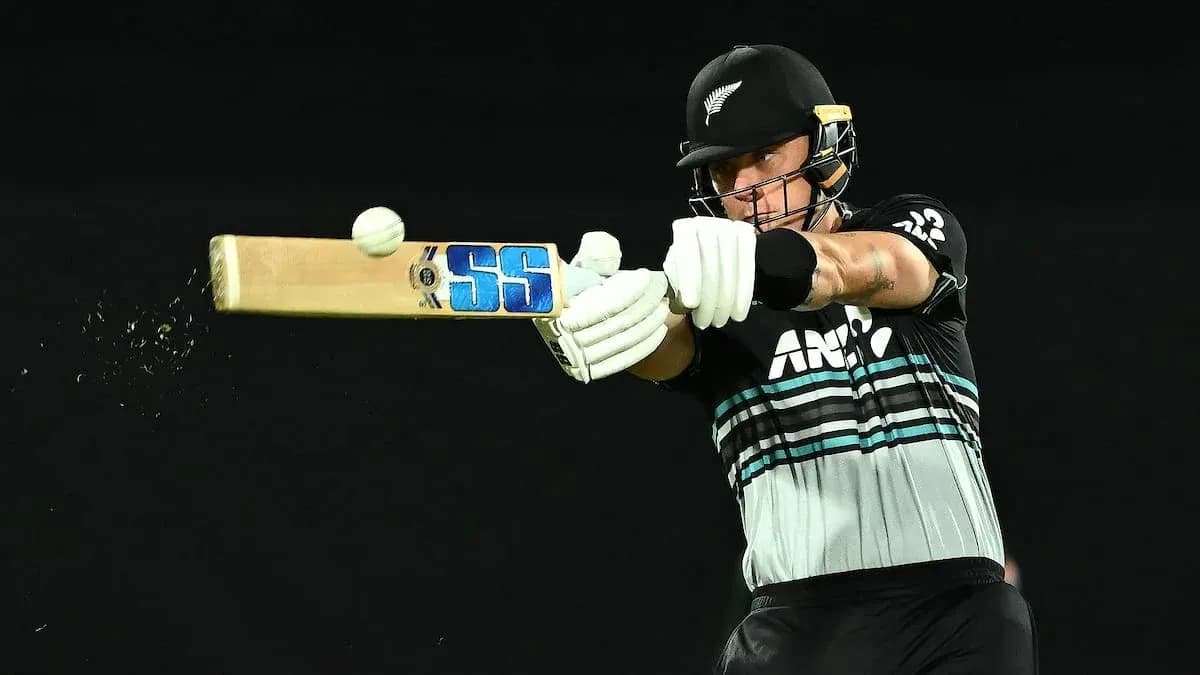
His white-ball record carried its own flash of rarity. In the 1994-95 season, playing for Maharashtra against Baroda, Kale reached a fifty from just 16 balls, one of the fastest List A half-centuries by an Indian for many years. For a batter best known for long hauls in first-class cricket, it was a startling reminder of range.
The signs kept coming. He scored 90 for the Board President’s XI against Zimbabwe. He went to South Africa with India A and made 75 against South Africa A. Former India selector Ashok Malhotra later described him as technically sound and particularly suited to the longer format. The case was building, brick by brick.
One cap, 10 runs, and a door that shut
The irony, when the call finally came, was stark. Kale, the archetypal long-format batter, was picked not for a Test but for an ODI.
He made his India debut in Dhaka against Bangladesh in April 2003. He was 29 years and 287 days old, far from a prodigy now, closer to a last-chance entrant. Several established players skipped the tournament, clearing space for fringe hopefuls. Kale got his shot.
He made 10 from 22 balls.
There was no second game. No extended run. No late-career surge. His entire international life fits into a single scorecard: one ODI, 10 runs, no Test cap. For a man who had spent a decade arguing his case with first-class numbers, the brevity felt brutal.
The scandal that stopped everything
Then the story darkened.
Later in 2003, national selectors Kiran More and Pranab Roy accused Kale of offering them ₹10 lakh each in connection with selection. Kale denied offering money. During BCCI proceedings, he admitted he had tried to influence selectors by approaching them directly or through his parents, and apologised for that conduct.
The Board deemed him guilty of misconduct and indiscipline and banned him until the end of 2004.
The Press Trust of India quoted then BCCI secretary Niranjan Shah (Shetty in some reports) as saying: “The player had offered to pay money to a couple of selectors for a place in the India A team. I can assure you that stern action will be taken against the player.” The allegation of money changing hands, though, was never backed by direct proof. BCCI president Jagmohan Dalmiya acknowledged as much at the time.
Kale’s own apology letter tried to draw a line. He wrote that the episode had “unnecessarily tarnished the image of the board” and accepted that it was wrong to influence selectors “by approaching them directly or through my parents”. On the specific issue of offering money, he said he had been misunderstood and insisted he had no such intention, tendering an “unqualified apology” for his actions.
The punishment rested on what he admitted – improper approaches – rather than on proven bribery. By then, the damage to his career was already done. Momentum, so hard-won in domestic cricket, vanished.
A career of numbers, and a gap that never closed
What remains, years later, is one of the strangest domestic careers of his generation.
Here was a batter who once shared Bombay’s top junior award with Tendulkar. Who sat in the same youth dressing rooms as Tendulkar and Kambli. Who scored 7,134 first-class runs at an average north of 54. Who made landmark innings against international-quality attacks when it mattered.
Tendulkar played 664 international matches. Kale played one.
Cricket has never been a pure meritocracy. Talent, timing, competition, politics, luck – they all pull at a player’s fate. Abhijit Kale’s record guarantees his name a place in any serious discussion about prolific Indian domestic batters who barely tasted international cricket.
Viewed from where he started, shoulder to shoulder with Bombay’s most celebrated prodigies, his story asks a question that still lingers over Indian domestic cricket: how many more Abhijit Kales are out there, with numbers that scream “ready”, and a door that never truly opens?