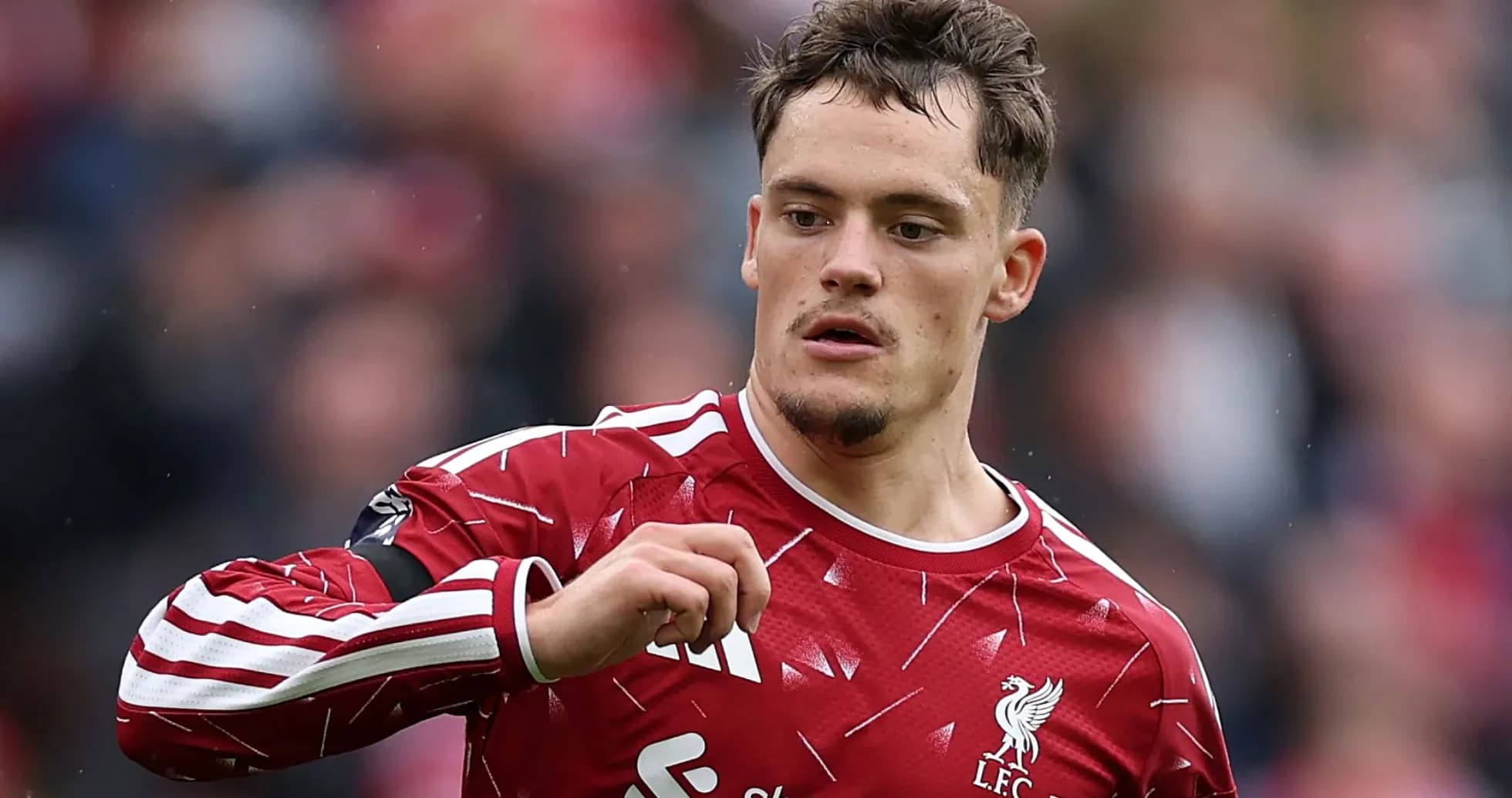
Wirtz's Liverpool Struggles: Hamann's Stark Warning
Florian Wirtz arrived at Liverpool as a statement signing, the kind of lavish investment that screams “centre-piece” rather than “project”. Yet as the 2026-27 season stutters into life, the German playmaker is still searching for a spark – and patience, according to Dietmar Hamann, is running out fast.
The club may have budgeted two seasons for him to truly catch fire. Hamann suspects he may not get that long.
The former Liverpool midfielder, speaking to GOAL in association with Betinia NJ, stripped away the comfort blankets around Wirtz’s situation. Asked what the 23-year-old needs from this campaign, and when exit rumours might start to swirl, Hamann did not bother with diplomacy.
“He’s got to start playing well. He has to start influencing the game,” he said.
Right now, Hamann sees a player drifting rather than dictating.
“I think he's a player who floats. He's probably not got that respect from the other players that sometimes maybe he can stop defending, because I think you've got to give him certain liberties and a certain freedom, that you've got players who win the ball back for him.
“And the players don't mind doing it if when he does get the ball 10 times, six, seven, eight times, something's going to happen. That's just not the case.”
The picture he paints is of a talent trapped between roles. Wirtz is working, running, chasing – but not hurting teams.
“Now he's working very hard going backwards. I think sometimes he's doing too much. He wants to help the team because he sees that he can’t influence the game going forward,” Hamann continued.
“So I think the balance in his game has been wrong, but he will only get the respect of the players when he starts influencing the game going forward. He's not there to win balls, he's there to set up goals and score goals.”
That is the crux. Liverpool did not spend big on Wirtz to turn him into another presser or water-carrier. They bought him to be the man who decides matches. Hamann reckons that has only happened in flashes.
“I think there were maybe a handful of games where he did that last season. And it's simply not enough,” he said.
The Premier League’s physicality is the familiar caveat, and Hamann acknowledges it. The league has chewed up and spat out big reputations before.
“Yes, it's more physical. And some of the best players took some time to adapt. I think [Juan Sebastian] Veron came lauded as the best midfield player. I think he lasted one season and went back to Italy. So some just can't do it or don't want to do it.”
Hamann initially backed Wirtz to ride out the storm. Time, he felt, would do its work. Then the months slipped by.
“And obviously, the longer it goes on now, because I said the first two or three months, give him time. I said he's too good to fail. But once it went past Christmas, I said, I don't think he's going to crack it anymore because it's too long now. Because expectations are not getting any less.”
This season has started with more questions than answers. Wirtz was substituted after an hour in Liverpool’s opening league game, another performance where he failed to leave a mark. Hamann believes the next few weeks are critical – not just for form, but for Wirtz’s entire Liverpool future.
“I think if he doesn't start playing well, he came off again in the first game after 60 minutes. I think if he doesn't start influencing games in the next three or four weeks, I think by the time we have that international break, which is longer this year, I think we have a lot of paper talk, a lot of discussions, whether the club should have bought him, which is obviously too late because he's there.
“And maybe him thinking, ‘well, maybe this is not for me’.”
That is a striking line: the possibility that the player himself begins to question the fit. For Hamann, something has to give if the current pattern continues.
“I think something will happen because for a player of that magnitude, of that stature, the amount of money he costs, it's simply not enough. You've got to find a solution somehow, maybe even in winter, if things don't get better.”
No.10, left forward… or just not working?
The Wirtz debate is not just about performance; it is also about position. Is he a classic No.10? A playmaker off the striker? Or a wide forward who drifts in from the left and attacks the half-spaces?
Liverpool have wrestled with that question since he arrived. The argument has rumbled on in punditry circles too. Hamann, a Champions League winner from his own Anfield days, is unconvinced that the positional wrangling can explain away the lack of end product.
“I know everybody said how well he does in training and all this,” he said. “And there does come a point, and I think the point was last year after Christmas, where somebody should have said, ‘listen lad, either you do it or in the summer, we see what's happening in the World Cup, maybe we've got to find a solution’. Because they can't wait forever.”
That line – “he was bought to be the main man” – hangs over everything. Liverpool built a chunk of their attacking future around him. Now, the cast around him is shifting again.
“He was bought to be the main man. And I wouldn't blame it on the position that he plays on the left. I think a year earlier, I said in the summer he sees him as a number 10.
“But if you've got a number 10 who doesn't create the chances or doesn't score enough goals, then obviously somebody else has to play - especially with [Bradley] Barcola coming in. It's a tricky situation for players in England.”
Barcola’s arrival sharpens the edges of this story. Competition on the left is no longer theoretical; it is real, fast, and hungry. If Wirtz cannot dominate games from there, Liverpool have another option ready to step in.
So the clock ticks.
A marquee signing, a swollen fee, a fanbase expecting a conductor and instead getting a player still tuning his instrument. The next three or four weeks will not define Wirtz’s talent. They might, though, define his Liverpool career.