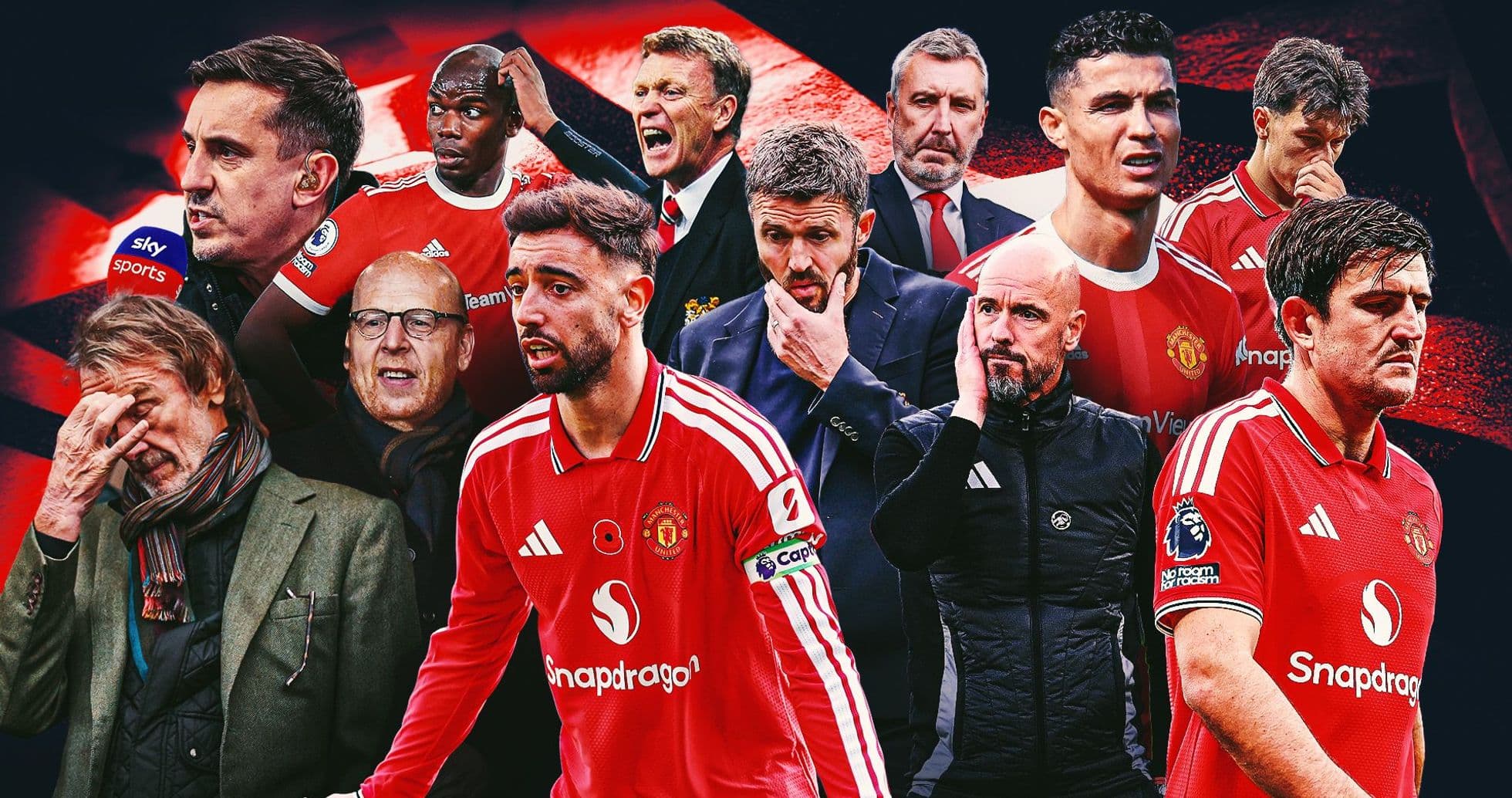
Who Is Truly Responsible for Manchester United's Decline?
Manchester United faces a relegation battle that has been looming for years. Michael Carrick's team currently sits just above the drop zone on goal difference, having secured only one win in their first nine league matches of the 2026-27 season. The club has suffered six losses and three draws across all competitions recently, conceding 18 goals while scoring just six. This troubling trend could persist through the end of the year.
Another managerial change seems inevitable, but the problems run so deep that any new appointment is unlikely to spark a quick revival. Despite ambitious aims set by the INEOS regime targeting Premier League glory by 2028—the club’s 150th anniversary—United appears far from elite status.
The Roots of Decline: Glazer Takeover and Early Fallout
The club’s troubles began in 2003 when Malcolm Glazer quietly acquired a small stake during a dispute involving Sir Alex Ferguson and previous owners John Magnier and J.P. McManus. By 2005, the Glazers had taken control of 98% of the club through a leveraged buyout, saddling United with hundreds of millions in debt for the first time in decades.
This takeover sparked immediate fan protests at Old Trafford and led to the creation of rival club FC United of Manchester. Though United won multiple titles under Ferguson during this period, debt ballooned to £716 million. Fans voiced dissent by wearing Newton Heath’s original green and gold colors, signaling unrest with ownership.
Ferguson remained loyal to the Glazers, insisting in 2012 that their ownership did not affect team performance despite financial constraints limiting transfer spending.
Transition Without Stability: The Post-Ferguson Era
Ferguson and CEO David Gill both left after the 2012-13 season, a triumphant campaign ending with a Premier League title. Their departure marked a turning point, as leadership shifted toward executive vice-chairman Ed Woodward and financial experts prioritizing commercial growth over football needs.
David Moyes, Ferguson’s successor, lacked the experience to manage United’s transition and quickly lost the dressing room. After a poor start and player unrest, Moyes was sacked, leaving United with its lowest Premier League finish of seventh place. Subsequent managers including Louis van Gaal, Jose Mourinho, Ole Gunnar Solskjaer, Ralf Rangnick, Erik ten Hag, Ruben Amorim, and Michael Carrick failed to restore consistent success, with frequent managerial changes reflecting deep instability.
Failed Recruitment and Financial Waste
Since Ferguson’s departure, United has spent over £2 billion on transfers but seen very few successes. Only Bruno Fernandes and Zlatan Ibrahimovic stand out as clear hits among 78 arrivals in 13 years. Expensive signings such as Angel Di Maria, Paul Pogba, Romelu Lukaku, Alexis Sanchez, Jadon Sancho, Donny van de Beek, and Aaron Wan-Bissaka often failed to deliver, becoming symbols of poor judgment.
Erik ten Hag’s tenure, despite a huge transfer budget, backfired with several ill-fitting signings that set the club back further. Ruben Amorim was tasked with correcting course but lacked authority and time. Meanwhile, recent player acquisitions appear driven more by club executives than managerial preference, unlike Ferguson’s era where he had full control over transfers.
Boardroom Mismanagement and Controversial Decisions
Ed Woodward’s tenure, starting with his role in the Glazers’ takeover, drew heavy criticism for prioritizing marketability over team needs, offering massive contracts to underperformers, and handling transfers poorly. His involvement in the failed European Super League proposal in 2021 led to fan outrage and his resignation.
Successors John Murtough and Richard Arnold continued some of these missteps, with reckless spending and poor crisis management, including mishandling the Mason Greenwood case and Cristiano Ronaldo’s turbulent second spell.
INEOS Ownership: High Hopes, Deeper Troubles
In late 2023, INEOS acquired a minority stake and took operational control, promising to overhaul recruitment and restore the club’s standing. A high-profile leadership team was assembled, but recent decisions have only worsened the situation. Ten Hag’s costly extension followed by his sacking, the brief appointment and dismissal of Amorim, and promoting Carrick to permanent manager suggest ongoing confusion.
INEOS’ transfer strategy has been flawed, especially defensively, contributing to the current relegation risk. Meanwhile, chairman Sir Jim Ratcliffe’s cost-cutting measures—such as staff layoffs, slashing amenities, reducing ambassador salaries, and raising ticket prices—have alienated fans even further.
Fan Backlash and Calls for Change
Supporters demand change, culminating in protests against ownership before a recent derby defeat to Manchester City. Ratcliffe’s public statements acknowledge criticism but show reluctance to stay if hostility persists. Former United captain Gary Neville has called for the Glazers to sell immediately, highlighting the club’s £1.2 billion debt and ongoing struggles.
Neville criticized the proposed £2 billion stadium project as another example of leadership disconnected from fans and reality. He insists the owners must relinquish control now, warning the club cannot sustain 13 to 14 years of failure without accountability.
The Path Forward
While INEOS may increase their stake or acquire full ownership by 2029, that timeline is too distant for supporters desperate for stability. The Glazers hold power to force sales if suitable offers arise, which many see as the only way to rescue the club.
United’s decline is tied to absentee ownership lacking connection to the club’s heritage and soul. As Neville bluntly puts it, enough is enough; the club cannot recover until those owners leave.