Tottenham's Journey: From Europa League Glory to Premier League Struggles
It has taken Tottenham 1,108 days to get back to this brink.
Four straight Premier League wins. It sounds routine for a club of their size, the kind of streak that once slipped into the fixture list almost unnoticed. Yet as Spurs head to Elland Road this weekend, the chance to stitch together four in a row feels like a marker of how wild, and how bruising, the last three years have been.
The last time they did it, Ange Postecoglou was still the fresh voice with the fresh ideas, the feel‑good soundtrack to a fanbase daring to believe again. In those opening months of the Australian’s reign, Tottenham rattled off eight wins from their first 10 league games, went five points clear at the top and did it all without Harry Kane, who had departed for Bayern Munich that summer. They even strung together two separate three‑game winning runs either side of a north London derby draw between August and October 2023.
It looked like the start of something. They finished that season in fifth. The real story, it turned out, was only just getting started.
A world turning while Spurs stood still
While Tottenham lurched from hope to chaos, the wider world spun on its own dramatic axis.
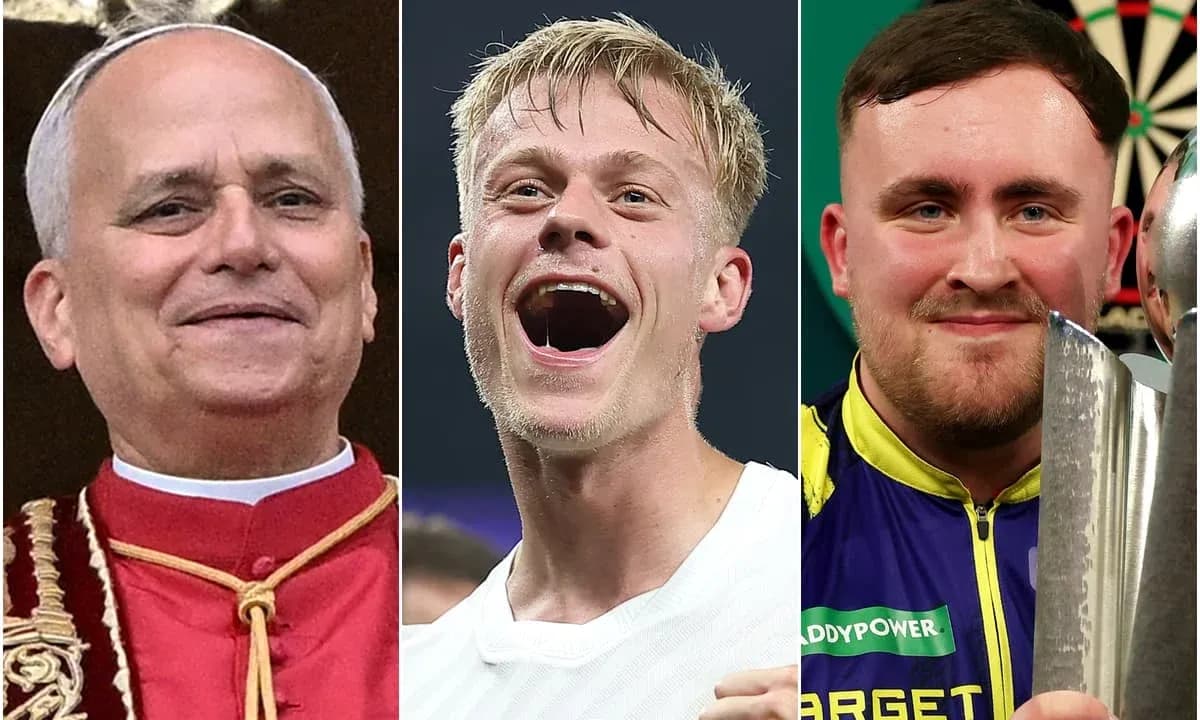
The Catholic Church welcomed a new leader as Cardinal Robert Francis Prevost became the 267th Pope in May 2025, taking the name Pope Leo XIV. A Real Madrid fan by reputation, he still ended up holding a Sunderland shirt with “Pope Leo, 14” on the back, a quirky echo of the one gifted to Pope Francis before Sunderland’s famous win over Newcastle in 2013.
Across the Atlantic, Donald Trump marched back into the White House, winning a second term as US President in November 2024 by defeating Democratic candidate and former vice‑president Kamala Harris. Four years earlier he had been beaten by Joe Biden, apparently consigned to history after his first spell in office, which began with victory over Hillary Clinton in 2016. He was not.
In Westminster, the revolving door of power spun again. The Labour Party returned to government after 14 years as Sir Keir Starmer became Prime Minister in July 2024 with a landslide. Two years later, he was gone, resigning in July 2026 and handing over to Andy Burnham. Five Prime Ministers in five years; instability became the new normal.
Tottenham, in their own way, kept pace with the turbulence.
Levy walks away and the floor gives way
In September 2025, a constant of the modern Spurs era finally stepped aside. Daniel Levy left his role as executive chairman, ending a 25‑year spell that had defined the club’s direction, finances and identity.
Non‑executive chairman Peter Charrington spoke of “a new era of leadership for the club”. What followed was not the kind of new era anyone had in mind.
Tottenham slumped into their worst Premier League season in history. The grand stadium, the lofty ambitions, the talk of pushing back towards the elite – none of it mattered as they stumbled towards the trapdoor. On the final day of last season, only a nervy 1-0 win at home to Everton kept them from relegation to the Championship. Ninety minutes that felt like a cup final, played in a state-of-the-art arena built for title races and Champions League nights, not survival scrapes.
The irony was brutal. Just a year earlier, Spurs had finally ended their long, suffocating trophy drought.
From Europa League glory to the brink
Twelve months before that desperate afternoon against Everton, Tottenham had been parading silverware. They lifted the Europa League, their first major trophy in 17 years, with victory over Manchester United in Bilbao. For a fanbase used to near‑misses and “nearly” seasons, it was a cathartic release.
Then came the decision that ripped the floor from under them.
Postecoglou, the man who had delivered that European triumph and restored a sense of identity, was sacked just 16 days after the final. It was controversial on the day it was announced. In hindsight, it looks catastrophic.
The following campaign unravelled into farce. Tottenham went through three managers in 10 months, a churn more associated with basket‑case clubs than with a side that had just lifted a continental trophy.
Thomas Frank arrived as Postecoglou’s successor, charged with consolidating success and pushing on. By February 2026 he was gone, dismissed with the club hovering over the relegation zone. Igor Tudor stepped in and barely had time to learn the names on the dressing-room doors. His spell lasted just 44 days before the hierarchy reached again for the reset button.
Only when Roberto De Zerbi was brought in did the slide finally slow. He steadied the ship just enough, steering Spurs to safety on that fraught final day, their Premier League status preserved “by the skin of their teeth” thanks to a crucial goal from loanee Joao Palhinha in that 1-0 win over Everton.
From Europa League winners to relegation candidates in a year. Tottenham had broken their trophy curse and almost paid for it with their top-flight place.
Neighbours fall, prodigies rise
While Spurs were fighting to stay afloat, chaos and brilliance were playing out elsewhere in sport.
Across London, West Ham completed a grim arc of their own. Within three years, they went from the high of winning the Europa Conference League – their first major trophy in 43 years – to relegation to the Championship. Poor recruitment, managerial churn and ownership uncertainty combined to drag them back into the second tier after 14 consecutive seasons in the Premier League. European glory to second‑tier slog: a warning from just down the road.
Other arenas showcased a very different kind of drama, the kind that comes when prodigies seize the stage.
In darts, Luke Littler exploded into the public consciousness at just 16, reaching the World Championship final on his debut at Alexandra Palace in January 2024. That breakout run was no fluke. He has since become a back‑to‑back world champion, the dominant force in the sport while still a teenager and one of the biggest names in British sport.
Formula One found its own phenomenon. Kimi Antonelli, almost unknown to casual fans three years ago, is now the youngest world champion the sport has ever seen. At 20 years and 68 days, he clinched the 2026 title with a third‑place finish at the Mexico City Grand Prix. The season has been a blur of broken records: youngest winner of the Monaco Grand Prix, youngest driver to record a Grand Slam, and the first Italian world champion in more than 60 years.
Tennis, by contrast, has been saying goodbye. Sir Andy Murray, two‑time Wimbledon champion and the man who carried British hopes for a decade, retired in August 2024. Rafael Nadal, 22‑time Grand Slam winner and king of Roland Garros, followed him in October. With Roger Federer already gone since September 2022, only Novak Djokovic remains from the ‘Big Four’ who dominated the 21st century.
Boxing has refused to close its own chapters so neatly. Tyson Fury’s retirement announcements have become a running joke, and his fourth such declaration last year convinced almost no one. Sure enough, he returned again in April 2026, beating Russian Arslanbek Makhmudov by unanimous decision. He then defeated Mariusz Wach in Thailand and is now building towards a blockbuster bout with Anthony Joshua in Cardiff in December, a fight that still carries heavyweight intrigue despite all the false endings.
Back to Elland Road
All of this has unfolded since Tottenham last managed four consecutive Premier League wins. New Popes, new governments, new champions, old legends bowing out. West Ham down, Spurs clinging on, prodigies rewriting record books.
Now Tottenham arrive at Elland Road with a simple, almost modest target: win a fourth league game in a row for the first time since that early Postecoglou surge.
It will not erase the chaos of the past three years. It will not rewrite the decisions that dragged them from Europa League glory to the edge of the abyss.
But in a club that has lived through so much upheaval, sometimes a small streak can feel like the start of something bigger. The question is whether this run is a flicker of form – or the first real sign that Spurs, finally, are ready to grow up again.