Rúben Amorim on Milan's Tactical Identity and Cissé's Readiness
Rúben Amorim walked into the press room at Milanello with a smile that said he’d seen all this before. Criticism, questions about style, doubts about his ideas. Juventus away had reopened an old Italian debate: is this Milan too cautious, too controlled, too… defensive?
He didn’t flinch.
“The last game wasn’t just static; I think we lacked energy,” he admitted, dissecting the 1-1 draw in Turin. Milan had the ball, especially before the break, but never really sank their teeth into Juventus in the final third. The coach’s verdict was blunt: the problem wasn’t the idea, it was the execution.
He had the clips to prove it.
“I showed the players that a lot of opportunities for Juve came from us losing the ball, sometimes even without pressure. Just a sloppy pass. Those details can change the game and the momentum. We worked on that, and we need to do better.”
Milan travel to Lazio with seven points from nine, two wins and that bruised draw, yet the conversation around the team has turned to aesthetics. Amorim, who arrived with a clear mandate to modernise and attack, now finds himself accused of being too careful. It’s a familiar storm.
“Criticism is normal. I already experienced that in my former club [Manchester United]. More than that, it’s impossible,” he said, half-smiling. He has worn heavier shirts and survived harsher headlines.
Cissé ready for Italy – and for everything else
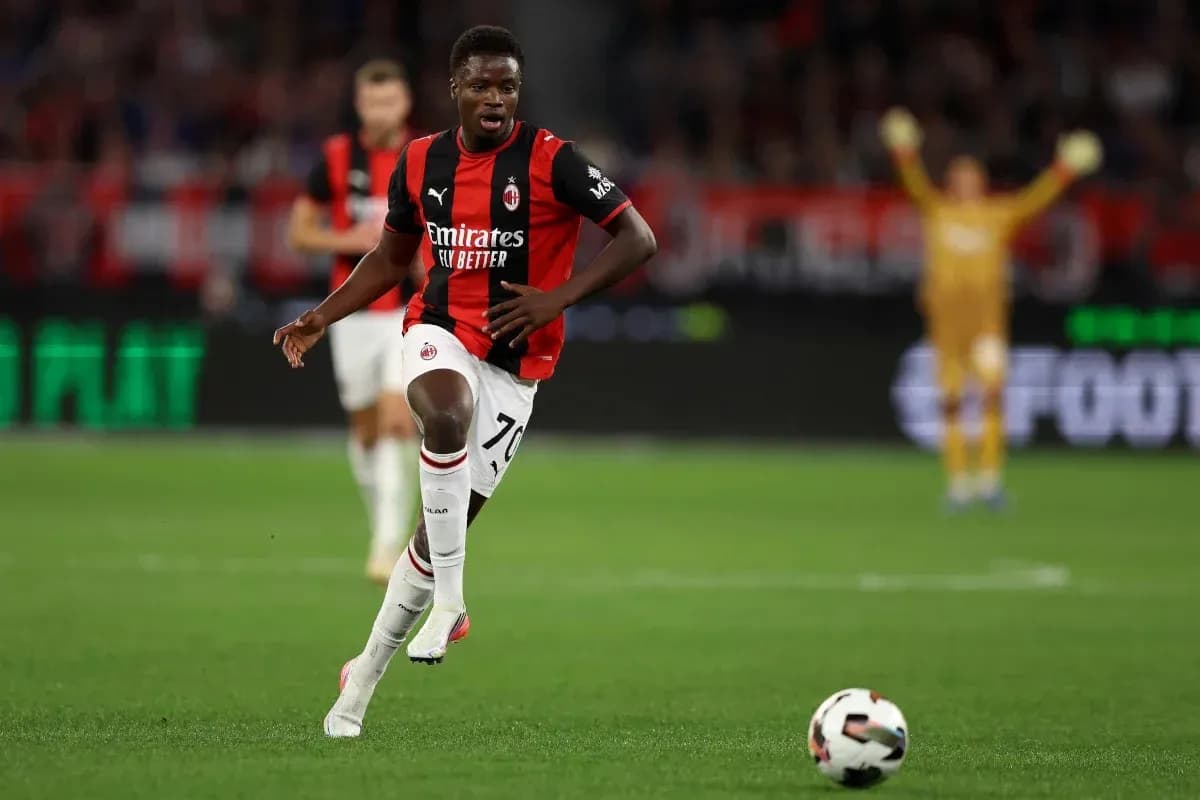
In the middle of all this noise, one story cuts through: Alphadjo Cissé. Two goals in his first three Serie A games, a burst of vertical running and courage that has jolted Milan’s attack. Italy has noticed. The Azzurri are expected to call him for the upcoming international break.
Amorim didn’t hesitate when asked if the 20-year-old is ready for that leap.
“If you put Cissé on the pitch, he’s going to play. Doesn’t matter if he’s with the national team, with Bastoni or with these guys,” he said. “He’s going to play, free. For that, he’s ready.”
Then came the nuance. The goals are there, the personality too, but San Siro is its own examination.
“He needs time to grow up. I saw a bit of a difference when he plays away and when he plays at San Siro. San Siro is tough, so he needs to adjust to all these small things. Let’s give time to Cissé.”
The message to Luciano Spalletti and Italy is clear: don’t worry about his character.
“If you put Cissé in training with the national team and playing with the national team, he won’t be shy, and he’s going to have the ball. So he’s ready, but he needs time to be the player he can be. He has a lot to learn.”
Milan, though, already know one thing: when Cissé steps on the pitch, he does not hide.
Pulisic’s frustration and Ramos under the microscope
If Cissé is flying, Christian Pulisic is still waiting to take off. Amorim confirmed the USMNT star will finally get his first minutes of the 2026-27 season against Lazio, after watching the first three games from the bench.
Pulisic is not happy about it. The coach didn’t try to disguise that.
He described the American as “upset” with his lack of playing time so far, an entirely predictable reaction from a player of his status. For Amorim, that edge is useful, not dangerous. Competition is part of the plan.
Gonçalo Ramos, meanwhile, has already felt the full swing of early-season judgment. Outstanding against Torino and Venezia, questioned after a quieter display in Turin.
“I think we need to improve as a team. Ramos did so well against Torino and Venezia that, in a game where he doesn’t have the same performance, you notice it,” Amorim said. The striker’s dip was framed not as an individual failure but as a symptom of a collective that lost sharpness and aggression.
“It’s more about the understanding of the game from all the players in the team,” he added. The idea is clear: when Milan’s structure and intensity drop, the forwards are the ones who look exposed.
Identity, opponents and a coach who won’t copy anyone
The Juventus game reopened a tactical argument around Amorim. Is this Milan too controlled? Too pattern-based? Too foreign in its thinking for an Italian audience that still loves spontaneity as much as structure?
Amorim pushed back firmly.
“If you look at our team, we always have an intention; you can’t see anything that is random,” he said. The patterns he demands are complex, sometimes demanding for the players, but they are deliberate.
He knows what it looks like when a coach arrives “from abroad to say how to play your football” and understands the instinctive resistance.
“I understand the pressure. I understand that when you see a guy coming from abroad to say how to play your football, it is really hard, and in the first moment you are just waiting to tell me that in my face.”
So he keeps repeating one promise.
“What I can promise is that the team will always be in first place. I want to dominate games, but then Spalletti, Fabregas, all these guys, they are really good and will push us.”
The reference to Spalletti and Juventus was telling. Milan had more of the ball in Turin, yet spent long stretches pinned back.
“Sometimes we want to score goals and be positive, but then there’s the opponent, and maybe Spalletti – your Spalletti – is really good and they pushed us back. We had the ball more than Juventus. Sometimes even when I have the ball, the other guy is better than me, but that doesn’t change the intention you have.”
For Amorim, intention is non-negotiable. Dominance is the target. Reality, though, includes elite managers in the opposite dugout.
He even zoomed in on one detail that, for him, can tilt narratives and buy time: set pieces.
“What’s really important is to be good in the last set pieces of the game because if we win, some guys will have to keep that question in their pocket for one more week.”
Win, and the debate pauses. Lose, and it roars back. He knows the rules.
Como, Fabregas and a project of his own
On the European front, another Italian story has grabbed attention. Como, coached by Cesc Fabregas, were the only Serie A side to win in the opening round of the Champions League, dismantling RB Leipzig with authority. Their fluid, confident football has quickly become a reference point.
Are Fabregas and Como a model for Milan’s long-term project?
Amorim didn’t even pretend to play along.
“I think we are different managers, with different backgrounds and work for different clubs,” he replied. There has been no directive from Gerry Cardinale to copy anyone.
“Mister Cardinale has never told me that [Como] is the inspiration, so you need to tell me, as I didn’t know. I have my way of playing; I think it will take time. Every manager needs time.”
He pointed to the signs of progress he sees inside his own work: Torino in the league, the friendly against Manchester United. Small steps, but steps.
Then came the line that cut through any idea of imitation.
“If you want a team that plays like Como, you need to buy Como’s manager to play the same way.”
There was no disrespect in the sentence. In fact, Amorim praised the scale of what Fabregas is doing.
“Coaching Milan is really hard; coaching Como and doing what they are doing in the Champions League is so hard, and they are doing so well, but I’m not focusing on how Como are playing; I focus on how Milan must play to win games.”
His identity is non-negotiable. The project is his.
Under scrutiny, but unshaken
Three games in, Milan sit unbeaten, with a rising star in Cissé, a restless match-winner in Pulisic ready to rejoin the fray, and a centre-forward in Ramos who has already shown he can carry the attack when the structure around him clicks.
The football is still a work in progress. The criticism has already arrived. Amorim, shaped by Manchester United and now tested by Serie A, stands in the middle of it, insisting on two things: the team comes first, and the idea will not bend to noise.
Lazio away will not answer every question. It will, though, show how quickly this Milan can turn intention into authority – and how ready they are to live with the weight that comes when you try to change the way a giant club plays.