Paris Saint-Germain vs Barcelona: How Enrique’s Late Tactics Broke Down Flick’s High Line
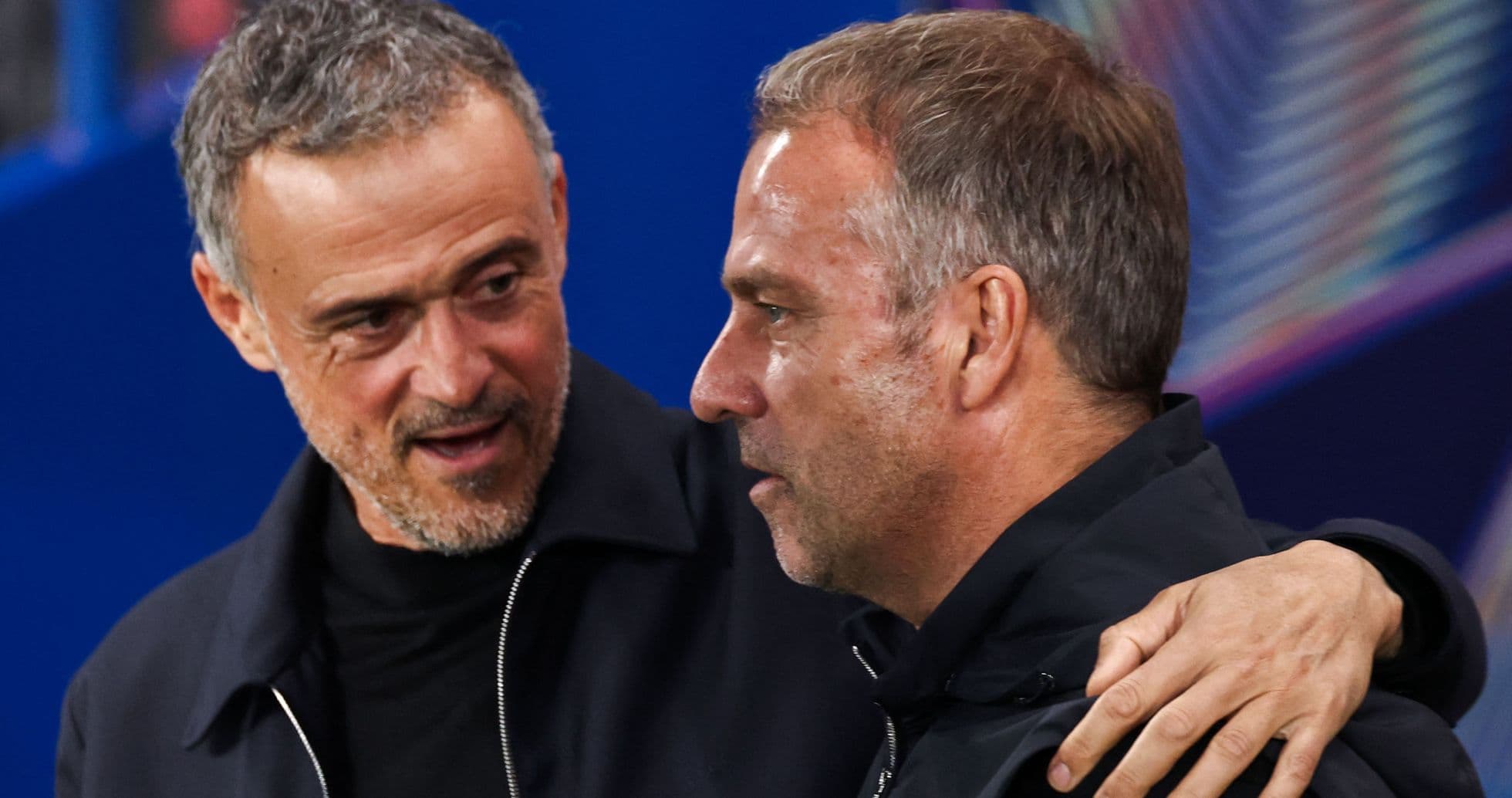
Paris Saint-Germain claimed a thrilling 4-2 victory over Barcelona, exploiting a late-game collapse sparked by Luis Enrique’s clever use of vertical transitions against Hansi Flick’s aggressive high defensive line. The match at Parc des Princes showcased a clash of strategies where PSG’s mental toughness and swift attacks overcame Barcelona’s possession-focused approach.
PSG’s Tactical Approach
Enrique lined up in a flexible 4-3-3 that favored quick vertical moves instead of holding the ball for long periods. Achraf Hakimi often drifted centrally to support midfielders Vitinha and Joao Neves, allowing PSG to transform into a 3-2-2-3 shape when attacking. The wingers stayed wide and high, forcing Barcelona’s full-backs to stretch and create space.
Defensively, PSG pressed aggressively early on, nearly scoring within two minutes when Khvicha Kvaratskhelia hit the post. The breakthrough came at 38 minutes after Lamine Yamal lost possession near his box; Desire Doue capitalized with a powerful shot from outside the area. After halftime, PSG switched to intercepting passes and cutting off Barcelona’s options.
Ferran Torres had a difficult night for Barcelona, missing key chances including one close-range effort and hitting the post late in the game.
Barcelona’s Setup and Struggles
Flick’s 4-2-3-1 aimed to disrupt PSG with a double pivot of Pedri and Marc Bernal, though Bernal was a less experienced choice due to resting Rodri ahead of El Clasico. Barcelona relied on "third-man runs" to break down PSG’s compact defense, which led to Fermin Lopez setting up Xavi Espart’s equalizer after coming on in the first half.
Yamal stayed wide to isolate Lucas Hernandez, who surprisingly performed well with physical play and even scored a crucial header at 72 minutes. Still, Barcelona’s high defensive line backfired repeatedly as PSG sliced through on counters. Goalkeeper Joan Garcia’s 10 saves prevented a larger deficit.
The Decisive Transition Phase
Both teams touched the opponent’s penalty area 32 times, but PSG converted these moments far more effectively with 15 shots on target from 22 attempts, while Barcelona managed just five shots on target despite intricate buildup play. Enrique’s strategy of conceding possession (47%) lulled Barcelona into overcommitting forward, exposing gaps behind their advanced defensive line.
In the last 15 minutes, PSG midfielders arrived late into the box to score twice: Vitinha volleyed home an 81st-minute goal after a blocked shot, and Fabian Ruiz finished Hakimi’s cross at the 86th minute. These goals punished Barcelona’s risky positioning and lack of cover behind their line.
Key Substitutions and Mental Strength
Flick introduced Rodri and Karim Adeyemi around the hour mark to seize control, and although possession increased, Barcelona couldn’t find a killer pass. PSG’s resilience shone through amid injuries to key players Dembele, Kvaratskhelia, and captain Marquinhos, forcing Enrique to adjust swiftly.
A tactical moment unfolded in the 78th minute when PSG replaced defenders Hernandez and Doue, freeing Yamal from tight marking. He quickly capitalized on a defensive error to level the score at 2-2. Instead of folding, PSG responded with two rapid goals within five minutes, turning chaos into opportunity.
Final Thoughts
The downfall of Barcelona was rooted in Enrique’s willingness to surrender possession and exploit the space behind Flick’s high defensive line. Even though Rodri’s introduction gave Barcelona more control, pushing too many players forward without protection left them vulnerable. PSG’s direct style, combined with strong mental resolve, dismantled Barcelona’s controlled possession when it mattered most.
Upcoming Matches
- PSG vs OL – Ligue 1, 25 Oct 2026, 21:45
- Barcelona vs Real Madrid – LaLiga, 25 Oct 2026, 22:00