Political Battle for 2030 World Cup Final
The battle to host the 2030 World Cup final has spilled out of boardrooms and into the political arena, with Morocco’s prime minister publicly rebuking his own federation chief while Spain ramps up its claim to stage world football’s biggest game.
The tournament, shared between Morocco, Spain and Portugal, already has a unique twist: its opening three matches will be played in Uruguay, Argentina and Paraguay to mark 100 years since the first World Cup. Everything else, though, is still up for grabs — including the stadium that will host the final.
Prime Minister Reins In Federation Chief
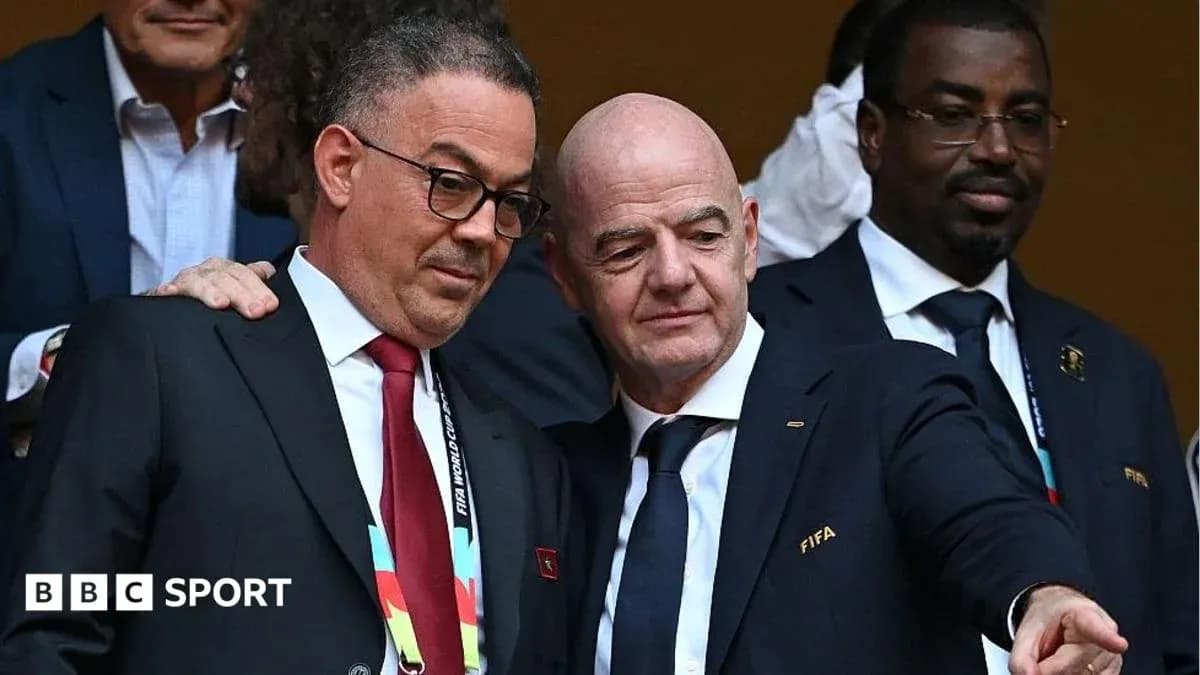
Fouzi Lekjaa, the powerful president of the Moroccan football federation (RMFF), set off the latest storm when he told a political party event that Casablanca would have the “honour” of hosting the final.
That went down badly in Rabat.
At a rally, Morocco’s prime minister Aziz Akhannouch stepped in with a pointed warning aimed directly at Lekjaa and his audience.
“Do not offer to host the big final game in Morocco while we still have not discussed the matter with our allies, Spain and Portugal,” he said, cutting through the electioneering.
Then came the sharper line.
“There should be some respect, brothers. Stop using electoral promises to pull the rug out from under us. These are huge matters. Deciding where the final will be held is a major issue.”
The message was clear: the World Cup final is not a campaign slogan. It is a diplomatic negotiation.
Fifa, as ever, stayed above the fray, limiting itself to a familiar line that “a decision will be made in due course.”
Spain Pushes Its World Champion Claim
While Morocco wrestles with its internal politics, Spain has moved with far more certainty.
Rafael Louzan, president of the Spanish football federation (RFEF), has already said he expects the final to be played on Spanish soil. That belief, he argues, has only grown stronger since Spain lifted the men’s World Cup for the second time this summer.
“Even though no decision has been taken, I believe Spain is the place because it cannot be any other way,” he told Cadena SER. “As you know, we are currently world champions.
“I believe Spain’s organisational capacity for major events is beyond question and that is why reality dictates that the grand final cannot and must not be held anywhere other than in Spain.”
Spain beat Argentina in July to claim this year’s World Cup, and Louzan is using that fresh success as leverage. The logic is simple: champions, renovated stadiums, proven infrastructure — and, in his view, a natural home for the showpiece.
History also offers a reminder: New Jersey was only confirmed as host of this year’s World Cup final in February 2024, just two years before the tournament. The 2030 decision, then, is unlikely to land any time soon, no matter how loudly the bidding nations talk.
Stadium Arms Race
Behind the rhetoric sits a very modern arms race: capacity, glamour, and global television shots.
Morocco is building a proposed 115,000-seat stadium, a project that, if completed as planned, would give it the largest football venue in the world. A ground of that scale, in a country co-hosting its first men’s World Cup, offers an enticing narrative and a spectacular backdrop.
Spain counters with pedigree and polish.
Real Madrid’s Santiago Bernabeu has undergone a major transformation and now holds 83,000, wrapped in cutting-edge infrastructure and designed for multi-event use. Barcelona’s Spotify Camp Nou, once its renovation is complete, will accommodate 105,000, restoring its status as one of the game’s great cathedrals.
On paper, Morocco brings sheer size; Spain brings heritage and a track record of staging major events. Portugal, notably quieter in this particular debate, remains an essential partner in the joint bid but has not pushed itself as a final host in the same way.
Allies, Rivals, and a Final Still in Play
This is the tension at the heart of 2030: three allies selling a shared vision, while two of them quietly jostle for the right to host the night that truly defines a World Cup.
For Morocco, the prize is symbolic as much as sporting — a statement of arrival on the global stage, backed by a record-breaking stadium project. For Spain, it is about reinforcing its status as a traditional powerhouse, world champions again and custodians of some of football’s most famous grounds.
Fifa will eventually choose between them.
Until then, every public comment, every political jab, every stadium announcement feels like another move in a long, high-stakes game that will only end when one city’s name is finally read out.