Why the Pistons Invested $200 Million in Jalen Duren Despite Playoff Setbacks
At just 22 years old, Jalen Duren is now an All-NBA center with a new five-year, $200 million deal from the Detroit Pistons. This contract falls well short of the $287 million maximum he could have received, yet it still signals strong faith in his future. Despite his impressive regular season, questions remain about how he’ll handle playoff pressure.
Strengths and Growth During the Season
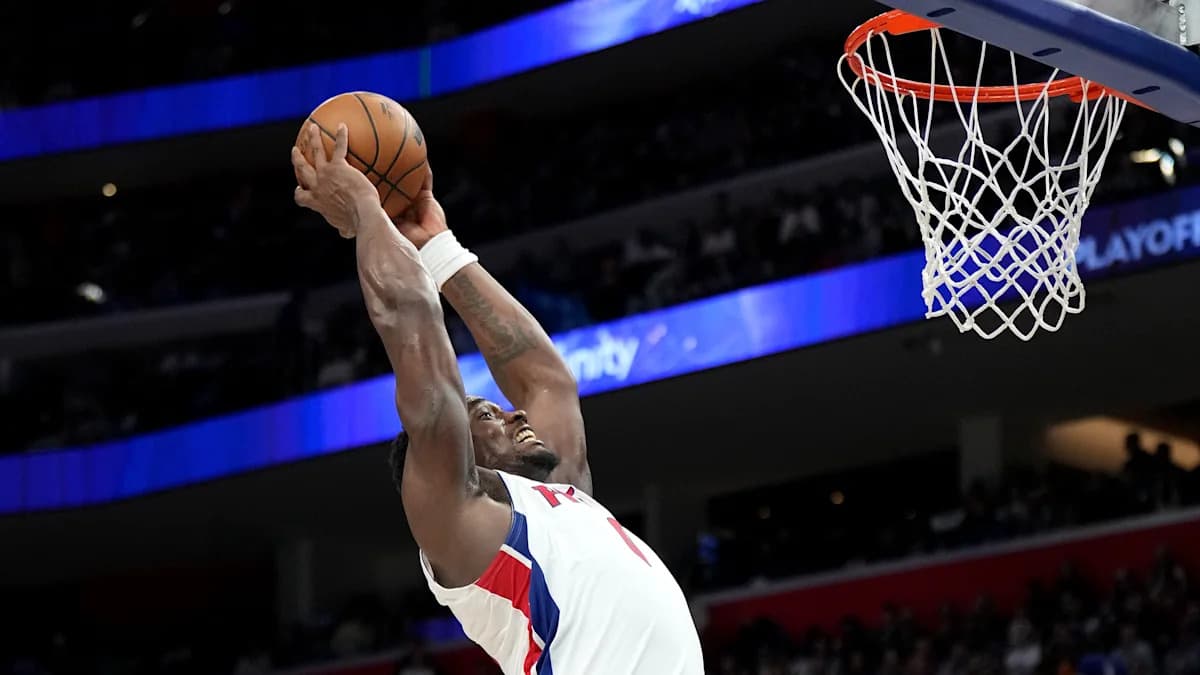
Duren has become a major asset for Cade Cunningham, providing a dominant presence near the rim. He excels at catching lobs, powering through contact, running the floor, and crashing the offensive glass to generate points without relying on set plays. Last season, he also improved his ball handling, passing, and screening. Without Cunningham on the court, Duren showed off a developing face-up post game, leading to twice as many free-throw attempts per game. His averages of 19.5 points and 10.5 rebounds helped Detroit rank second in defense, earning him All-NBA honors.
Playoff Performance Raised Doubts
But the playoffs revealed cracks. Duren was outperformed by Wendell Carter Jr. in Round 1, then struggled badly against Evan Mobley and Jarrett Allen in Round 2. His scoring dropped to 10.2 points per game, and his shooting percentage slid from 65% to 51.4%. Suddenly, a player who looked like a star all season appeared to stumble on basic roles expected from a contributor.
“I’m man enough to acknowledge my flaws and that I’m not perfect. I’m also man enough to get my ass in the gym and work on those things and get better,” Duren said. “I’m not trying to run from anything. I’m not running from what happened because I know I will make things better in the future.”
Inconsistency and Development Concerns
The playoff issues partly explain why the Pistons avoided giving him the full max. Over his first three seasons, Duren has been inconsistent—dominant at times but sometimes lax on defense or less aggressive offensively. Some scouts attribute this to mentality or focus, others to conditioning; Detroit even tried to include weight clauses during contract talks. Maturity could be a factor too. From teenager to young man, Duren is now embracing his role more seriously, possibly entering his prime.
Looking Ahead: Versatility and New Skills
For this extension to pay off, Duren must show that last year’s gains aren’t a one-time thing and that he can elevate his playoff play. He’s aiming to become more versatile and harder to box in, saying, “I try to be a tool that my coaches and my teammates can use to do anything.”
Last season, Duren took more pull-up jumpers than ever before, hitting 15 of 31 attempts (48.4%), a small sample but promising. He also shot efficiently in post-ups (54.5%) and isolations (46%). If these flashes grow into reliable weapons, the Pistons’ decision to keep him over trading for veterans like Domantas Sabonis or Anthony Davis becomes clearer—both older and with less upside or durability concerns.
Spacing Issues and Team Fit
Duren’s value still rests heavily on potential. While he can bully smaller players and take midrange shots, Detroit needs him to develop a spot-up three-point shot eventually. This skill is key because of how he pairs with Ausar Thompson, another non-shooter. Together, they cramped the paint and limited spacing during the playoffs.
- With Thompson on floor, Duren off: Pistons outscored opponents by 11.2 points per 100 possessions.
- With both Duren and Thompson: Pistons had a -0.9 net rating.
- With Duren but no Thompson: Detroit was -1.7.
These numbers reveal how poorly the Pistons played with Duren in the playoffs. The lack of shooting and motion hurt flow compared to lineups featuring Paul Reed or Thompson’s cutting.
Detroit addressed this by adding shooters John Collins, Isaiah Joe, Taurean Prince, and drafting Ebuka Okorie—all providing better spacing options.
Youth, Promise, and Patience
The Pistons exceeded expectations last season with 60 wins, though their playoff exit disappointed. Cunningham is just 25, Thompson 24, and Ron Holland 21. Many players are still far from their primes.
Duren has already helped reach this level, but his best years may lie ahead. General Manager Trajan Langdon now faces the challenge of determining how much of Duren’s potential can be realized alongside Detroit’s core. Agreeing on a contract was only part of the puzzle. If Duren stalls or regresses, the Pistons still have flexibility since his contract is manageable and tradeable.
The ideal scenario includes Duren or Thompson developing a dependable three-point shot, Okorie or Holland becoming contributors, and Cunningham continuing his rise. This group deserves time, but the NBA’s landscape can shift quickly. Another disappointing postseason might push Langdon to reconsider patience.
“I want to be a Detroit Piston for life,” Duren said. “Making that happen will take more than becoming a better individual player. I have to become a better fit.”