Pelicans Bet on Internal Growth Amidst Loud Expectations
The numbers from last season don’t lie: 26-56, 11th in the West, nowhere near the postseason. Most teams in that position tear it down or swing big. New Orleans has chosen a different lane.
They’re running it back.
Not literally the same roster, but close enough that the message is clear. The front office is betting that internal growth will do what cap space and blockbuster trades have not. That the kids will grow up, the stars will stay healthy, and the pieces will finally click.
It’s a bold kind of patience.
A Quiet Offseason, Loud Expectations
The headline moves weren’t splashy. AJ Johnson, Bennedict Mathurin, Jaron Pierre Jr. and Trendon Watford arrived, adding depth and a bit of edge. The core, though, remains intact.
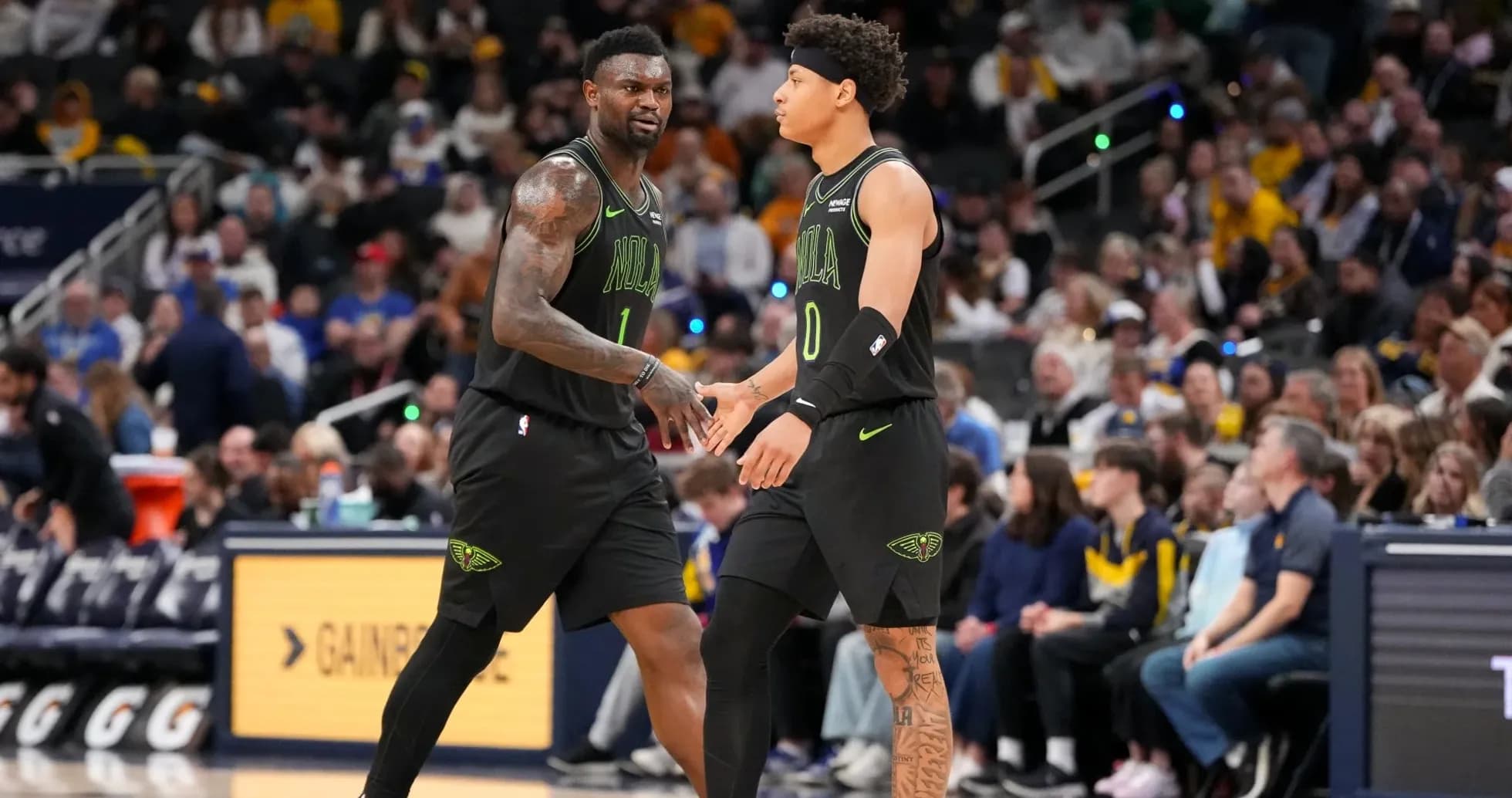
This is still Zion Williamson’s team. It still leans heavily on Trey Murphy, Dejounte Murray and now Mathurin to carry late-game possessions. It still asks a lot of players who haven’t yet proven they can drag a franchise out of the middle and into relevance.
The risk is obvious: if the growth doesn’t come, Murray’s name will sit on every trade-deadline whiteboard in the league.
Fears, Queen and the Future Taking Shape
For all the familiar faces, the long-term future in New Orleans rests with two names: Jeremiah Fears and Derik Queen.
Both flashed in their rookie seasons. Not in empty, end-of-bench minutes, but in ways that suggested they can handle more. Fears showed poise and feel. Queen brought size, touch and a sense that the game moves slowly for him.
This season, they move from “promising” to “responsible.” Bigger roles. More minutes. More scrutiny. If they answer that call, the franchise finally has a foundation that looks sustainable instead of speculative.
If they don’t, the Pelicans’ decision to mostly stand pat will look less like belief and more like denial.
Herbert Jones at a Crossroads
No one embodies this make-or-break tone more than Herbert Jones.
A few years ago, he was the league’s favorite secret: a long, sharp defensive mind who could guard up, guard down and swallow space. First Team All-Defense in 2024, a key part of New Orleans’ rise that year, and a nightmare matchup on the perimeter.
Then the ascent stalled. The impact dulled. The regression was subtle at first, then hard to ignore.
At 28, he’s squarely in his prime. This is the season that will define what he is: cornerstone defender or movable contract. His 3-point shooting has sagged to 31% over the last two seasons, a number that shrinks the floor and limits his value in modern lineups. That has to change.
Jones doesn’t need to become a sniper. He just needs to be credible. If he can bump that percentage up and reclaim his spot among the league’s elite stoppers, the Pelicans’ defense suddenly looks a lot more serious — and his name becomes either untouchable in New Orleans or highly coveted on the trade market.
Living in the Paint, Dying in the Details
New Orleans knows exactly where it wants to play: the paint. No team leaned into that more last season. A staggering 58% of their shots came at the rim or in the lane, the highest rate in the league.
On paper, that should be efficient basketball. With Zion, it often is.
Williamson ranked third in the league with 791 field-goal attempts in the paint and converted 60.3% of them — better than league average and his best mark in three years. When he gets there, good things usually happen.
The problem is everyone else.
As a team, the Pelicans shot just 55.4% in the paint, the second-worst mark in the NBA. That’s a brutal return for a team that lives at the rim. They had three of the 41 players — Jones, Micah Peavy and Jordan Poole — who shot below 50% on at least 100 attempts in the paint. Those are the kinds of numbers that turn aggressive offense into wasted possessions.
Mathurin arrives with his own mixed paint résumé. He’s hit 51.5% in the paint over his career, not exactly a cure-all for their finishing woes. Where he can help is at the foul line. His knack for drawing contact and getting to the stripe offers a different kind of efficiency, one this team badly needs to balance all those missed bunnies.
Circle These Dates
For a team under the microscope, some nights will carry more weight than others.
- Oct. 21: Pelicans vs. Pacers
Opening night, and it comes with layers. It’s a first look at what Mosley wants this group to be, a reunion for Mathurin with his old team, and a backcourt duel between Dejounte Murray and Tyrese Haliburton that could say plenty about where each franchise is headed. - Nov. 6: Pelicans vs. Timberwolves
Zion vs. Anthony Edwards. Two former No. 1 picks, two very different arcs. Edwards has surged into superstardom. Zion is still fighting his body and the narrative. Can he stay on the floor long enough to chase the path Ant has carved? - Nov. 18: Pelicans vs. Pistons
The start of a three-game stretch against the Pistons, Thunder and Spurs. Young, hungry, ascending teams. It’s an early measuring stick for whether New Orleans belongs in that conversation or trails behind it. - Nov. 29: Pelicans vs. Trail Blazers
Zion and Ja Morant, picks 1 and 2 in the 2019 Draft, share the floor again. Both are trying to escape the weight of expectation and the shadow of what-ifs. It’s a reminder of how quickly a “can’t-miss” career can drift off course. - Feb. 2: Pelicans vs. Magic
Jamahl Mosley returns to Orlando, where he steered the Magic to three straight playoff appearances and helped shape Franz Wagner and Paolo Banchero into stars. It’s a reunion, but also a quiet comparison: can he build something similar in New Orleans?
Mosley, Dumars and a Culture Test
All of this unfolds under a new voice on the sideline.
Jamahl Mosley arrives with a reputation: player’s coach, teacher, defensive organizer. In Orlando, he connected with young stars, installed a sturdy defensive identity and turned promise into playoff reality. New Orleans needs all of that.
The Pelicans have sat in the bottom 10 defensively in each of the last two seasons. That’s not a talent-only issue; that’s habits, connectivity, buy-in. Mosley’s task is to tighten the screws without losing the freedom that makes players like Zion and Mathurin dangerous.
For team president Joe Dumars, this hire is more than a tactical move. It’s a culture swing. If Mosley reaches this core — if Fears and Queen grow, if Zion buys into both ends, if Jones rediscovers his bite — then the front office can shift its focus to upgrading talent around a clearly defined nucleus.
If he doesn’t, the Pelicans won’t just be stuck in the standings. They’ll be stuck in identity.
They’ve chosen to bet on continuity, on growth, on the idea that this group has more to give. Now the question hangs over New Orleans:
Is this the year that faith finally pays off, or the one that forces them to start over?